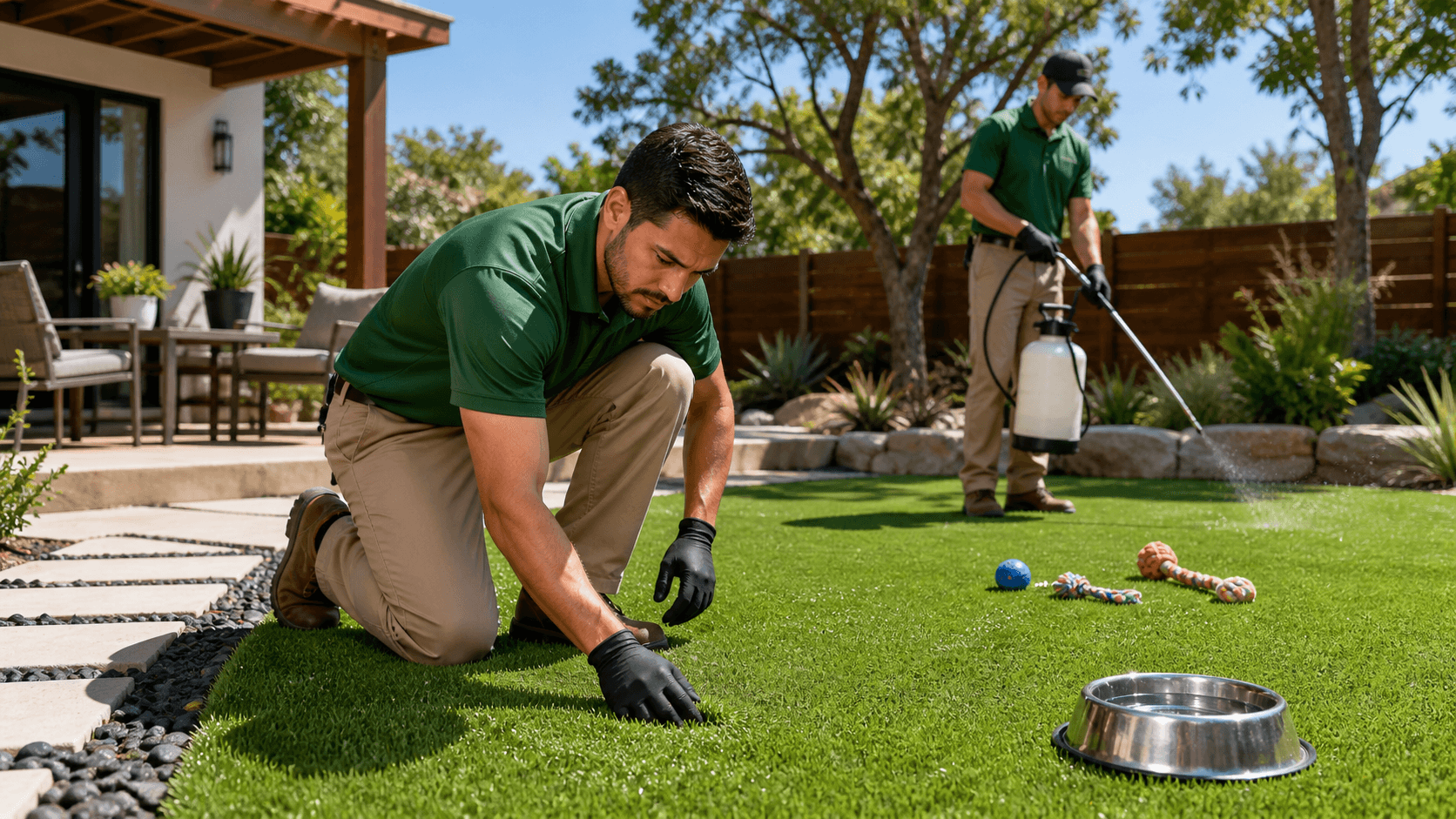
Stop Turf Odors Before They Ruin Your Austin Backyard
A great Austin backyard should smell like fresh air, not a dog park or a swamp. If your artificial grass hits you with a nasty odor every time you step outside, that smell is trying to tell you something. Odor is a symptom, not the whole problem. The real issues usually sit in the turf backing, the base, or the water that gets trapped in the system.
Fall evenings in Austin are perfect for patio time, grilling, and hanging out with friends and dogs. When turf smells bad, it ruins that easy outdoor time. In this article, we walk through why artificial turf smells here in Central Texas, how to quickly test what is going on in your own yard, and a simple troubleshooting flow to figure out the true source before you spend more money on cleaners, sprays, or even a full replacement. As a local, family-owned Texas-based installer, we fix a lot of "smelly turf" jobs that were installed without a good plan, and we can tell you: understanding the root cause matters more than any one product.
Four Main Reasons Artificial Turf Smells in Austin
Most turf odor in Austin comes back to some mix of these four things:
- Pet urine trapped in the system
- Anaerobic base and poor drainage
- Bacteria, algae, and organic buildup
- Irrigation runoff and neighborhood drainage
Let us break each one down.
Pet Urine Trapped in the System
Dogs love routines and tend to pee in the same spots. Over time, urine salts and organic material build up in the fibers, the infill, and the backing. If the turf uses a lot of infill, that material can soak up and hold urine like a sponge. In busy pet yards, the smell can feel constant.
Fall is often when people start noticing it more. Windows are open more, people are back outside for longer, and that hit of ammonia or sour smell becomes hard to ignore.
Anaerobic Base and Poor Drainage
If the base under your turf is not built right, water sits instead of draining. When water and urine get trapped in low spots or compacted areas with no oxygen, the base can go anaerobic. That means bacteria that like low-oxygen, soggy conditions start breaking things down and creating a sour, rotten odor.
Heavy Central Texas storms and regular irrigation can soak a base that never fully dries. If you have "birdbath" dips in your yard or you see puddles after every rain, drainage is likely part of your odor problem.
Bacteria, Algae, and Organic Buildup
Even if pets are not the main issue, organic stuff still lands on your turf:
- Leaf litter and oak leaves
- Pollen and dust
- Pet hair and dander
- Dirt from nearby beds or natural grass
All of this can form a thin film on the surface and between blades. That film is food for bacteria and algae. In shaded Austin yards under large trees, the turf often stays damp. Add Central Texas humidity and heat, and slimy or discolored patches can start to smell musty or swampy.
Irrigation Runoff and Neighborhood Drainage
Water that looks "clean" can still cause smells when it sits. Overspray from sprinklers, runoff from nearby natural grass, and fertilizer-heavy water that washes across your turf can pool at edges or seams. Over time, that nutrient-rich water feeds algae and bacteria on and under the turf. The result is a funky smell that shows up after watering or rain, even if your pets are not heavy users.
Quick Home Tests to Pinpoint What Is Causing Your Turf Odor
Before buying more cleaners, try these simple checks to narrow down the real issue.
Smell Mapping Walk-Through
Walk the yard during two times:
- Early morning
- Late afternoon or early evening
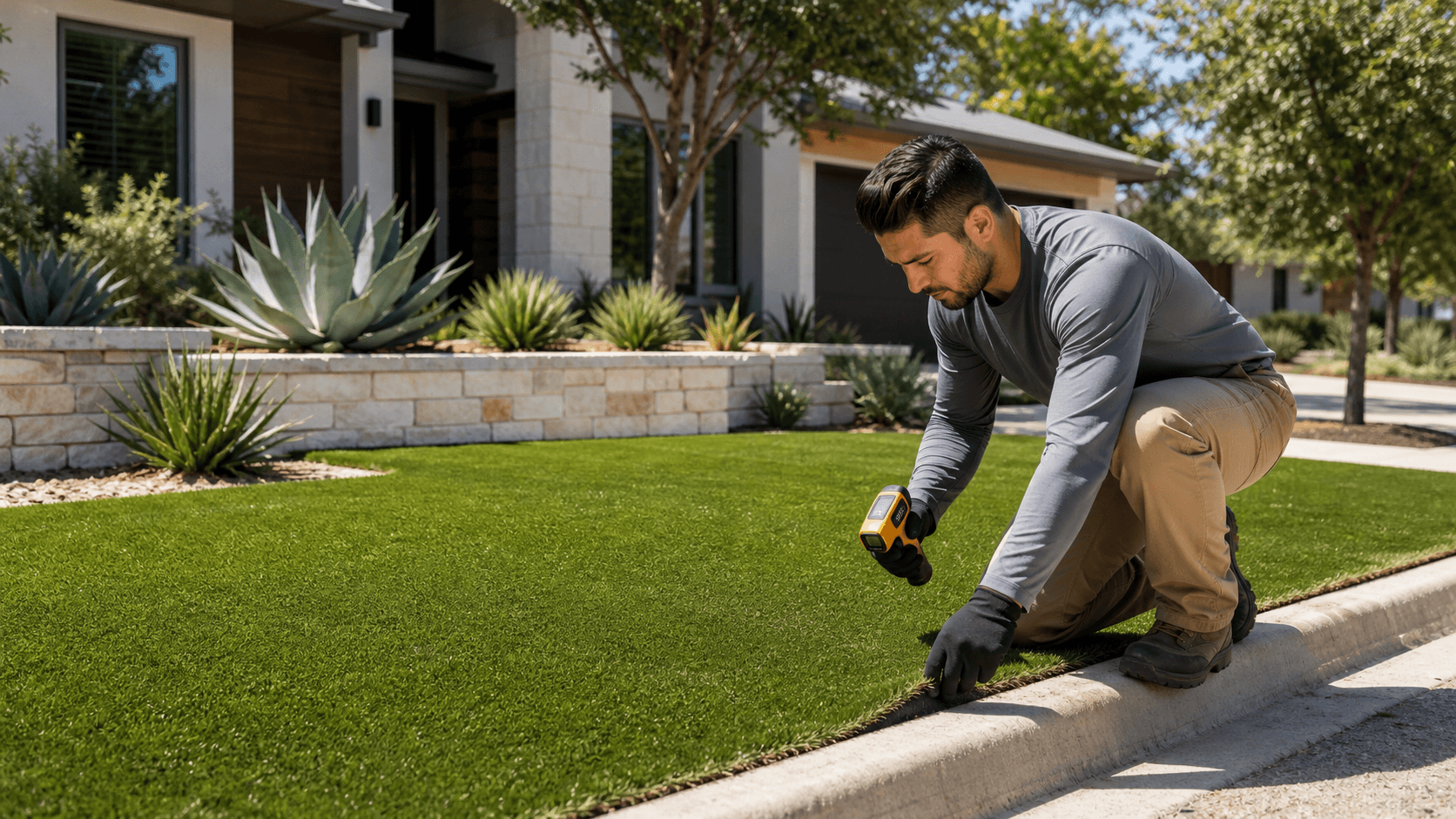
Move slowly along seams, edges, and favorite pet spots. Take a careful sniff in each zone. If possible, gently lift a small corner of turf and smell underneath. If the worst odor lives under the turf, the base or drainage is likely the main problem.
Water and Hose Tests
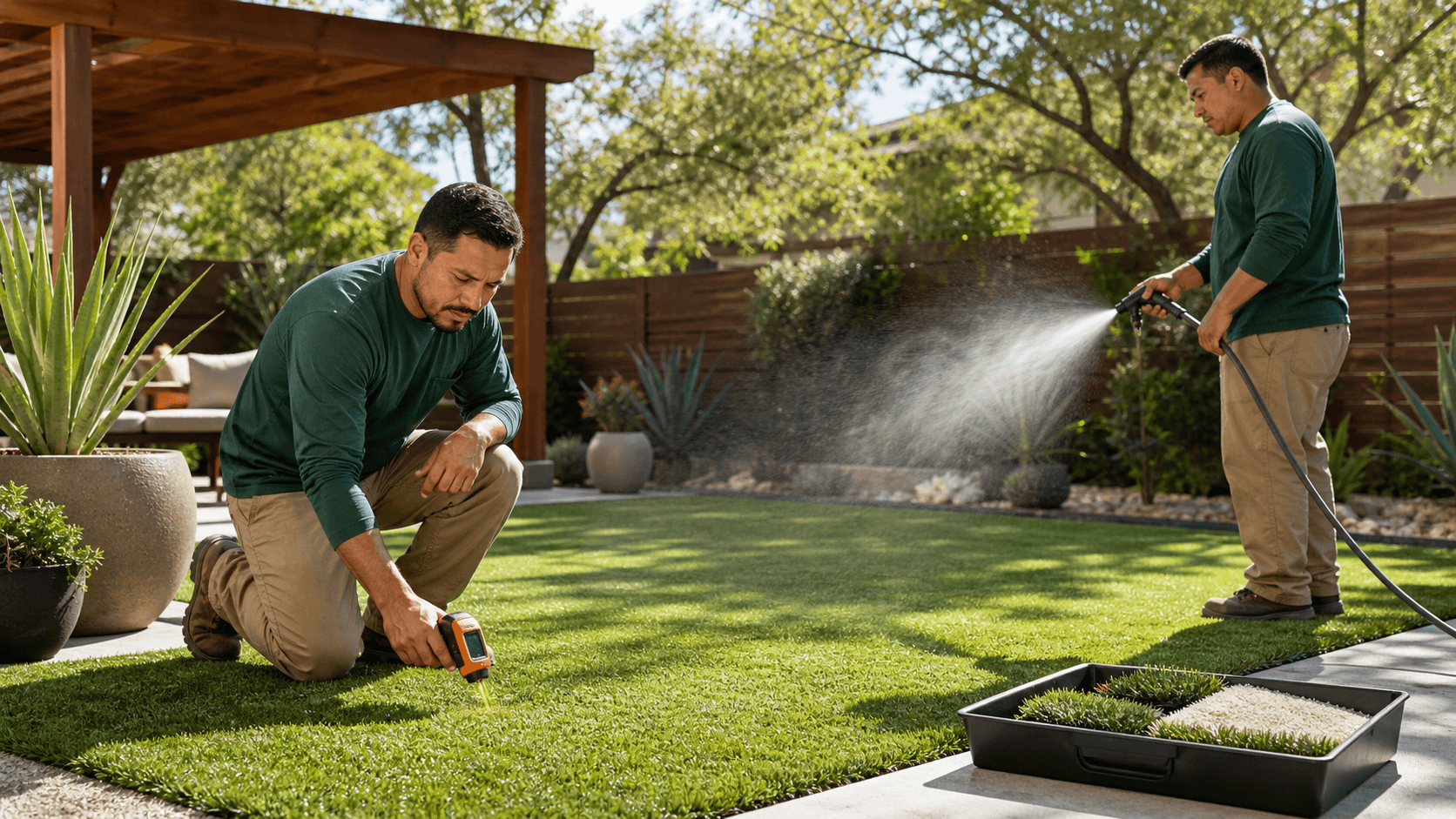
Pick a smelly area and run a hose there for 2 to 3 minutes.
Watch what happens:
- Water disappears quickly and evenly: drainage is probably okay; smell may be mostly urine or surface buildup
- Water puddles or runs sideways toward the house or fence: slope or base materials may be wrong
- Water sits for a long time: trapped moisture and possible anaerobic base
If the area drains fast but smells strong again after it dries, the backing or infill may be holding urine or bacteria.
Simple DIY Bacterial Versus Urine Check
On a small, smelly patch, use a basic enzyme cleaner meant for pet turf. If the smell improves right away but returns within a short time, the deeper layers are likely saturated. If you see slimy, greenish areas or black patches that feel slick, you are looking at algae or heavy bacterial growth that a quick hose rinse will not solve for long.
Troubleshooting Flowchart to Diagnose Turf Smells
Use this simple flow in your head as you test.
Start Question: When and Where Is the Smell Worst?
- Strongest in dog potty zones: follow the pet urine path
- Strongest after rain, irrigation, or wet days: follow the drainage/base path
Pet Urine Path
Next question: Does the odor sit on the surface or feel like it comes from deep down?
- Surface only: a deep clean, enzyme treatments, and better rinsing habits may help a lot
- Deep, sour smell under the turf: the base may be holding urine and water; cleaning the top will not fix the trapped odor below
If you are tired of repeating the same clean, smell, clean cycle, long-term relief usually comes from a better-draining design and sometimes switching to artificial grass that does not trap odor as easily, often with less or no infill that can hold urine.
Drainage and Anaerobic Base Path
Question: Does water pool for more than 10 to 15 minutes after your hose test or a storm?
- Yes: the base may be wrong, too flat, or not using the right materials, so water is rotting under the turf
- No, but smell lingers: you might have a mix of light drainage issues plus bacteria or algae on the surface
Bacteria, Algae, and Runoff Path
Question: Do you see slimy patches, dark or green discoloration, or a lot of leaf buildup?
- Yes: organic film is feeding bacteria and algae, which calls for mechanical cleaning like brushing and power washing
Question: Can you see irrigation overspray or clear runoff paths from nearby lawns?
- Yes: fertilizer and soil in that water may be driving smelly growth on and under the turf
Choosing the Right Fix Instead of Throwing Money at Cleaners
When Cleaning and Maintenance Are Enough
If tests point to light urine buildup and some surface gunk, a realistic care plan can keep things fresh:
- Thorough rinsing in pet areas
- Occasional use of enzyme products
- Seasonal power washing and brushing
Even artificial grass that does not smell easily still needs smart care in a busy Austin pet yard, especially with our heat and humidity. The goal is easy to keep fresh, not never think about it again.
When Your Installation Is the Real Problem
Some signs a past turf job is working against you:
- Standing water after storms
- Noticeable dips and birdbaths
- Turf laid over soil or base that stays soggy
- No clear thought given to drainage direction
If the base is wrong, cleaners and deodorizers are just band-aids. The odor will keep coming back because you are treating symptoms, not the real issue.
How Turf Design Helps Control Odors Long Term
A pet-friendly turf design focuses on:
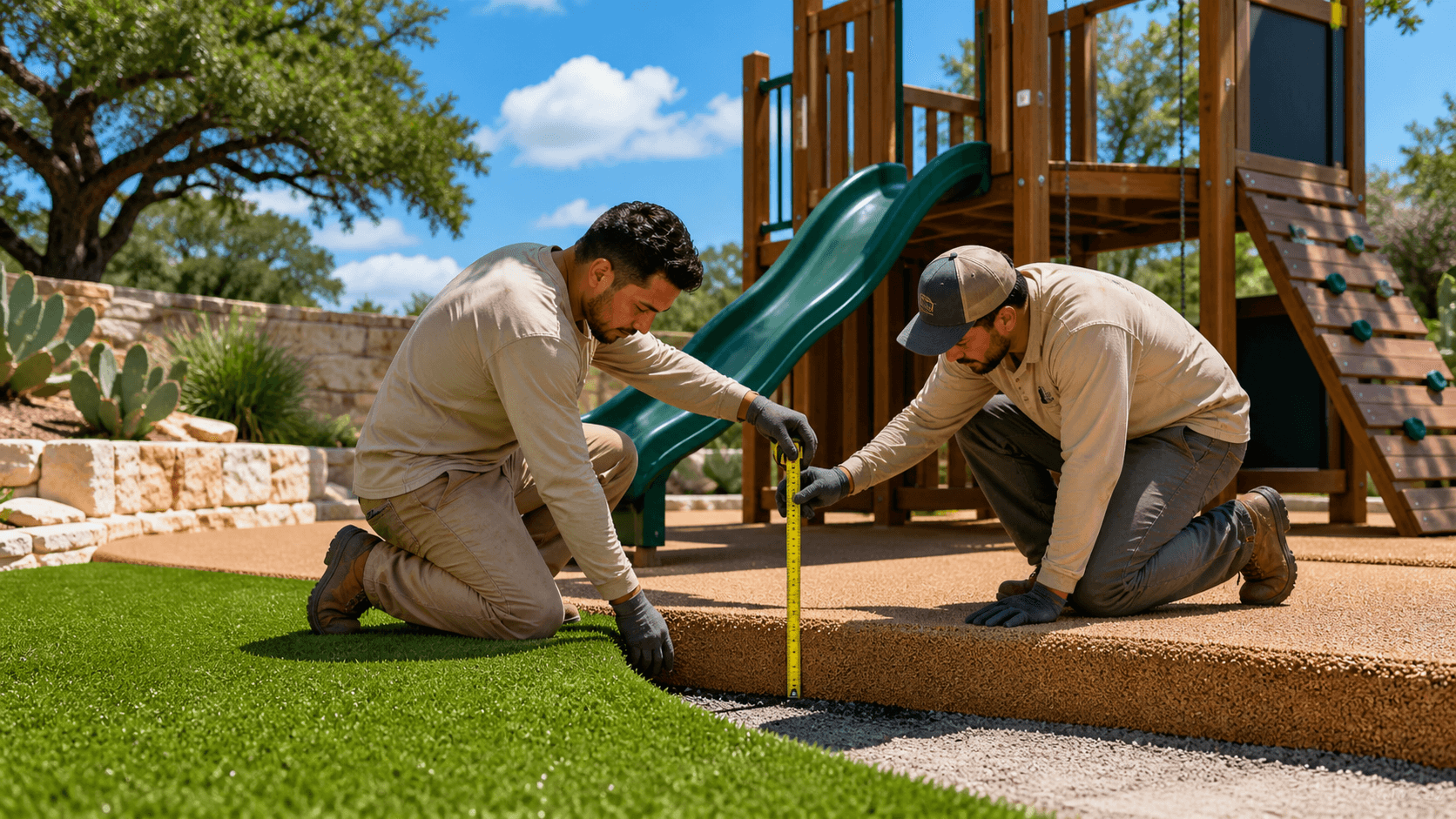
- Drainage slope away from patios and doors
- Quality base materials that drain well
- Seams placed away from heavy potty zones
No-infill systems can reduce odor risk because there is less loose material to soak up urine and trap bacteria over time. For Austin and Central Texas yards, pairing that design with a base built for our clay-heavy soils and intense downpours makes a big difference.
Why No-Infill AGL Grass Helps with Pet Odor Control
Traditional turf often relies on crumb rubber or silica sand infill. That infill holds the blades up, but it can also soak up urine and hold odor unless it is cleaned very aggressively. It can also get kicked into the house by kids and pets.
AGL Grass is a premium, no-infill turf system available in Texas through TexasTurf. It does not depend on loose infill between the blades, which cuts down on trapped urine and messy granules. Because there is no loose infill to blast around, AGL Grass can be power washed effectively, which helps flush pet waste through the backing and into the drainage layer below.
For Austin families who want artificial grass that is easier to keep fresh in our heat, this type of system can make rinsing and cleaning more straightforward. TexasTurf installs AGL Grass with methods that fit Central Texas soils, drainage patterns, and climate. For busy dog runs, side yards, and family backyards where odor has been a problem, the mix of a well-engineered base and no-infill AGL Grass can make a noticeable difference.
When to Call a Pro for Turf Odor Problems
Sometimes, the home tests make it clear that things are beyond simple cleaning. Signs it is time for a professional look include:
- Odor comes back within days of every cleaning
- You see standing water after storms or irrigation
- Turf is lifting, wrinkling, or feels squishy in spots
- Smell under the turf is much stronger than on top
Many homeowners inherit turf from a builder or past owner and have no idea how it was installed. In those cases, a pro assessment is important before you spend more money on short-term fixes.
A proper turf odor check should look at drainage slope, base materials, condition of the backing, and how pets actually use the space. At TexasTurf, we focus on whether a deep clean, a targeted repair, or a full reinstallation with a better system like a no-infill AGL Grass installation will give you the best long-term result. With the right design and materials for Central Texas conditions, your yard can go back to being a fresh, easy outdoor space you actually want to use.
Get Started With Your Project Today
If you are ready for a yard that looks great and stays fresh, we are here to help design the right solution for you and your pets. Explore how our artificial grass that doesn't smell can transform problem spots into clean, low-maintenance spaces. Our team at TexasTurf will walk you through turf options, drainage, and installation so everything works for your home. Have questions or want a quote now? Just contact us to get started.