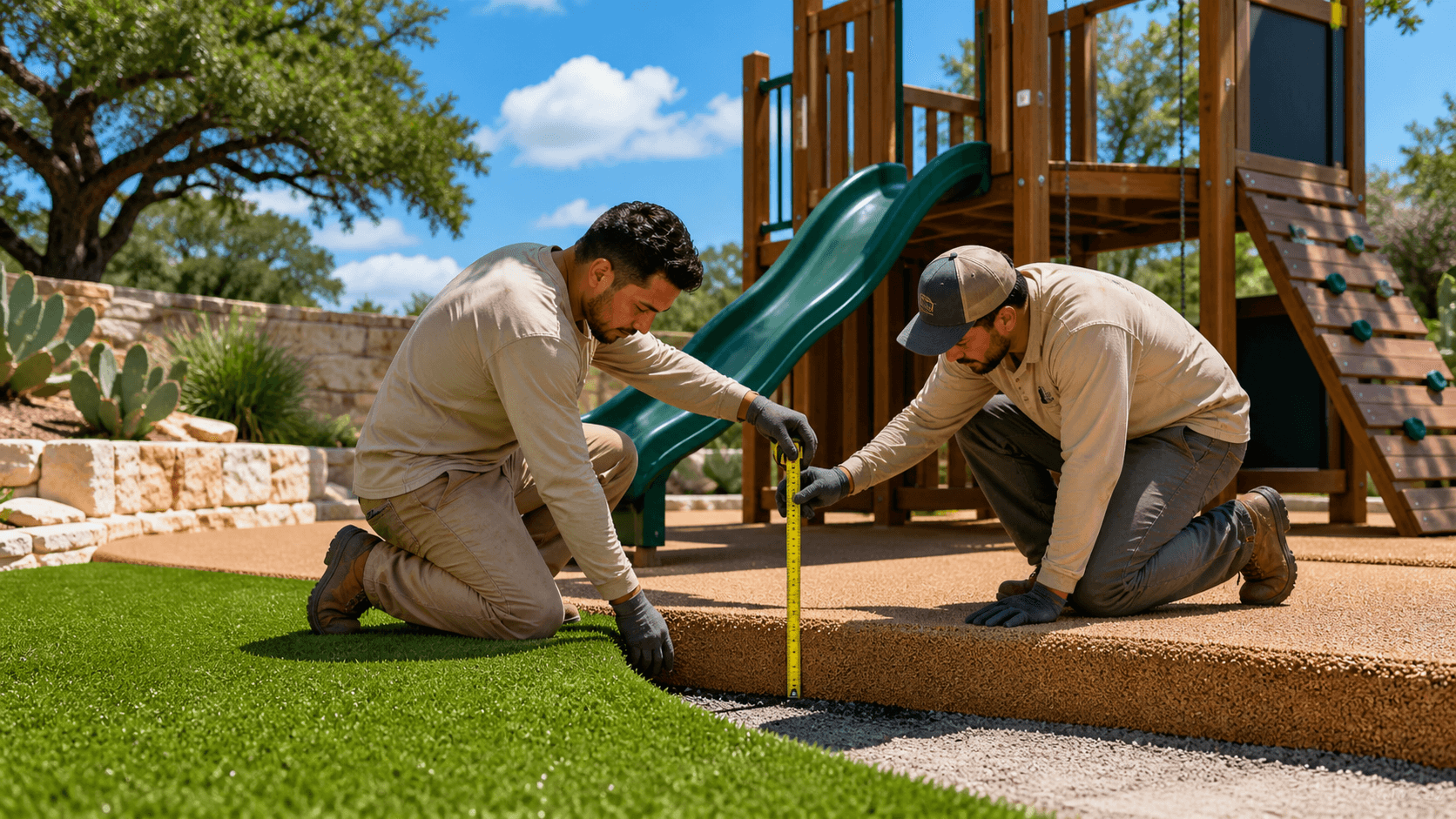
Safer Backyard Play All Year in the Austin Heat
Safe play space matters when kids start climbing higher, swinging harder, and racing all over the yard. Falls from swings, slides, playsets, and little climbing walls are part of normal childhood, but the surface they land on makes a big difference.
As fall rolls around, days feel a little less intense, kids want to be outside longer, and many families start thinking about getting the yard ready before holiday gatherings. This is when questions about artificial playground grass, fall-height ratings, and padding start to come up.
Kid-safe turf systems are not just "fake grass." Under that green surface is a whole build: base rock, drainage, padding, and the turf itself, all chosen to work together. When it is done right, you get a surface that cushions falls, drains fast after storms, and stays cleaner than dirt, mulch, or gravel.
In this guide, we will walk through what makes a play area safer, what fall-height ratings actually mean, how padding works, how Austin soil and heat affect your choices, and what to ask any installer before they touch your yard.
What Makes a Play Area Kid-Safe in Austin Yards
Many Austin backyards start out with good intentions and end up with:
- Hard-packed dirt under the swings
- Patchy grass with bald spots under slides
- Exposed tree roots that catch little toes
- Pea gravel that scatters into the lawn and patio
- Muddy low spots that stay slick after a storm
When we talk about "safety surfacing," we mean a layered system under and around your play equipment, not just a soft top layer. A typical kid-safe build will include:
- A graded, compacted base so the surface stays level
- A drainage layer to move water away
- A shock-absorbing pad with tested fall protection
- Artificial playground grass on top, with or without infill
Austin's clay-heavy soils and sloped yards make drainage planning even more important. Without the right base, water can collect under the turf, causing:
- Puddles that stay wet for days
- Slippery turf on the surface
- Erosion around playset posts and borders
Heat matters too. Any outdoor surface in full Texas sun will warm up, including turf, rubber, and concrete. Kid-safe design looks at:
- Shade from trees, pergolas, or shade sails
- Lighter turf colors that absorb less heat
- Airflow and drainage under the turf so moisture does not sit and steam
- Smart layout so the hottest areas are not where kids sit or crawl
A safe play area is not just "soft grass." It is the right materials, correct fall protection, and an installation plan that fits your exact equipment and yard conditions.
Understanding Fall-Height Ratings and Playground Safety Standards
Fall-height ratings sound technical, but the idea is simple. It is the maximum height from which a child can fall onto a surface without the impact going past accepted safety levels for head injuries.
You may hear terms like ASTM standards or CPSI guidelines. Homeowners do not need to memorize codes, but it helps to know what they mean in everyday language:
- Surfaces get tested in a lab with drops from different heights
- The lab measures how much impact the surface absorbs
- Each pad and turf system earns a tested fall-height rating
Different types of equipment need different levels of protection under and around them. For example:
- Swing sets need extra coverage in front and behind the swings
- Slides need protection at the exit where kids land
- Climbing domes and walls need more cushioning under the highest points
- Trampoline surrounds can benefit from softer turf around the edge
Professional installers map out "fall zones." We:
- Measure the highest standing or hanging points on your equipment
- Mark how far kids are likely to travel when they jump or fall
- Choose padding thickness and materials that match the needed fall height
The goal is not to prevent every bruise or scraped knee. Those come with active play. The goal is to dramatically lower the chance of a serious head injury from the kinds of falls kids often take in a backyard.
Padding Options Under Turf and How They Protect Kids
Under artificial playground grass, padding does the heavy lifting for impact protection. There are a few common types used for home play areas:
- Foam safety pads, often interlocking panels, sized for high-impact zones
- Shock pads made for sports and playgrounds, with tested fall-height ratings
- Rubber underlay products, sometimes used where extra durability is needed
Pad thickness, measured in inches, ties directly to fall-height performance. Taller structures usually call for thicker or higher-performing pads. A lower slide may be fine with a thinner pad, while a tall climbing tower usually needs more cushioning.
For Austin yards, long-term performance is just as important as day one comfort. Good pads:
- Hold their shape on gentle slopes
- Resist flattening in high-traffic zones
- Allow vertical drainage, so water moves through and into the base layer
Parents usually notice the benefits right away:
- Softer landings at the bottom of slides
- Less road rash compared to concrete, decomposed granite, or bare dirt
- A forgiving surface under swings, where kids jump off and land again and again
We design the base prep, padding, and turf as one integrated system. That avoids bouncy spots in one area and hard, thin areas somewhere else.
Artificial Playground Grass vs. Other Surfaces in Texas Yards
Artificial playground grass is one option among several, each with tradeoffs.
Loose-fill options like mulch and pea gravel often start out nice, then:
- Scatter outside the play zone
- Develop bare, compacted spots where kids land the most
- Create tripping edges at borders
- End up in shoes, indoors, and in pool areas
Natural grass can feel great on day one, but under swings and slides it often turns into:
- Ruts, holes, and slippery mud
- Dusty patches during dry spells
- Uneven ground that is harder to see under clutter
Poured rubber can offer good impact protection, but it can crack or fade over time, and it can feel very hot in full sun.
A well-installed artificial playground grass system gives more consistent cushioning and better drainage than loose-fill materials that move or compact. Heat-wise, turf can warm up, but it often feels more comfortable than rubber or bare concrete when you pair it with:
- Shade sails or pergolas
- Trees that give afternoon shade
- Thoughtful placement so slides and seating are oriented away from direct sun
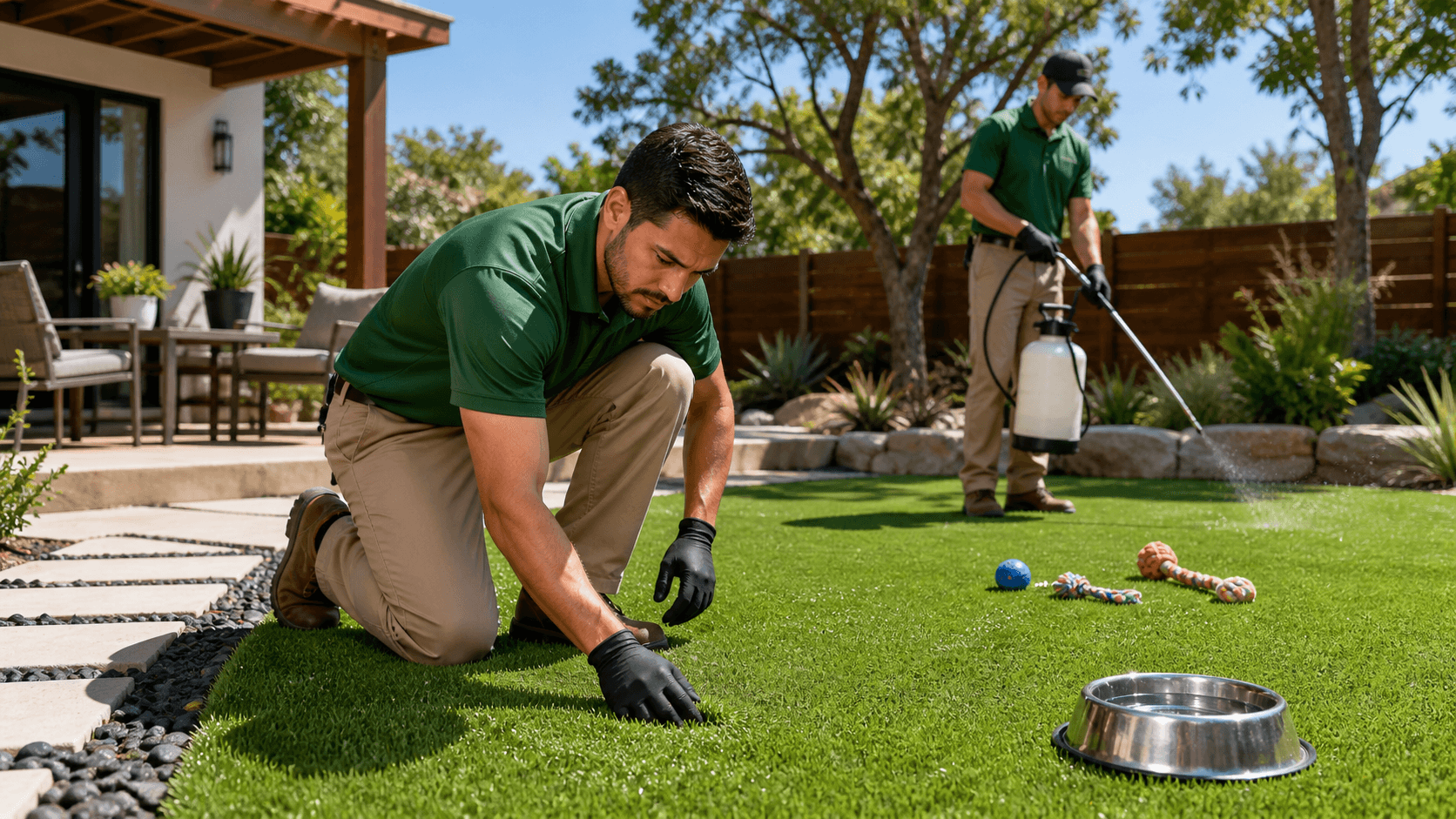
At TexasTurf, we also install AGL Grass, a premium no-infill turf option. It reduces the mess of loose infill tracking into the house, can be power-washed, and stays cleaner for kids who love to play barefoot. It is a strong fit for families that share play areas with pets and want simple cleaning.
Drainage, Cleanliness, and Maintenance for Family Play Spaces
Drainage is a safety topic, not just a convenience feature. Standing water in a play area can lead to:
- Slick surfaces where kids slip
- Mud and mess carried into the house
- Faster growth of bacteria in warm, wet spots
We design base layers and drainage to handle Austin storms, with:
- Graded sub-base so water flows where it should
- Crushed rock that lets water move down and out
- Perforated turf backing to let water drain through the surface
Cleanliness is a big win with artificial playground grass. Day to day, parents can:
- Rinse drink spills and sticky snacks with a hose
- Clean up after pets more easily than in tall grass or mulch
- Blow or brush away pollen, dust, and leaves that collect in fall
AGL Grass no-infill systems make cleaning even simpler. With fewer loose particles in the turf, it is easier to power-wash high-traffic spots and manage odors in areas where kids and dogs share space.
Maintenance is still needed, but it is usually lighter than other surfaces:
- Occasional rinsing after heavy use
- Regular debris removal with a blower or rake
- Brushing high-traffic areas to keep fibers standing up
Compared to re-mulching or re-sodding, many families find that an artificial playground grass system saves time and keeps the play area more consistent all year.
Planning a Safe Austin Play Yard with TexasTurf
When you are ready to plan a safer play yard, start by walking the space and taking notes:
- The tallest points on swings, slides, and climbing features
- Areas that stay muddy, soft, or cracked
- Spots where water tends to sit after a storm
Think about how your family uses the yard. Many Austin homeowners like to blend:
- Artificial playground grass around the playset
- Pet-friendly turf zones for dogs
- Seating areas for adults to relax and watch
- A small putting green or chipping area for fun after school or work
A local, on-site assessment is the best way to match fall-height ratings, padding type, turf style, and drainage design to your specific yard and equipment. As a family-owned artificial turf and landscape design company in the Austin area, we work with the clay soils, slopes, and heat you are dealing with every day, and we are the exclusive Texas provider of AGL Grass no-infill systems for families who want an easier-to-clean play surface.
With the right planning, you can have fewer muddy shoes in the house, more usable days after storms, and a cleaner, safer place for kids to run, climb, and play all year in the Texas sun.
Get Started With Your Project Today
Transform your play area into a safer, cleaner space with our premium artificial playground grass solutions tailored to your property and budget. At TexasTurf, we work closely with you to design and install a surface that looks great and stands up to heavy use. If you are ready to explore options or request a quote, simply contact us and we will walk you through the next steps.