
Stop Turf Puddles Before They Ruin Your Austin Yard
If your artificial lawn in Austin keeps forming puddles, smelling bad after storms, or sending muddy paw prints through the house, the turf itself usually is not the main problem. Most of the time, it comes down to drainage. Water is not getting through the turf system and into the ground the way it should.
Here in Central Texas, that is pretty common. We have clay-heavy soils, quick downpours, long hot stretches, and pets that love to use the same corner every single day. All of that puts serious pressure on the base under your turf. Our goal with this guide is simple: show you a few easy hose tests, explain what is normal, and help you see when it is time to let a turf pro fix the base or add drains.
How Good Turf Drainage Should Work in Austin
Good drainage starts below the blades. When turf is installed right, water should:
- Pass through the turf backing
- Move down through the compacted rock base
- Spread into the native soil instead of sitting on top
On the surface, "normal" after a storm or hose rinse looks like this:
- A light shine of water that clears within a few minutes
- No standing puddles deeper than a quarter inch
- No swampy squish when you walk across it in sandals
Some areas need extra attention. Pet yards should drain fast so you can rinse waste and keep odor down. Backyard putting greens need smooth, even drainage so the ball does not bump through damp spots. High-traffic family areas need a base that can handle kids, dogs, and daily hose rinses without soft spots.
We also work with AGL Grass, a premium no-infill system that can be power-washed. Because there is no loose infill to worry about, water and pet waste can rinse through quickly. That makes it easier to see if the base under your turf is really draining or if the water is getting stuck below the backing.
Simple Hose Tests to Check Your Turf Drainage
You do not need special tools to get a feel for your drainage. A garden hose and a phone timer tell you a lot.
Try this simple hose test:
- Pick a sunny, dry day so you are starting with a dry lawn
- Clear leaves, toys, and debris from the turf
- Choose one problem area and one "normal" area for comparison
- Set the hose to a shower or gentle spray, not a jet
- Run water over each spot for about 5 minutes
- Turn off the hose and start your timer
- Watch how long it takes for the visible water to shrink down to a light sheen
Here is an easy way to think about pooling:
- Puddles deeper than about a quarter that hang around longer than 10 to 15 minutes in warm weather usually point to a base or soil issue
- If the turf still feels squishy hours later, there is likely trapped water under the surface
Tie this back to real life. After a summer storm, kids want to run around. Dogs go right back to their favorite corner. If water keeps pooling around your putting green edge or pet area, you will see sloppy feet, off-target putts, and more odor.
A quick wet look on top is fine. Recurring "birdbath" puddles, strong smells, or green algae on the surface are not. Those are signs the drainage under your artificial lawn in Austin needs attention.
What Pooling, Odors, and Heat Are Telling You
Your turf is sending signals. You just have to know how to read them.
Persistent puddles in the same spots often mean:
- Low areas in the base
- Base rock that has settled and compacted unevenly
Slow drainage across the whole lawn may suggest:
- The base layer was not designed for your soil
- Weep holes along the border are blocked
- Water has no clear path off the surface
Strong pet odors after rain or rinsing usually mean waste is stuck in the infill or base instead of flushing through. When water sits in that mix, smell builds up and can drift across the whole yard.
Heat plays into this too. When water cannot drain, it sits and then evaporates in the Texas sun. That can make some turf systems feel sticky, hotter, and more uncomfortable to walk on. Natural grass in these same problem areas would often turn muddy and bare. A well-built artificial system should stay stable and usable even with heavy pet and kid traffic.
A no-infill system like AGL Grass can make odor and heat management easier. You can power-wash more often without worrying about loose infill washing away, so waste and fine particles are less likely to stay trapped where they cause smells and hold heat.
Easy Homeowner Fixes Before You Call a Pro
There are a few light steps most homeowners can handle that do not involve pulling up the whole yard.
Helpful maintenance moves include:
- Deep cleaning with a turf-safe cleaner, then rinsing with a strong hose spray to flush out contaminants from the surface
- Cleaning out perimeter drains and downspouts nearby so extra roof water is not dumping onto one small section of turf
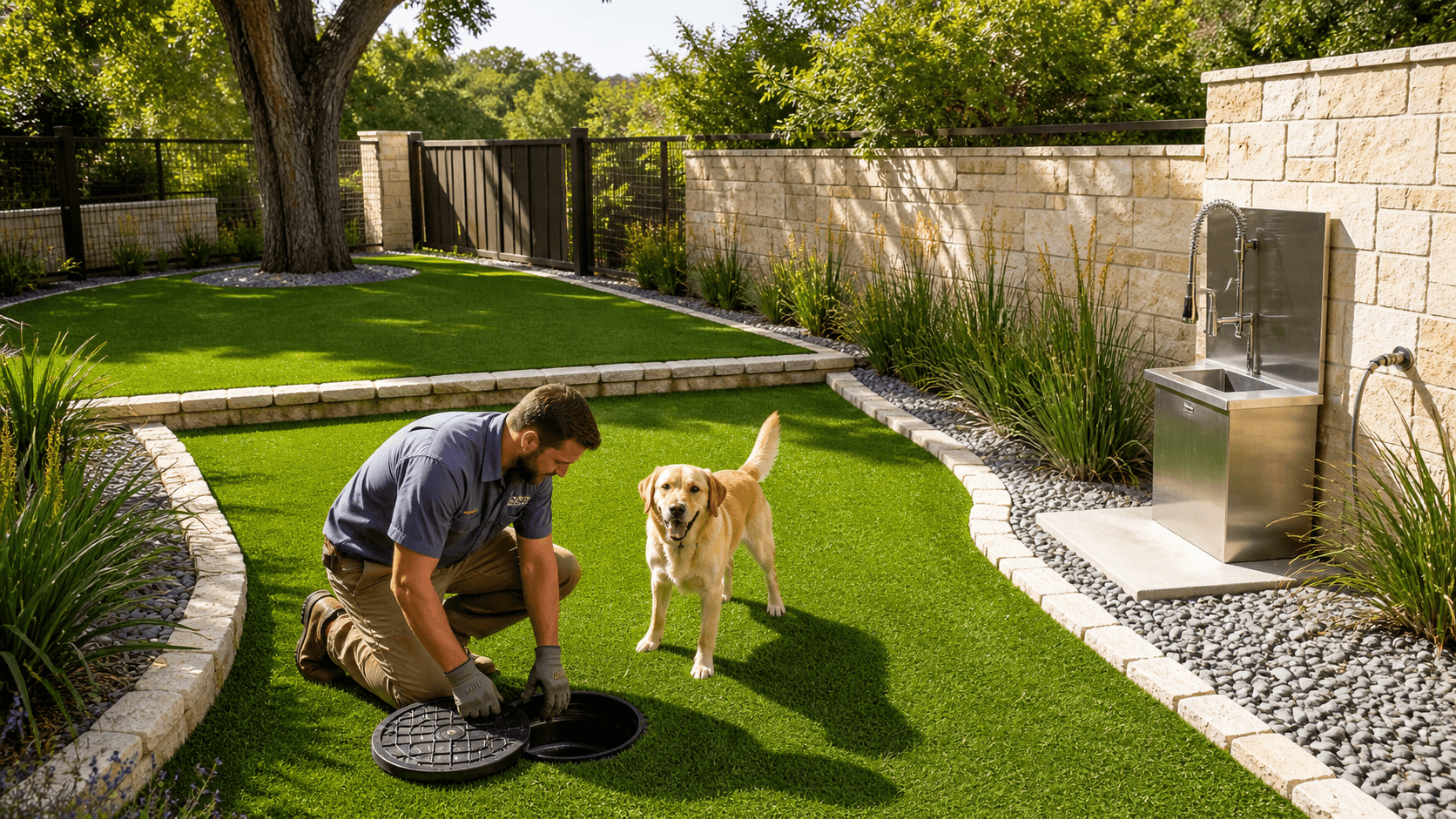
- Checking any visible weep holes in borders and clearing leaves or dirt that might be blocking them
For very small low spots near the edge, some homeowners gently adjust the border and base. This is delicate work and easy to overdo, so it is better to keep changes tiny and call a pro if you are unsure.
Late summer is a smart time in Austin to test and tune drainage. You can use long daylight hours and dry stretches to run hose tests and cleanings, before the season when more frequent storms start rolling through.
What you want to avoid:
- Adding sand or soil on top of the turf
- Punching random holes through the turf backing
- Pouring extra infill into puddle zones
All of these can trap more water, hold odor, and make problems worse instead of better.
When It Is Time to Add Drains or Rebuild the Base
Some drainage problems are bigger than a rinse and a quick clean. That is when a professional turf team should step in.
Good signs it is time for pro help:
- Deep puddles keep forming in the same places after every rain or hose test
- You see wrinkles, dips, or sinking spots in the turf
- Pet odors come back fast, even after careful cleaning
- Water is flowing toward your house, patio, or pool instead of away
Common professional solutions include:
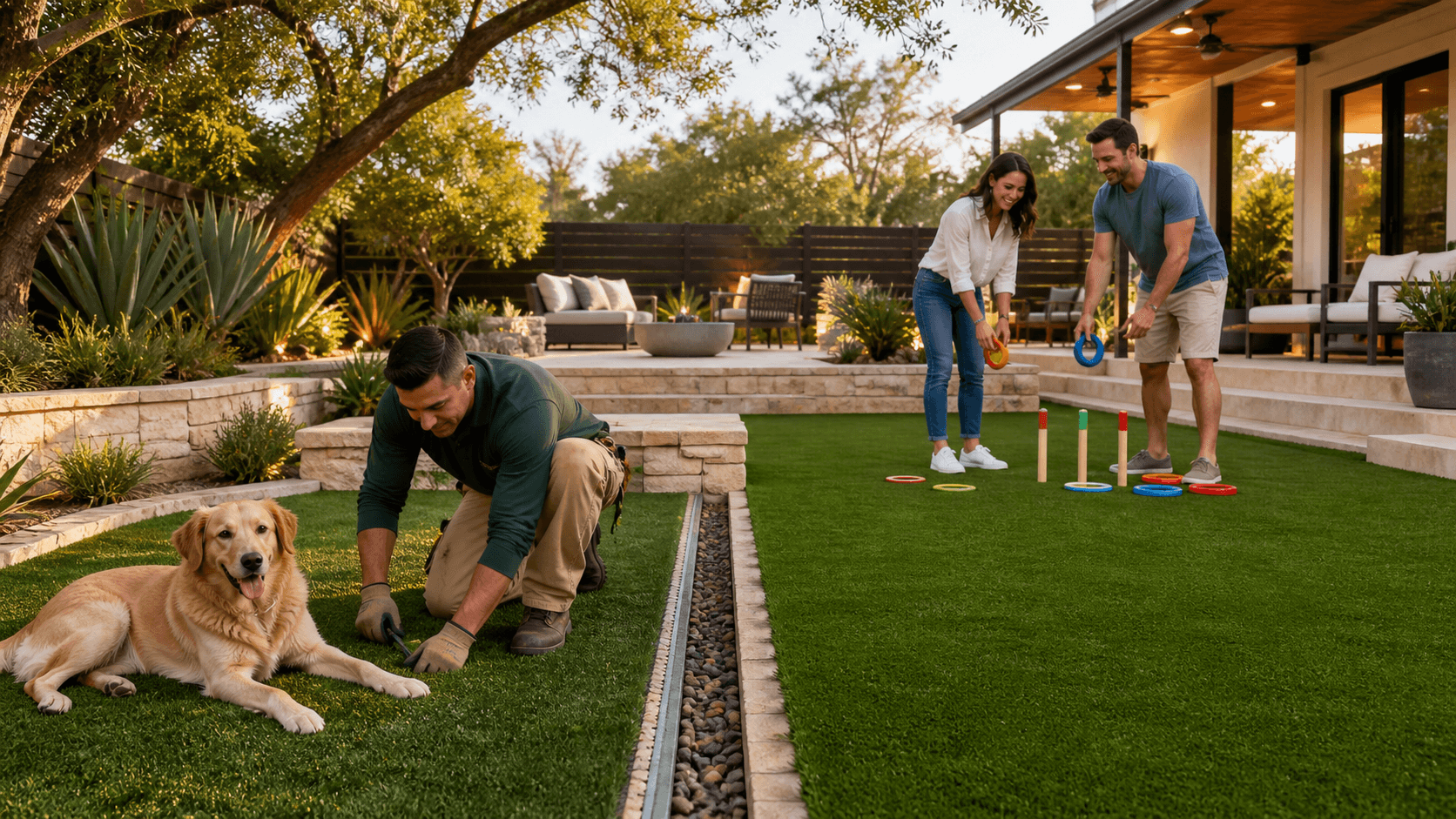
- Adding French drains or channel drains to move water off and away from your turf area
- Rebuilding the base with the right depth and rock blend for Central Texas soils, with proper slope and compaction
- Upgrading older turf to a backing with higher drainage, such as AGL Grass, so your system can keep up with local storm patterns and pet use
It usually works out better in the long run to fix the drainage and base correctly one time instead of chasing smells, soft spots, and failing seams over and over. A well-thought-out base helps every type of turf area, from pet zones to putting greens to family play lawns. After storms, the surface comes back faster, stays cleaner, and is ready to use again without a big mess.
Building a Yard That Beats Austin Heat and Storms
The big picture is pretty simple. Run the hose test on your artificial lawn in Austin, pay attention to where water lingers and for how long, and notice any odors or squishy spots. Try careful cleaning and clearing around borders and drains. Then decide if a drainage upgrade is worth it for how your family, pets, and friends actually use the space.
When drainage is right, your turf works with our Texas weather instead of fighting it. Pet areas stay fresher, putting greens roll better, and backyard hangouts stay open more days of the year. At TexasTurf, we build turf systems for local heat, heavy play, and pets, and we are the exclusive Texas provider of AGL Grass no-infill systems that are made for easy cleaning and low-fuss yards. If you document your hose tests with a few photos or short videos, a turf pro can quickly see what is going on below the surface and help you decide the best next step.
Get Started With Your Project Today
Transform your yard into a beautiful, low-maintenance space with our custom-designed artificial lawn in Austin solutions. At TexasTurf, we listen to your goals and create a design that fits your lifestyle, budget, and property. If you are ready to explore your options or have questions about your project, please contact us so we can help you take the next step.