Design a Cleaner Dog Run Before You Install a Single Roll
A sanitary artificial turf dog run starts long before the turf shows up in your yard. It starts with a smart layout that works with your pets, your home, and our Central Texas weather. When the space is planned right, daily cleanup is quick, odors stay under control, and you are not spending every evening chasing muddy paw prints with a hose.
When we talk about sanitary artificial turf in a Texas backyard, we mean a surface that is easy to rinse, drains fast, holds up to heavy pet use, and does not turn into a smelly swamp after a storm. In the Austin area, that also means planning for hard rain, clay pockets, and long stretches of warm, sunny days.
At TexasTurf, we work with local soils and heat every day, and we see how much layout decisions matter. Our AGL Grass no-infill systems make rinsing and even power-washing simpler, since there is no loose infill to splash onto patios or track inside. In this article, we will walk through how to plan zones for play and potty, set smart drainage paths, and place rinse stations so your turf dog run stays cleaner with less effort, even through fall storms and warm afternoons.
Map Smart Zones for Cleaner, Sanitary Dog Runs
One of the easiest ways to keep a dog run clean is to stop thinking of it as one big open space. Zoning breaks the area into smaller roles so mess and wear are more predictable and easier to manage.
Helpful zones usually include:
- A primary potty zone
- High-traffic play lanes
- Shady rest spots
- Clear human access paths
A dedicated potty zone is the heart of a sanitary layout. When most waste happens in one area on the turf, you can scoop faster, rinse more often, and treat odors right where they start. That is much easier than chasing random spots across the entire yard.
Placement matters. We usually aim to:
- Keep the potty zone close enough to a door or gate that dogs head there first
- Keep it away from main seating areas so guests are not walking through it
- Line up human paths so you are not stepping through a "minefield" to reach gates or AC units
Austin yards come in all shapes. Narrow side yards can work well as long, simple potty lanes, with play space in the wider part of the yard. Sloped lots might get a potty zone on the higher end, so waste and rinse water run away from the house. Small urban backyards may need a combo zone, but we still separate a main potty side from a main play side as much as the space allows.
AGL Grass no-infill systems can be especially helpful in the main potty zone or even the whole run. Without loose infill, there is less material to get kicked onto patios or into the house, which helps keep indoor floors cleaner and reduces that gritty feel under bare feet.
Build Drainage Paths That Beat Austin Downpours
Good drainage is the backbone of any sanitary artificial turf dog run. If water sits on the surface or in the base, odors build up, bacteria can grow, and you end up with damp, smelly corners that never quite dry out.
A pet-friendly drainage design usually includes:
- Proper grading so water flows away from the house
- The right compacted base materials that let water move through
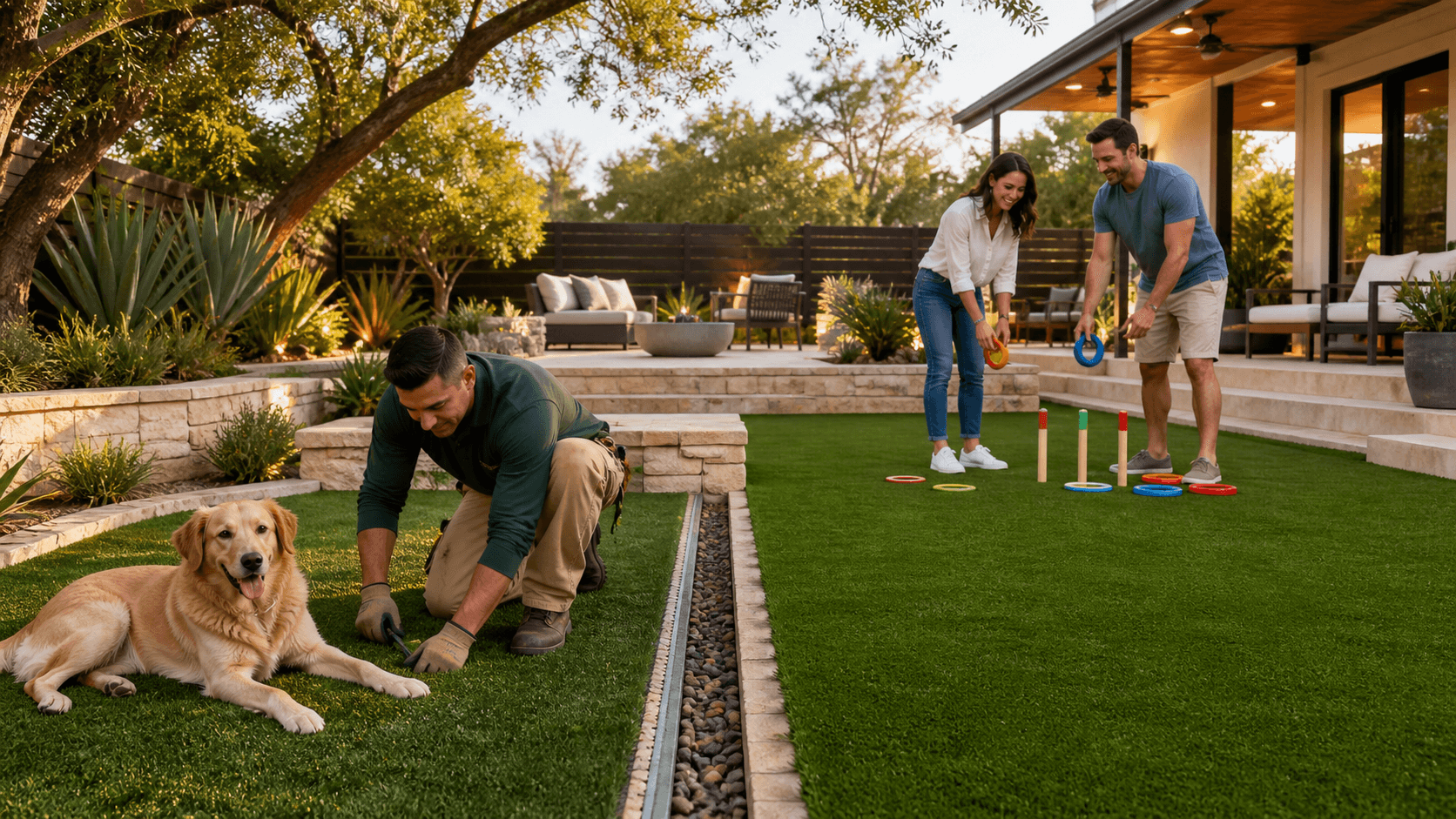
- Drainage channels or French drains where natural slope is not enough
In the Austin area, we have a few extra things to think about. Heavy fall thunderstorms can drop a lot of water in a short time. Some neighborhoods sit on clay-heavy soils that hold water instead of letting it sink in. Flat lots might not look like a problem at first, but without added slope in the base, water can pool under the turf and cause long-term odor.
A well-built system sets a planned exit path for everything: rain, urine, and rinse water. That means the water moves toward:
- Drains or gravel strips instead of under your patio
- Your own drainage paths, not under a neighbor's fence
- Slightly lower, well-vented areas where it can soak in or move away
AGL Grass pairs nicely with this kind of base. The no-infill-system design and open backing help water, cleaner, and disinfecting rinses move quickly through the turf instead of getting trapped. That leads to faster dry times and less odor, especially helpful in warm, humid stretches when smells can flare up.
Rinse Stations That Make Daily Cleanup Almost Automatic
If drainage is the backbone, rinse stations are the daily driver. A quick rinse after picking up solid waste keeps odors from settling into the fibers and makes sanitary artificial turf feel fresh day after day.
Good rinse station spots often include:
- Near existing hose bibs
- Along fence lines by the potty zone
- Right by the main dog gate, so rinsing becomes part of your routine
The goal is to make rinsing so easy you barely think about it. If you have to drag a hose across the whole yard every time, it will not happen as often. Small touches help, like:
- A simple hose with a high-pressure spray nozzle
- Quick-connect fittings so you can click on and off fast
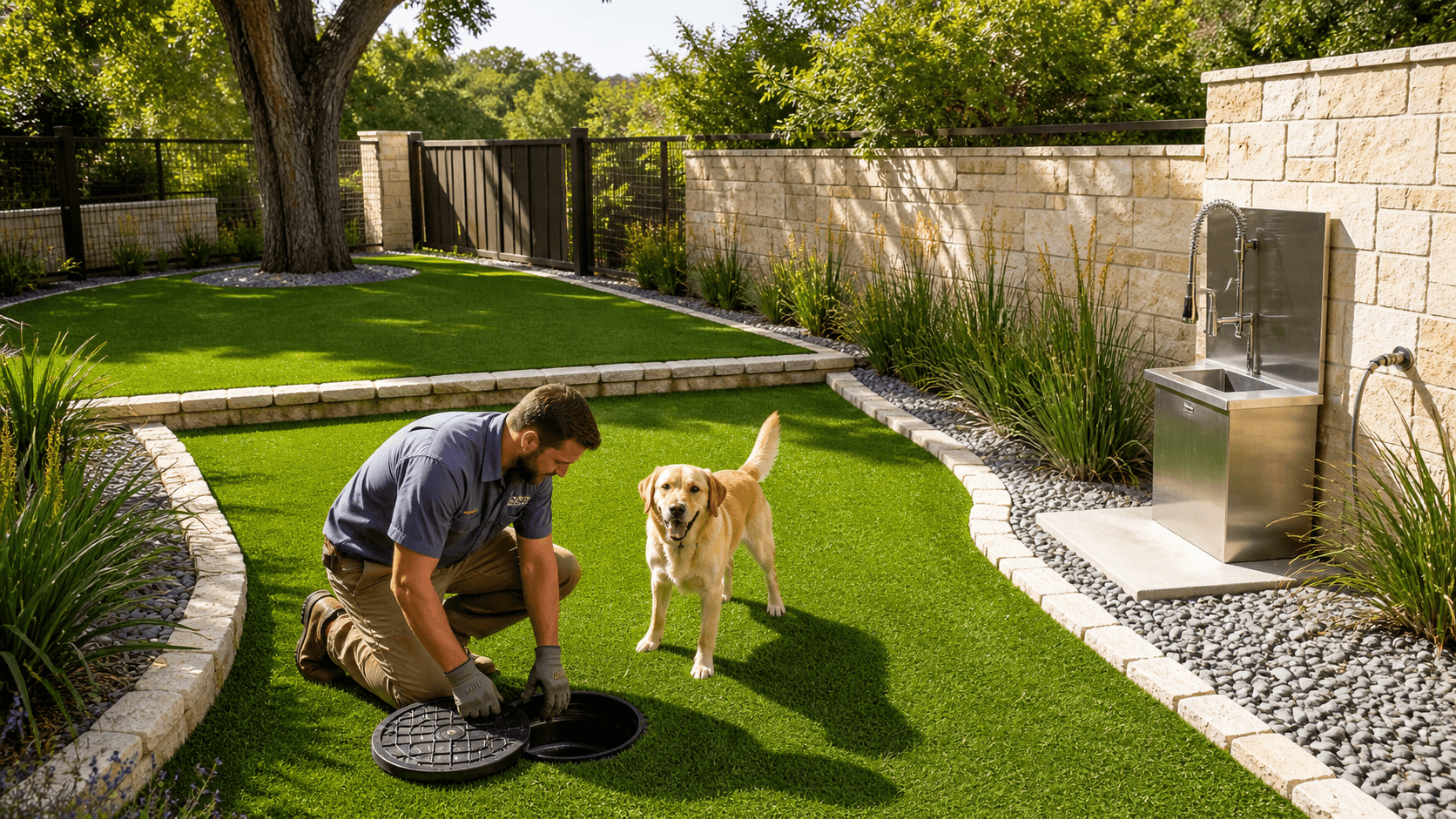
- Wall-mounted sprayers or a short dedicated pet-rinse spigot near the dog run
This is where a no-infill system like AGL Grass really shines. You can power-wash stubborn spots without blasting infill all over the place. Because there is no infill layer to hold moisture, regular rinses work better, and the turf can dry faster between uses.
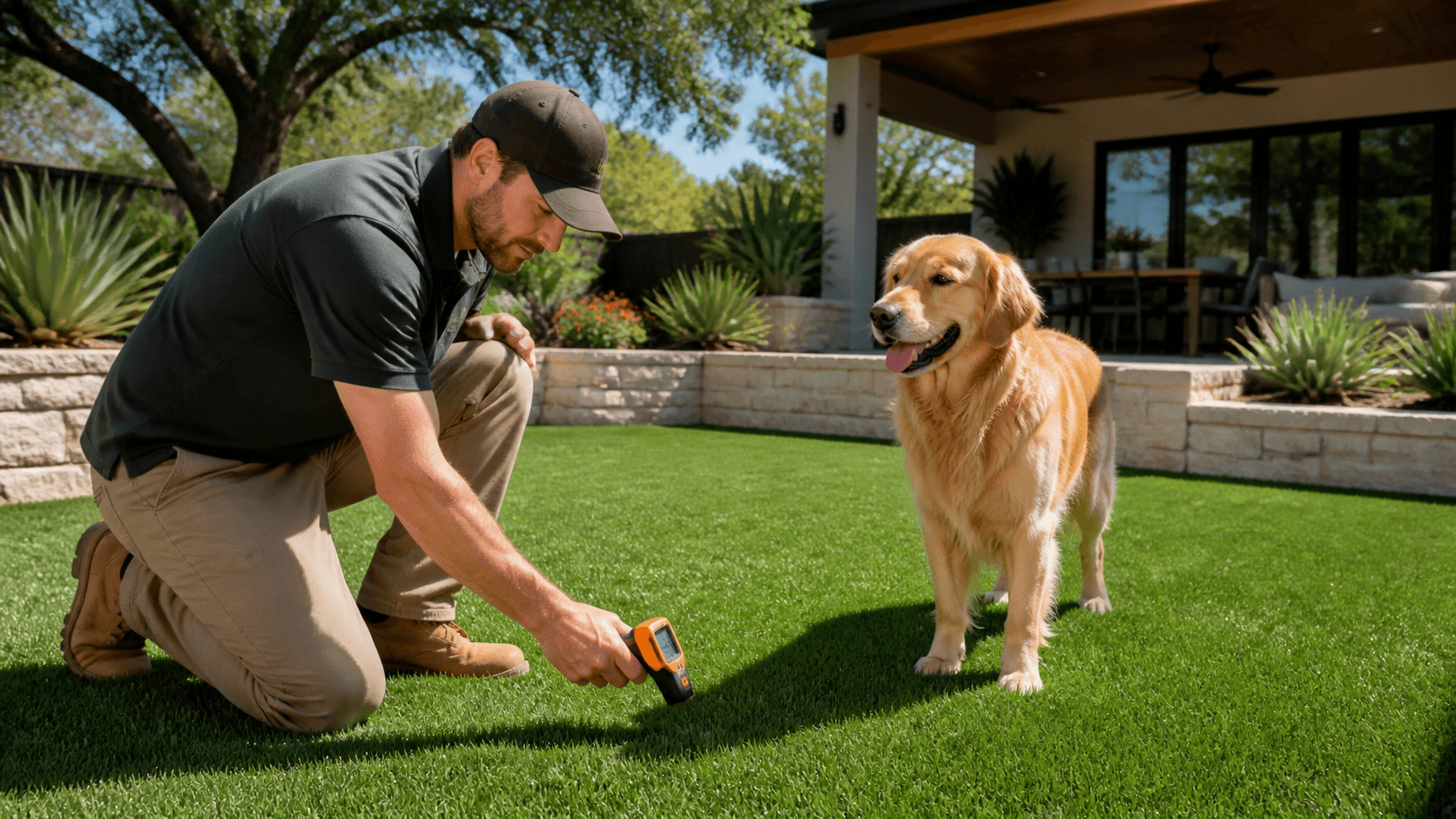
During fall in Austin, we still get plenty of warm afternoons. Regular light rinses, especially in potty zones and high-use corners, keep odors from baking in when the sun hits. With rinse stations in the right place, that upkeep feels more like a quick habit than a chore.
Make Maintenance Routine, Not a Weekend Project
Even the best sanitary artificial turf dog run needs some consistent care. The goal is not zero maintenance; it is light, simple maintenance that fits into your normal week instead of stealing your whole weekend.
A realistic, simple schedule might look like:
- Daily or every-other-day solid waste pickup
- Quick spot rinses in the potty zone after pickups
- Weekly hose-downs in the heaviest use areas
- Occasional deeper cleaning during long hot, dry stretches
Odor management is easier if you stay ahead of it. That can include:
- Using pet-safe turf cleaners as needed in potty zones
- Checking drainage outlets for leaves or debris
- Lightly brushing turf fibers now and then to keep them upright and avoid matted, smelly patches
When turf is installed with the right base, slope, and zoning, each of these tasks takes less time. Waste is concentrated where it needs to be, water flows where you planned, and you are not fighting hidden low spots or soggy corners.
AGL Grass no-infill systems can also make occasional power-washing more straightforward, especially for homes with multiple dogs. If you like to freshen everything up before holiday guests or backyard get-togethers, it is nice to know you can rinse and wash hard without worrying about blowing loose infill all over your lawn furniture.
Plan Your Dog Run Layout with a Local Turf Pro
Sanitary artificial turf for Austin dog runs is not only about the turf itself. The real magic happens when smart zoning, good drainage paths, and convenient rinse stations all work together. That is what turns a basic dog run into a low-mess, easy-to-clean space that feels good to use every day.
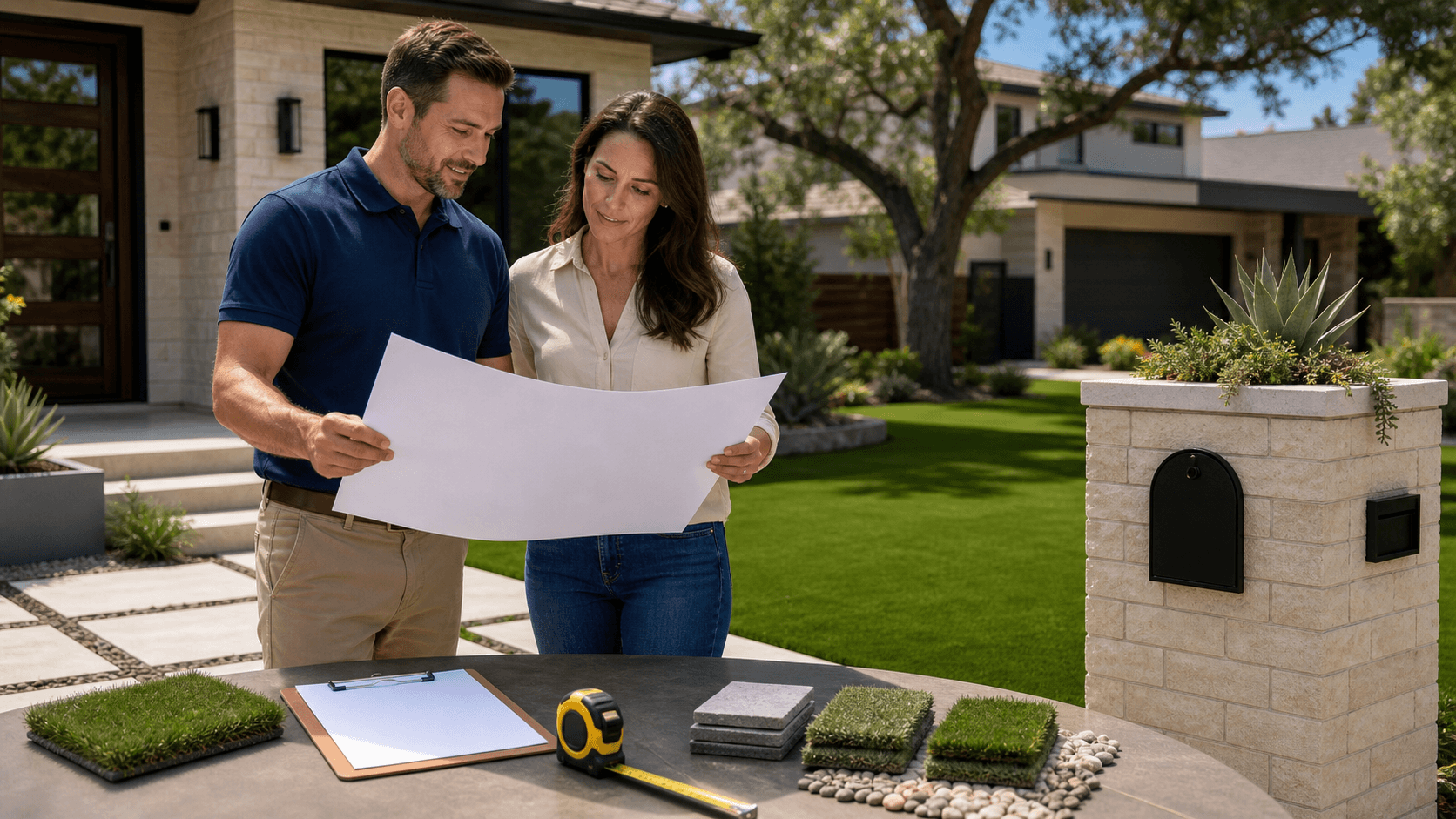
A great first step is to grab a simple sketch of your yard and mark:
- Where your dogs enter and exit
- Where you would like the main potty zone to be
- Where a rinse station would feel easiest to use morning and evening
From there, a local turf specialist who understands our soils, slopes, and weather patterns can help fine-tune the plan and recommend the right turf system for your pets and space. TexasTurf serves the Austin area and is the exclusive Texas installer for AGL Grass no-infill turf, which is designed to be easier to rinse and power-wash for pet, family, and low-maintenance yards. As fall schedules fill up with school events and holiday plans, planning your dog run layout now helps you enjoy cleaner, simpler backyard time when those cooler evenings and longer hangouts roll around.
Get Started With Your Project Today
Explore our sanitary artificial turf options and let us help you create a cleaner, safer outdoor space that fits your needs. At TexasTurf, we listen to your goals and recommend products that match your lifestyle, budget, and maintenance preferences. If you are ready to talk details or schedule a consultation, simply contact us and we will guide you through the next steps.