Beat Austin Heat with Smarter Pet Turf Choices
No-infill pet turf in Austin backyards can make the difference between a yard your dog actually uses and a yard everyone avoids by late afternoon. When September still brings triple-digit days and the kids are back in school, a lot of dogs end up stuck inside while the backyard sits too hot to touch.
Not all "pet-friendly turf" works the same way. How it feels under paws, how fast it drains, how easy it is to clean, and how bad it smells after a long stretch of use all come down to what is under those green blades. The backing, infill, and layout matter as much as the turf itself.
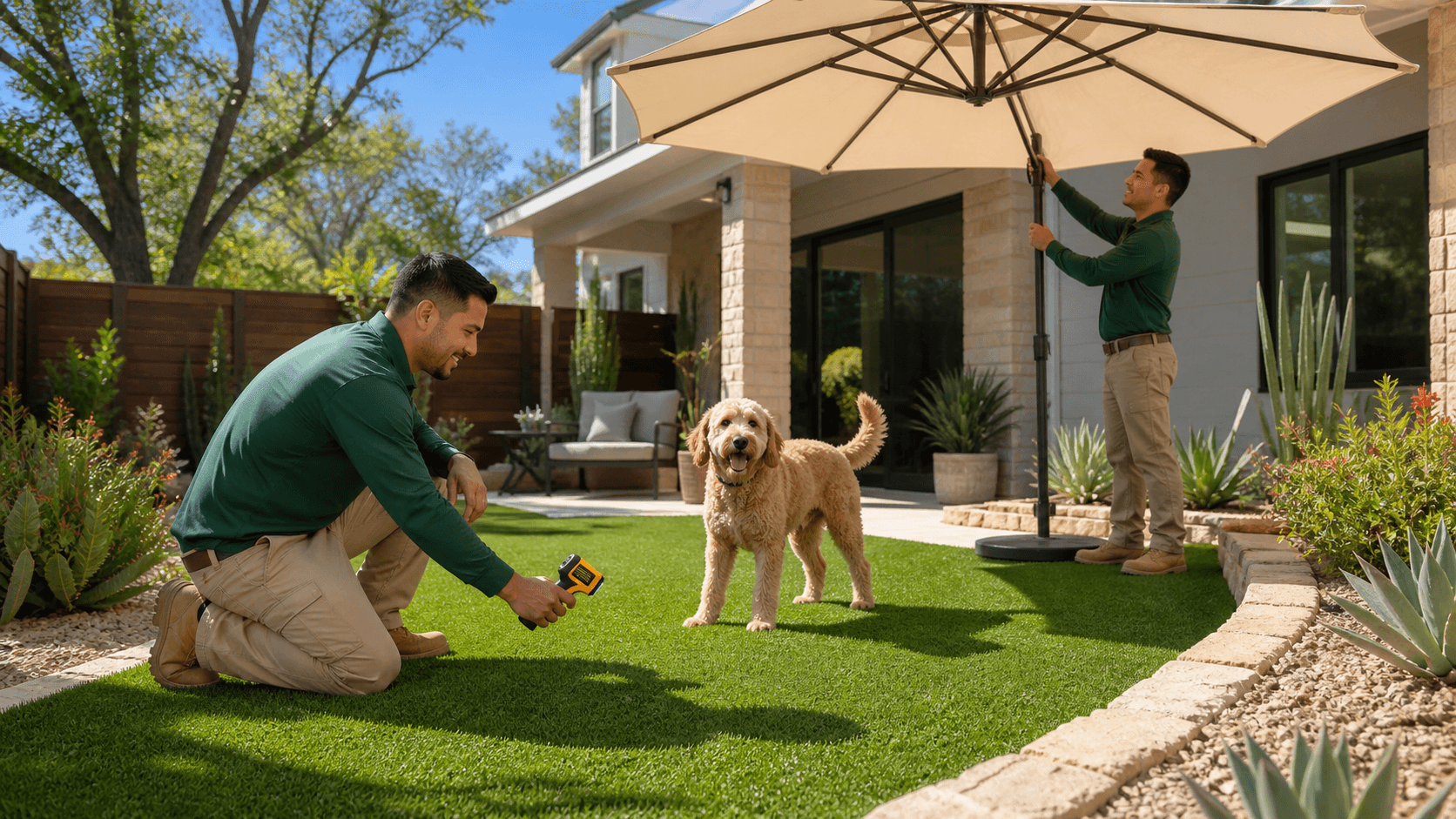
We want to walk you through how different turf systems behave in real Austin backyards. We will look at surface temperatures, simple shade strategies, and how no-infill turf stacks up against traditional infill and hybrid designs. We are a local, family-owned installer, and as the exclusive Texas provider of AGL Grass, we have spent a lot of time on hot patios with an infrared thermometer in hand.
How No-Infill Pet Turf Actually Works Under Texas Paws
Most pet turf systems in Austin fall into three main groups:
- No-infill turf that does not rely on loose rubber or sand
- Traditional infill turf with rubber, sand, or a mix spread between the blades
- Hybrid systems that use a lighter amount of infill only where it is needed most
No-infill turf, like AGL Grass, is built so the backing and blade design carry the load. The turf stays in place without a heavy blanket of loose material on top. That means no rubber pellets spilling into your pool and less grit stuck in fur or tracked across your floors.
For pet owners, well-designed no-infill systems usually mean:
- Less loose material in paws, fur, and house rugs
- Easier power washing without blasting infill all over the yard
- Better access to the backing for enzyme treatments and odor control
- Cleaner pool decks and patios next to dog runs
AGL Grass uses a no-infill design that works well for pets and families. Its backing is built to handle regular rinsing and power washing, so cleaning up after dogs is more straightforward. Because there is no loose infill to manage, many Austin homeowners like it for play areas where kids and pets share the space and want to avoid extra mess.
Real Surface Temperature Tests in Austin Backyards
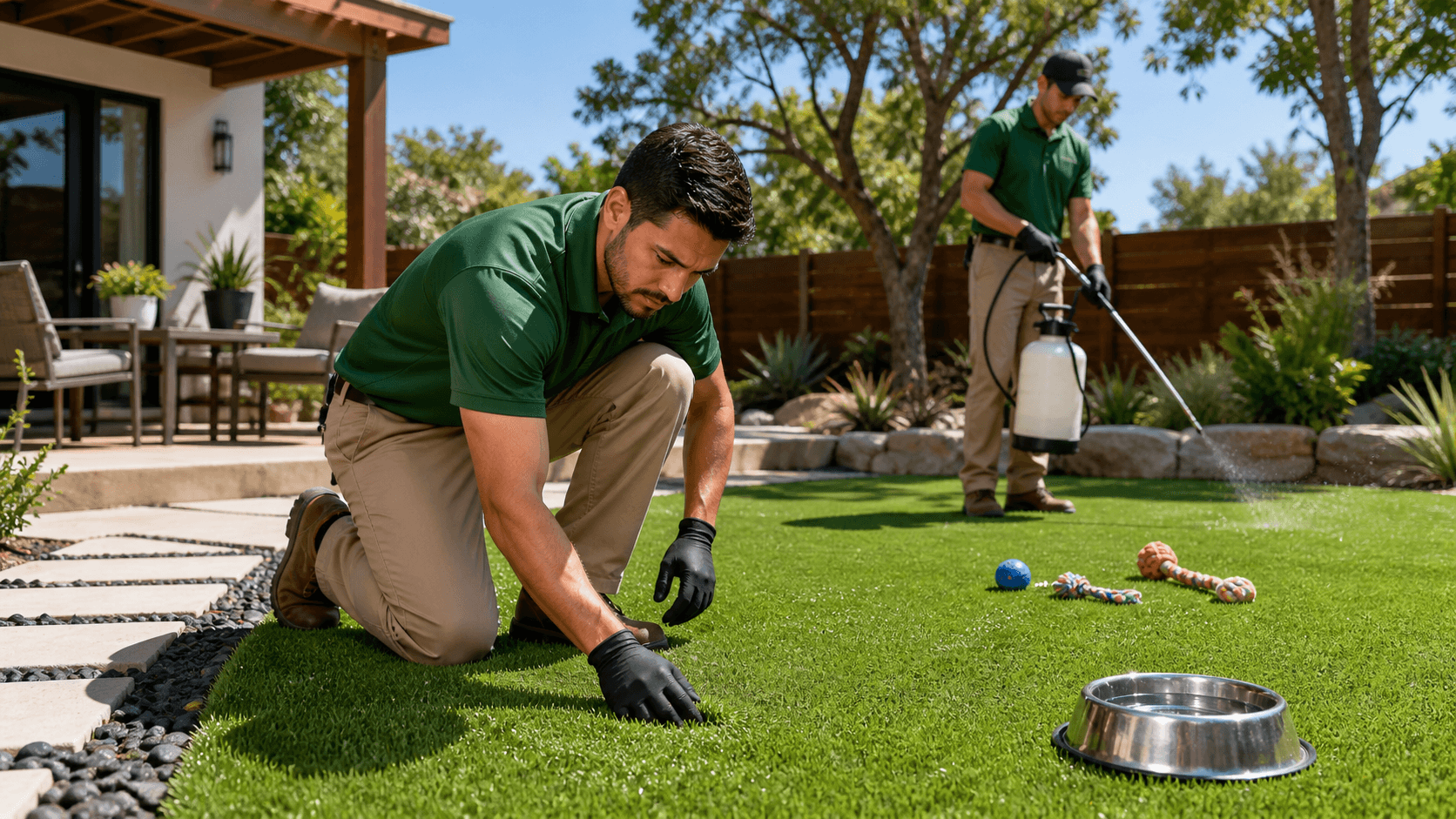
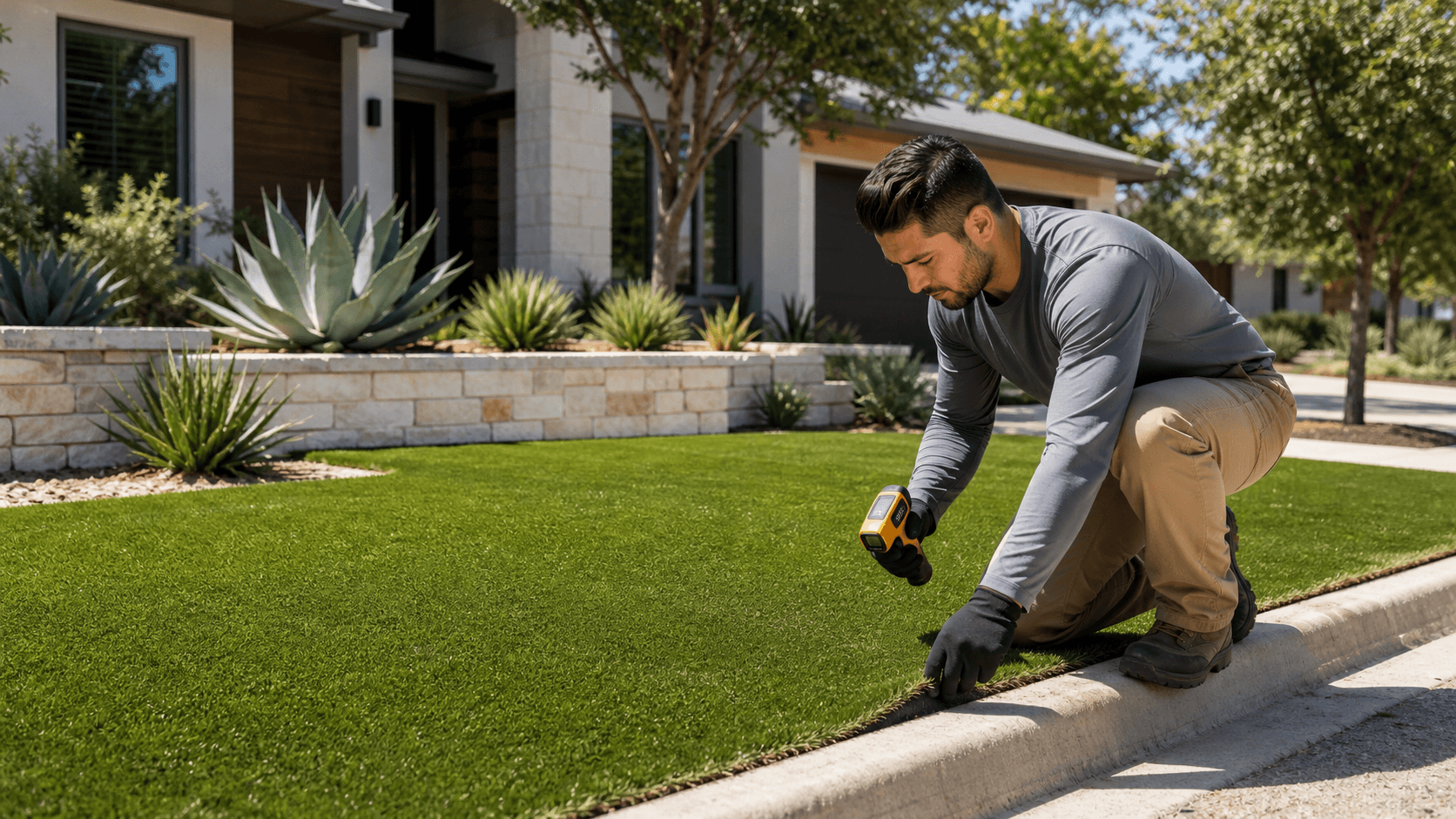
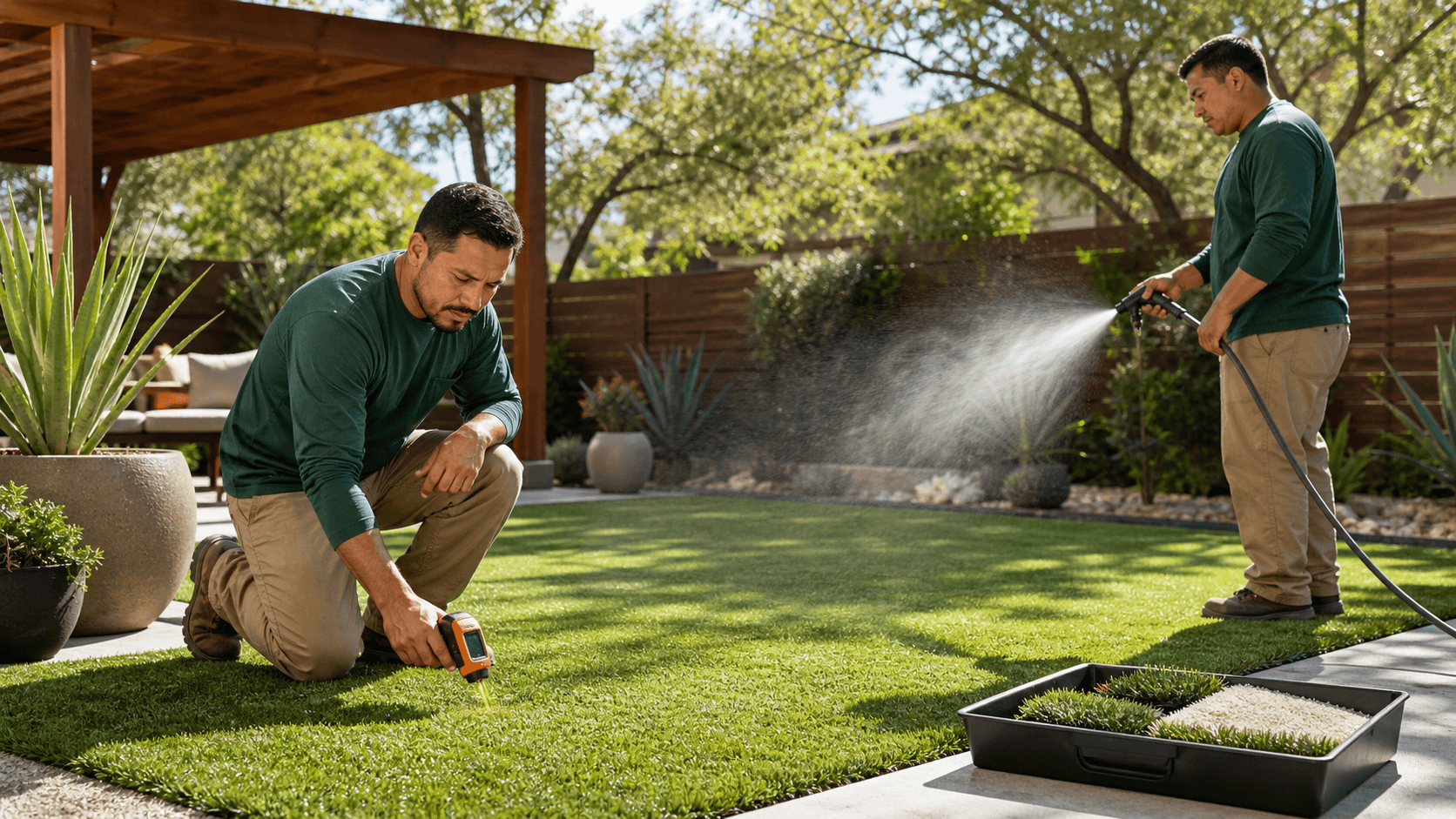
We spend a lot of time checking turf temperatures the same way a homeowner would. An infrared thermometer, a sunny day, and a few different surfaces in the same yard tell you a lot about what your dog feels at 4 p.m.
We commonly compare:
- No-infill pet turf in Austin
- Traditional turf with heavier infill
- Hybrid sections with light infill
- Nearby natural grass or concrete for reference
A few patterns show up again and again in Central Texas yards:
- All turf gets warm in direct sun, including no-infill
- Color, blade shape, and backing design can change how hot it feels
- Heavy rubber infill often acts like a heat sink and can feel hotter on bare skin
- Lighter infill or no-infill systems often feel more even and less "spiky" under paws
No-infill pet turf in Austin backyards often feels more consistent, because there is not a separate layer of dark, loose material soaking up heat. Hybrid installs with a light touch of infill can also feel better than older, heavy crumb rubber systems.
Even with the best turf, smart use matters during Austin afternoons. Simple comfort tricks help a lot:
- Touch the turf with your hand or bare foot before letting dogs out in peak sun
- Build paw-friendly paths with pavers or shaded zones for quick relief
- Plan fetch and zoomies for mornings and evenings when surfaces are cooler
Shade, Drainage, and Odor Control for Pet Turf
Shade is one of the biggest helpers for pet turf, and many homeowners are surprised how much difference even a small patch can make. A strip of shade from a fence or a tree can lower how hot the turf feels without changing the turf at all.
Helpful shade ideas for Austin lots include:
- Keeping existing trees when possible
- Adding pergolas or shade sails over dog runs or side yards
- Favoring east- or north-facing locations for pet areas when you have a choice
Even partial afternoon shade can turn a "too hot to touch" space into a workable play area later in the day.
Drainage is another key detail, especially with Austin's clay soils and fast storm bursts. Good pet turf design pays attention to:
- Grading so water moves away from the house and does not pool under the turf
- A solid, well-compacted base layer with the right depth
- A backing that lets urine and rain pass through quickly
With no-infill turf, rinsing can be easier because you are not trying to work urine through a thick layer of rubber or sand. Water and cleaning solutions move directly through the blades and backing, so deep cleaning feels more direct.
Odor control is all about routine:
- Quick rinses in the main potty zones, especially after busy days
- Monthly enzyme treatments to help break down organic material
- Seasonal deep cleans to reset high-traffic areas
Premium no-infill products, including AGL Grass, are well suited for this style of care. You can power wash without chasing infill across the yard, and you get better contact between cleaners and the backing where smells tend to linger.
No-Infill vs. Infill vs. Hybrid: Maintenance and Look
When people compare turf systems, they often start with which turf costs more. In real Austin projects, the bigger drivers are usually what is under the turf and how tricky the site is. Base work, access, and drainage adjustments all affect the total project.
Some homeowners find that premium no-infill systems can simplify long-term care because there is no loose infill to replace or re-level. Over time, that can mean less fuss with materials and grooming.
Day-to-day maintenance looks different for each style:
- No-infill: easy power washing, no loose infill to sweep, simple vacuuming or blowing of leaves, and fewer worries about infill moving into pools or patios
- Infill-based: useful for certain sports areas or specific putting performance, but expects periodic brushing and topping off infill as it moves
- Hybrid: a middle ground, where you keep pet zones lower-maintenance and use infill only where you want extra cushion or ball roll
Curb appeal and comfort underfoot also matter. Modern no-infill pet turf in Austin can look lush and natural without the dark crumb look at the edges. Blade shapes and color blends have come a long way, so the yard does not have that flat, shiny look older products had.
How it feels when you walk on it depends on pile height, density, and base prep. Many homeowners notice:
- A softer, more natural feel where the base is smooth and well-graded
- Better blade recovery after play when the turf is installed correctly
- That the installer's skill often affects long-term appearance more than the brand name
Planning Your Pet-Friendly Backyard with Confidence
Choosing between no-infill, infill, and hybrid turf comes down to how your yard is actually used. A busy dog family will have different needs than someone focused mainly on a backyard putting green.
Here are some simple ways to think about it:
- Lots of dog traffic and easy cleaning at the top of the list? A premium no-infill system in the main pet zones is usually a strong choice.
- Want a putting green or multi-sport lane too? A hybrid layout can keep your pet side low-maintenance while using targeted infill where performance matters.
- Tight lot, rocky spot, or drainage issues? Solid base work and the right backing should be your main focus before you even pick a turf name.
When you talk with an installer, good questions help you get a clear plan. Ask things like:
- What surface temperature checks do you do in real Austin yards?
- How do you design drainage for both pets and heavy rain?
- How will I clean and maintain this exact turf system over time?
At TexasTurf, we focus on helping local homeowners answer those questions and see the options in person. As the exclusive Texas provider of AGL Grass, we can walk you through how a premium no-infill system compares with traditional infill and hybrid designs, so your Austin backyard works for your dogs, your family, and your long-term curb appeal.
Transform Your Yard Into a Cleaner, Safer Pet-Friendly Space
Give your pets a comfortable, low-maintenance outdoor area with our premium No-infill pet turf in Austin designed for cleanliness, durability, and year-round curb appeal. At TexasTurf, we help you choose the right turf system for your property so you can spend less time maintaining your lawn and more time enjoying it. If you are ready to explore options or schedule an on-site consultation, simply contact us and we will walk you through the next steps.