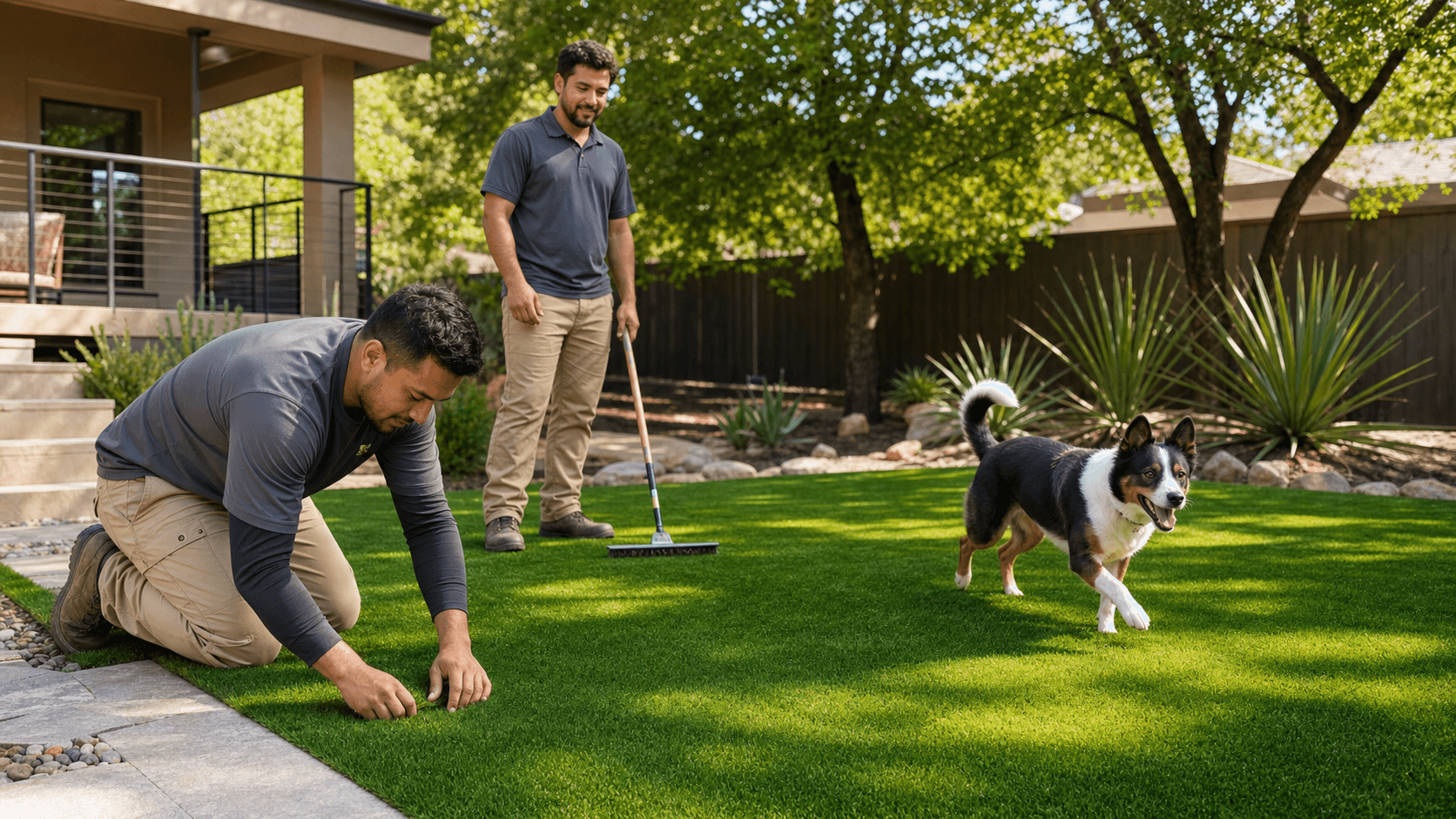
Austin Pet Owners Want Cleaner, Easier Backyards
Keeping natural grass alive under Austin heat, active dogs, and constant foot traffic is tough. Muddy paws after a quick rain, yellow burn spots from urine, and thin, patchy areas where grass just gives up are everyday headaches. Many homeowners feel like they are pouring money into watering and re-sodding, only to end up with the same problems a few months later.
That is why more local pet owners are asking about no-infill pet turf in Austin. In simple terms, it is artificial grass that is designed to work without the loose rubber or sand infill you might have seen on sports fields. As a family-owned artificial turf and landscape design company here at TexasTurf, we work with homeowners and businesses across the Austin area who want yards that look good, drain well, and stand up to pets.
In this article, we will walk through what no-infill pet turf actually is, how it performs in our Central Texas climate, what it costs to live with, and where it does and does not make sense. By the end, you should have a clear sense of whether this style of turf, including options like AGL Grass, is a smart fit for your yard, your pets, and your budget.
What No Infill Pet Turf Really Means for Your Yard
Traditional turf systems usually rely on infill. That is the material brushed into the blades after installation, such as crumb rubber, sand, or specialty infill products. It is there to help keep blades upright, add weight so the turf does not shift, and offer some cushioning underfoot.
No-infill pet turf is built differently. The backing and yarn structure are designed to support the blades without needing that loose material. The turf is typically denser, with a stiffer backing that gives it body on its own. For pet areas, this changes how the turf feels, drains, and cleans.
For everyday life with dogs, fewer loose particles can be a big advantage. With no-infill systems, you are less likely to deal with:
- Tiny rubber pieces stuck in paws or fur
- Granules tracked into your home or car
- Infill collecting in corners or low spots
At TexasTurf, we offer AGL Grass as a premium no-infill option available exclusively through us in Texas. It is designed for pets and families that want a clean, low-maintenance surface without the mess of infill, and it pairs well with backyard putting greens and modern landscape designs.
Pet Comfort, Cleanliness, and Odor Control in Austin Heat
Pet safety and comfort come first. Turf can get warmer than natural grass in direct sun, but the real story depends on color, density, sun exposure, and airflow. In full afternoon sun, any surface will heat up, whether it is concrete, pavers, or grass. With turf, good planning makes a big difference.
Practical ways to keep pets more comfortable include:
- Adding shade from trees, pergolas, or shade sails
- Choosing turf colors and pile types that do not trap as much heat
- Encouraging use in cooler parts of the day
- Using light misting on the hottest days for quick cooldowns
No-infill turf can help keep things cleaner. Without crumb rubber pockets, there are fewer places for bacteria and grime to settle. The flatter, more consistent surface makes it easier to:
- Power-wash when needed
- Remove solid waste thoroughly
- Rinse away residue more completely
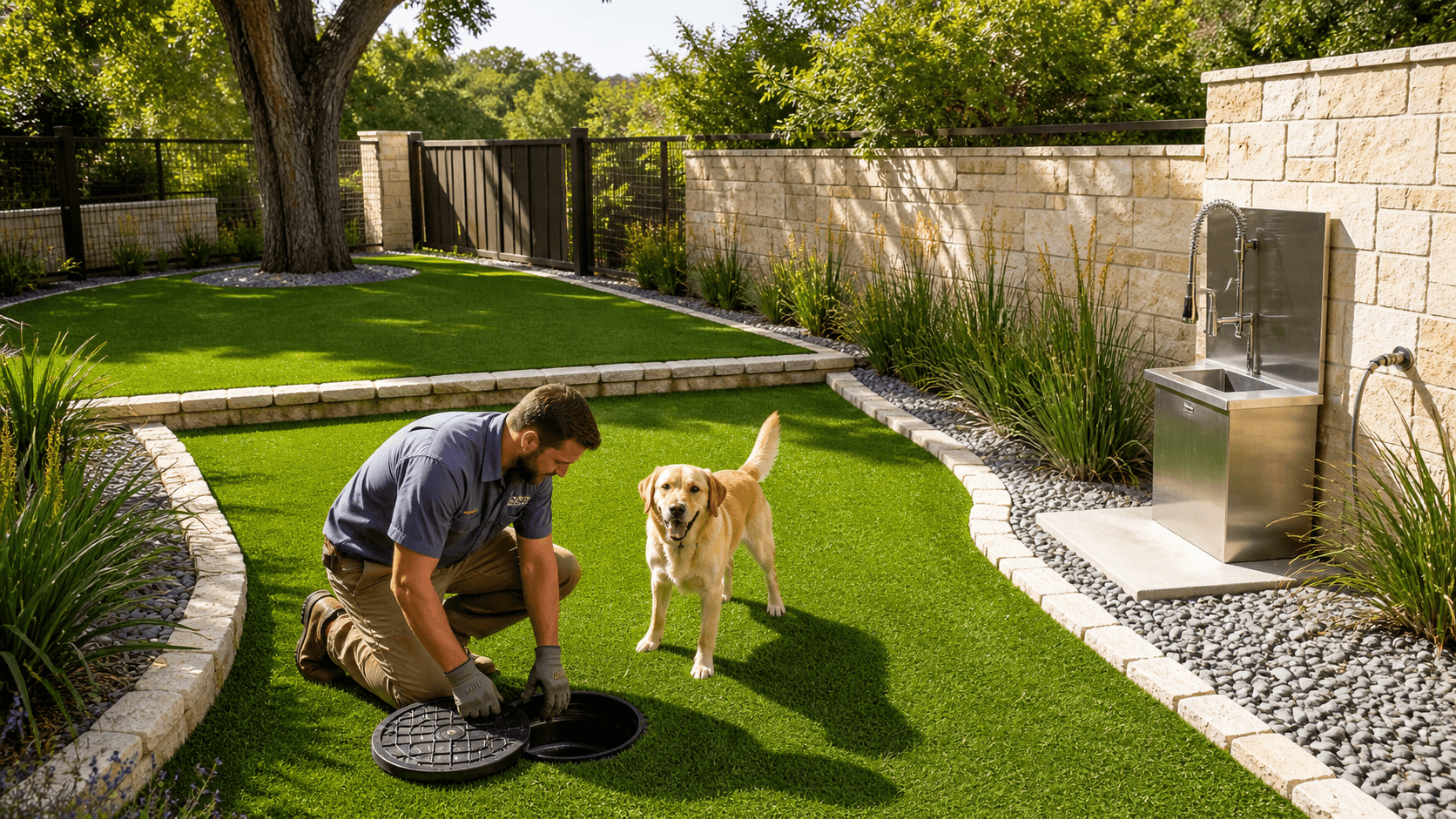
Urine and odor management is a big concern in Austin's heat, especially in small yards or multi-dog homes. Successful odor control depends on three main factors:
- Proper drainage, so liquids do not sit in the base
- Regular rinsing, particularly in high-use areas
- Use of pet-safe cleaners when needed to break down organic matter
AGL Grass is designed to be power-washed and cleaned more easily than many older turf styles. For owners with several dogs or compact city yards, that ability to rinse and reset the surface quickly can be a major quality-of-life improvement.
Drainage and Durability During Austin Storms and Sun
Central Texas weather can swing from long dry spells to sudden heavy downpours. Our clay soils and sloped lots in many Austin neighborhoods make drainage planning essential. Turf that looks great on day one can turn into a soggy, smelly mess if water has nowhere to go.
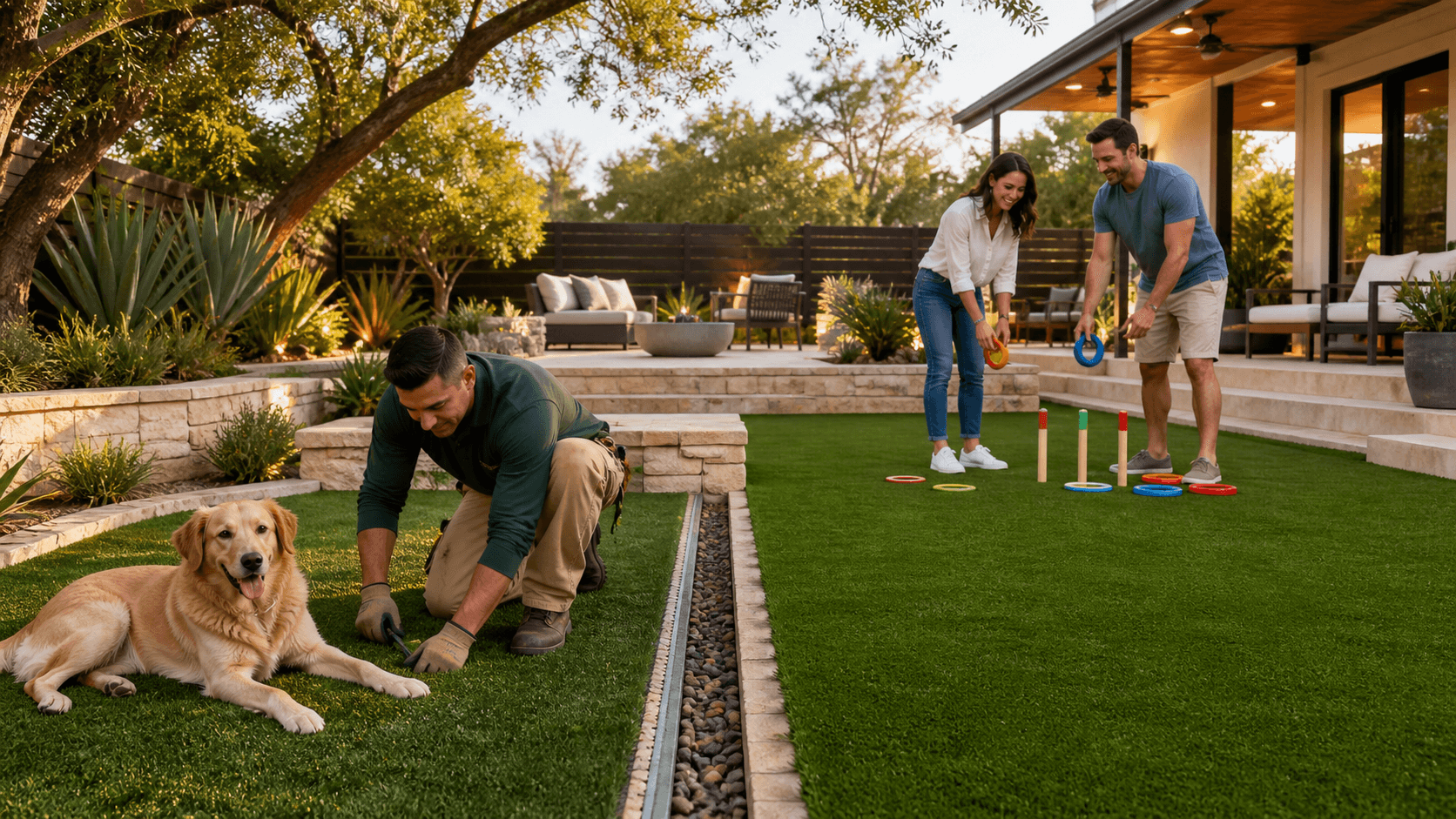
Well-designed no-infill pet turf, installed correctly, can handle these conditions very effectively. The turf backing is perforated to let water pass through into the base. The real work happens underneath, where we focus on:
- A properly graded base that directs water away from structures
- A compacted aggregate layer that lets water move through instead of pooling
- Strategic use of drains in low spots, when needed
Cheap turf or rushed installations can lead to puddling, shifting seams, or smells that never quite go away. With no-infill turf, you do not have loose material helping weigh everything down, so backing strength and careful installation matter even more.
Durability in Austin also means standing up to strong sun and active pets. When we look at products for pet yards, we pay close attention to:
- UV stability to help the turf keep its color over time
- Backing strength without relying on infill support
- Resistance to digging in popular dog paths and corner spots
- Performance in side yards, where traffic is heavy and space is tight
Maintenance, Cost, and Long Term Value for Austin Homes
No-infill pet turf is not maintenance-free, but the work is different from caring for natural grass. Instead of mowing and fertilizing, you are focusing on keeping the surface clean and the blades looking fresh.
A realistic maintenance routine usually includes:
- Regular rinsing, especially in dog bathroom zones
- Brushing high-traffic paths to keep blades standing up
- Blowing or raking leaves and debris off the surface
- Occasional deeper cleaning or power-washing, depending on use
When you compare costs, natural grass often looks cheaper up front but more expensive over time. Sprinkler repairs, watering, mowing, weed control, fertilizing, and re-sodding in dead zones all add up. Quality turf with professional installation is a bigger initial investment, but many homeowners appreciate the predictable, lower-hassle upkeep afterward.
Installation quality has a major impact on total value. A well-built project will have:
- Correct base preparation and compaction
- Tight, properly secured seams that do not separate
- Clean edging and transitions to beds, fences, or hardscapes
- Thoughtful layout around pools, patios, and play features
No-infill pet turf tends to make the most sense in specific areas such as dog runs, shaded backyards where grass struggles, small urban yards that are hard to mow, around pools where you want less mud and clippings, and as the low-maintenance surround for backyard putting greens.
When No Infill Pet Turf Is Not the Best Fit
There are situations where a traditional turf system with infill or even improved natural grass might be the better option. Extremely steep slopes, very large acreage, or specialized sports fields often need different construction methods, infill types, or natural turf for performance reasons.
Some homeowners also prefer a softer, more cushioned feel underfoot, especially in kids' play zones. In those cases, select infill products or different turf systems can provide extra padding that no-infill designs are not intended to deliver.
It is also worth pointing out that many turf horror stories come from budget products or DIY installs that are not designed for Austin's climate. Heat buildup, poor drainage, and lingering odors often reflect product and installation choices, not turf technology as a whole.
The key is to match turf type, base design, and expectations with how your family and pets actually use the space, rather than forcing a one-size-fits-all solution on every yard.
How to Decide If No Infill Pet Turf Is Right for You
If you are weighing no-infill pet turf in Austin, it helps to start with a quick checklist. Ask yourself:
- How many pets do we have, and how big and active are they?
- Where are the worst mud, odor, or dead grass problems now?
- How much direct sun and shade does each part of the yard get?
- What look are we going for, and how low-maintenance do we want it to be?
- How long do we plan to stay in this home?
Walk your yard and make note of trouble zones: narrow side yards that never dry out, high-traffic dog routes along the fence, shady corners where grass never fills in, or tricky spaces that are tough or unpleasant to mow. These spots are often where no-infill turf, including options like AGL Grass, can deliver the biggest payoff in everyday use.
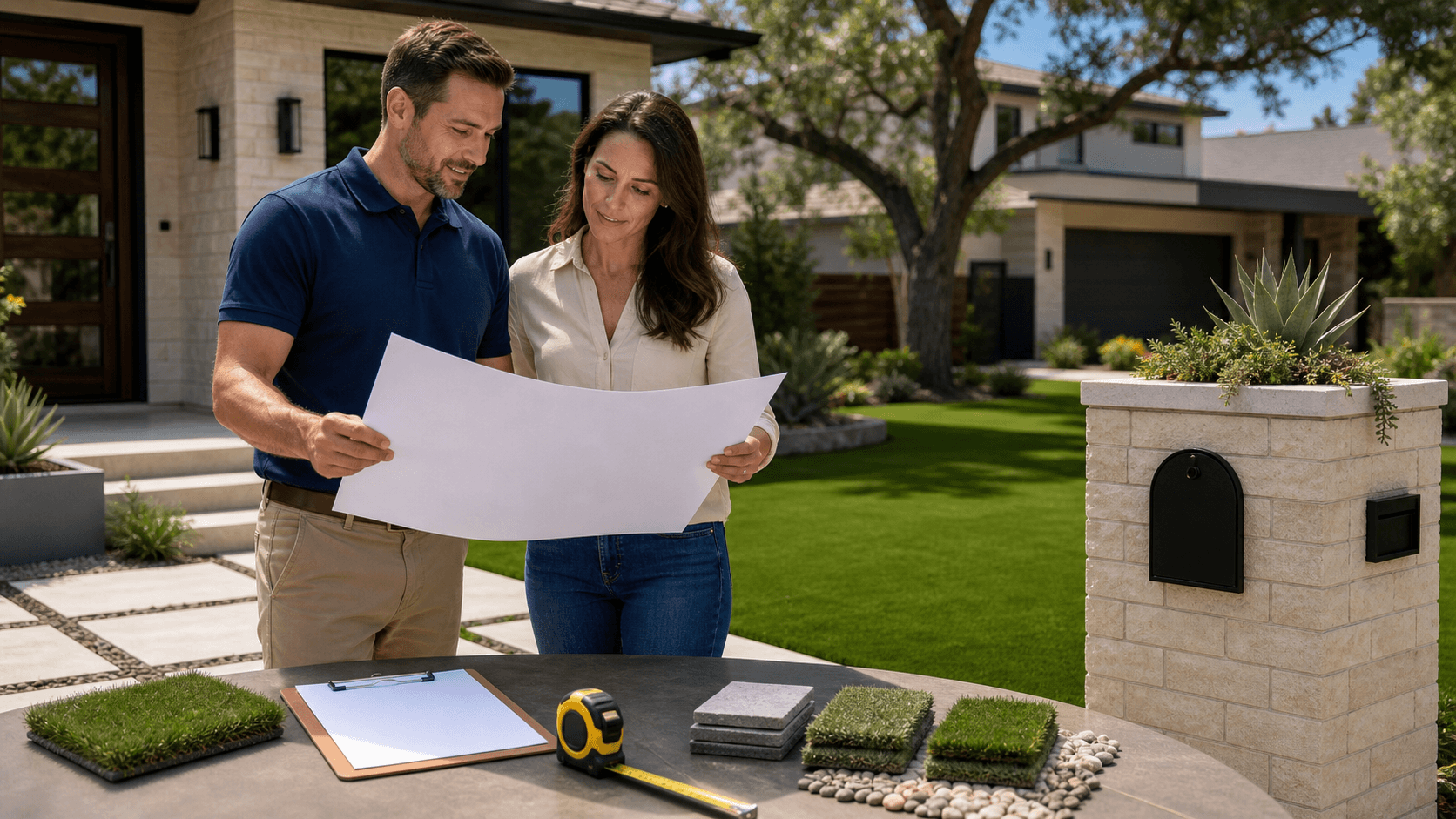
As a local, family-owned company, we spend a lot of time evaluating drainage, slopes, and sun patterns in Central Texas yards. The right solution is rarely just about picking a turf sample. It is about designing a pet-friendly, low-maintenance layout that works with your property and how you actually live outside.
Give Your Pets a Cleaner, Safer Yard Today
If you are ready to upgrade your outdoor space, our team at TexasTurf can help you choose the right No-infill pet turf in Austin for your home. We will walk you through the options, answer your questions, and provide a clear installation plan. Reach out through our contact page to schedule a consultation and get a customized quote.