Why Drainage Matters for Austin Artificial Grass Yards
Drainage is one of the biggest things that can make or break fake grass in Austin. Our storms hit hard and fast, and the water has to go somewhere. If it cannot move through your turf system and away from your home, you get puddles, mud along the edges, and a yard that no one wants to use.
Around Central Texas, we deal with sudden heavy downpours, flash flooding, and clay-heavy soils that stay sticky and hold water. Homeowners worry about standing water, bad smells, mosquitoes, and even damage to patios or foundations when water keeps sitting in the wrong spots. Those concerns are real, but most of the scary stories come from turf that was installed without a real drainage plan.
Our goal here is simple: clear up some common myths about drainage, explain how a proper turf system should work, and help you know what to ask before you commit to fake grass in Austin.
Myth 1: Artificial Grass Always Puddles When It Rains
When people see puddles on turf, they often blame the grass itself. In most cases, the problem is not the turf. It is what is going on underneath it. Bad grading, low spots, and clay soil that was never addressed are usually the real issue.
A professional installer builds a drainage plan before a single roll of turf is laid. That plan should include things like:
- Creating a gentle slope away from the house and structures
- Using the right base depth so water has room to move
- Managing downspouts, pool overflows, and patio edges
- Avoiding "bowls" where water gets trapped
In a natural lawn, you can usually spot drainage issues before turf goes in. Watch your yard during a heavy rain. If you see:
- Water pooling in the same spots every time
- Soil that stays soggy long after the rest has dried
- Runoff racing toward your foundation or patio
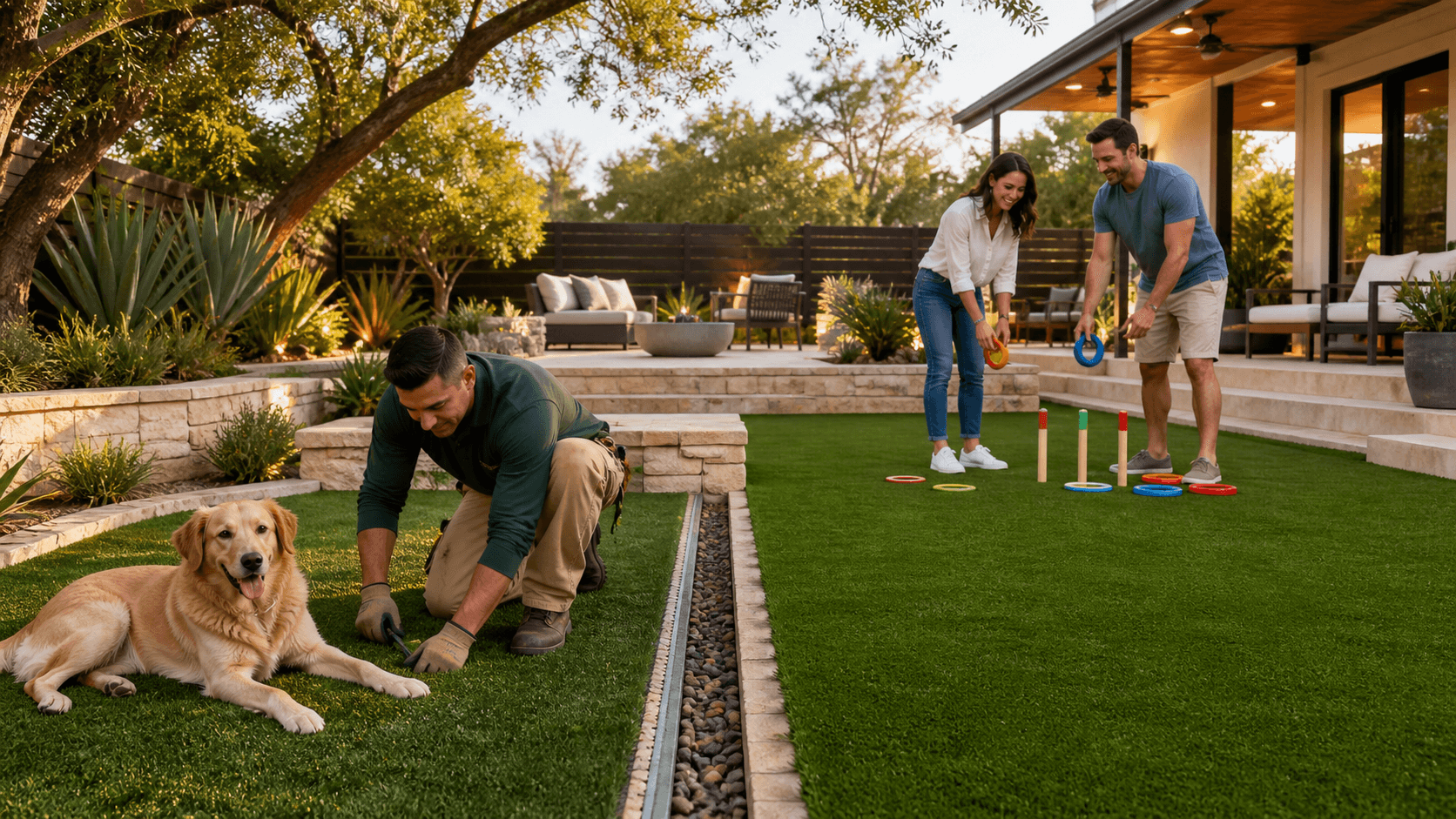
then those problems must be fixed during installation. Sometimes that means adding French drains or channel drains to give water a clear path out of the area. When the base and grading are done right, a quality turf product will shed water quickly and consistently.
Myth 2: Fake Grass Traps Pet Urine and Starts to Smell
Pet odor is one of the biggest fears we hear about artificial grass. The smell is not automatic, though. It usually shows up when drainage was not planned for pets or the wrong materials were used.
Pet urine becomes a problem when:
- The yard is very flat with little or no slope
- The base layer does not drain well
- The turf backing acts like a sponge
- The infill holds moisture and bacteria
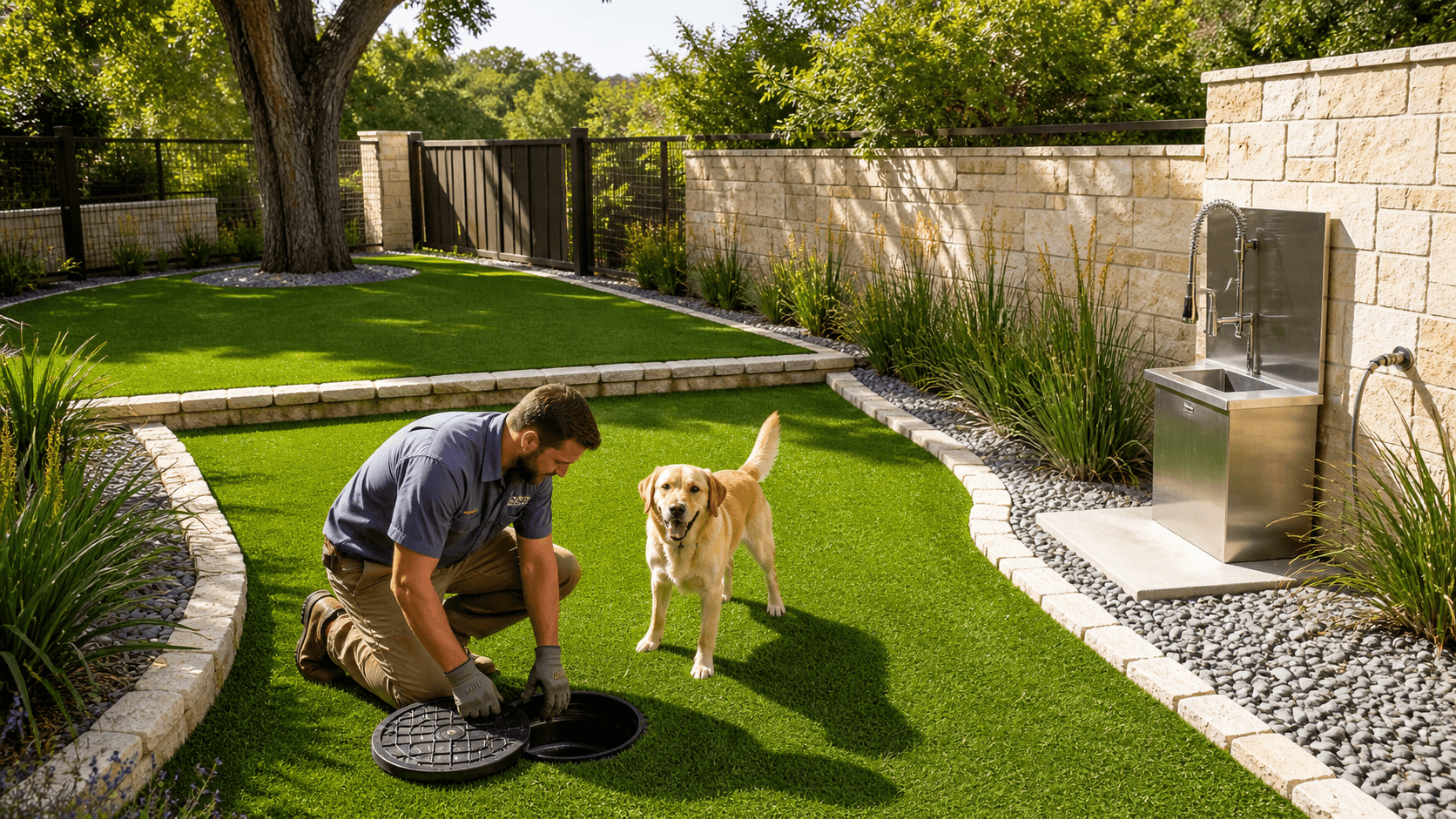
A quality pet turf system is designed so liquids move both down and out. That means the urine goes through the backing, into a free-draining base, and then away from the surface instead of sitting there and baking in the Texas sun.
This is where AGL Grass stands out. It is a no-infill system with a highly permeable backing, so there is no heavy layer of loose material for urine to soak into. You can power wash it, which makes cleanup simple and helps keep odors under control. With no loose infill, you also avoid sand or rubber being tracked into the house on dog paws or kid shoes.
For Austin homes with dogs, that kind of drainage and easy cleaning can make the difference between a yard you love and one you try not to smell.
Myth 3: Drainage Is Just About the Turf Backing
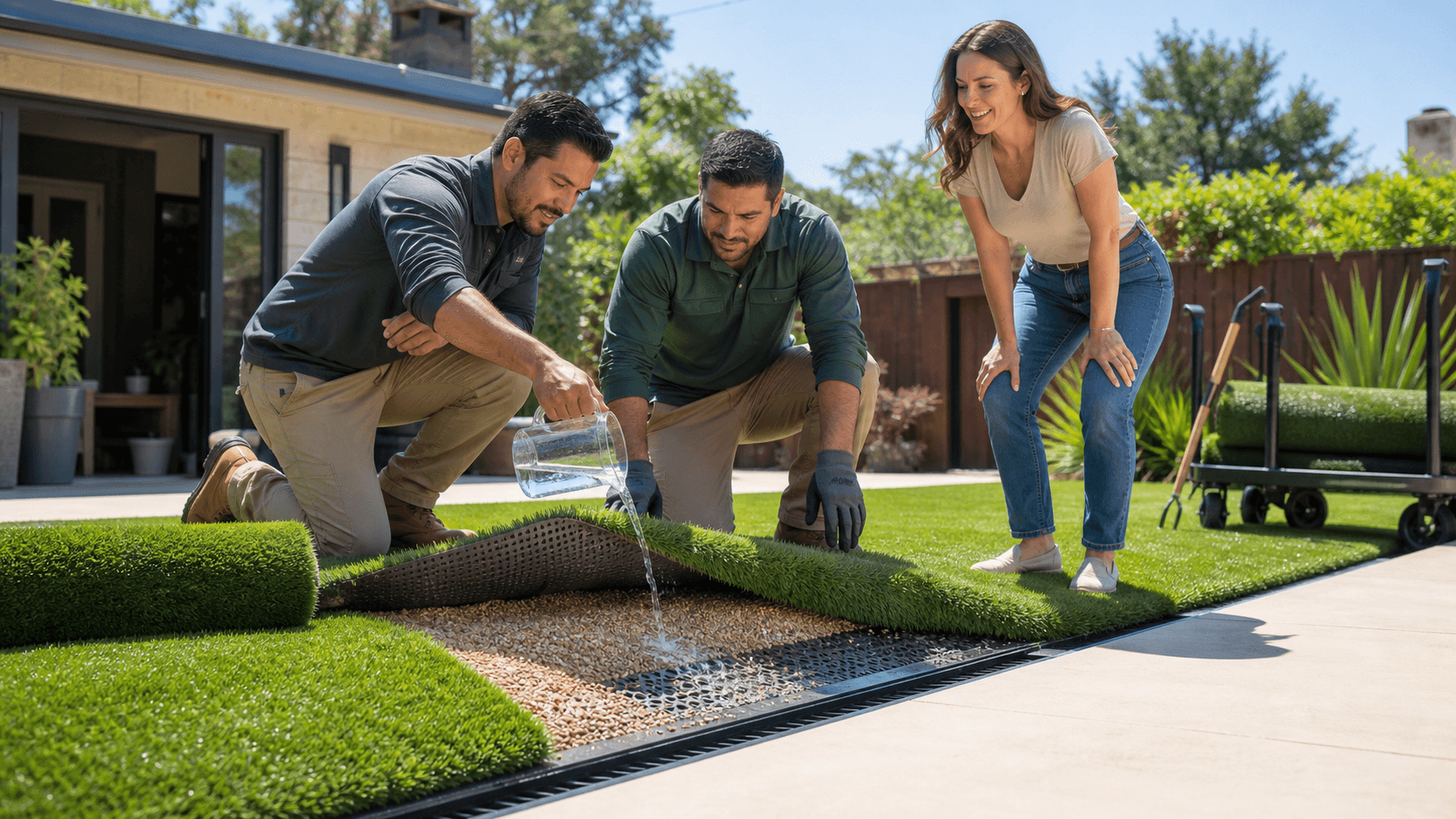
Many people focus only on drainage holes in the turf backing. Those matter, but they are just one piece of the system. The way your whole yard handles water depends on several layers working together.
A complete drainage plan considers:
- The native soil: heavy clay, rocky soil, or mixed fill
- The base layers: materials, thickness, and compaction
- The turf itself: permeability and how seams are joined
- The edges: how turf meets concrete, fences, or garden beds
In Central Texas, the soil under fake grass in Austin can shift a lot from one property to the next. Some yards sit on sticky clay, others on thin rocky ground, and many have a mix. A good installer will evaluate what is there and adjust the base depth and material so water can move instead of getting trapped.
Different parts of your yard may need special attention. For example, turf around pools must handle splash-out and cleaning water without washing infill into the pool. Under live oaks, you often need to protect roots and still let water reach them. Tight side yards and steep Hill Country slopes can send runoff racing toward gates or neighbors if the flow is not managed.
When each layer is designed to support the next, you get turf that looks great and drains well through storm seasons and daily use.
Myth 4: More Infill Always Improves Drainage
Infill is the material that sometimes gets spread into turf fibers. Its main jobs are to add weight, help blades stand up, and in some cases keep the surface a bit cooler. Many people assume that more infill must be better for drainage, but that is not how it works.
Too much infill can:
- Slow down drainage by filling tiny air gaps
- Hold onto moisture and odors, especially in pet areas
- Migrate into pools, patios, and flower beds
- Make big cleanups harder after heavy Texas thunderstorms
For busy families and pet owners, that extra material can become a headache. Every time it rains hard or the dogs sprint across the lawn, some of that infill wants to move.
Traditional turf systems rely on infill, but AGL Grass is different. It is a no-infill system, so there is much less material to trap moisture or odors. Water rinses through the backing and base easily, and you can power wash the surface for a reset. That makes long-term care simpler, especially for pet zones, play areas, and outdoor living spaces that see a lot of traffic.
Myth 5: If It Drains Today, It Will Drain Forever
Even a yard that drains well on day one can change over time. Our Texas heat, foot traffic, kids playing, and seasonal storms all work on the ground below your turf. If the base was not built correctly, it can settle in spots and create new low areas where water starts to collect.
Good artificial grass does not mean "set it and forget it." It does best with light, regular attention, such as:
- Checking edges and seams after major storm seasons
- Watching for new puddles or soft spots
- Keeping drains, gutters, and downspouts clear
- Rinsing high-use pet areas so the base stays clean
Working with a local expert who understands Central Texas soils, city rules, and common HOA expectations helps a lot on the front end. When the system is planned for long-term performance, you are far less likely to fight new drainage surprises a year or two down the road.
Turn Your Drainage Questions Into a Solid Plan
If you are thinking about fake grass in Austin, start by looking at how your yard behaves right now. During the next hard rain, note where the water goes. Ask yourself:
- Where does water naturally collect or run off?
- How do pets use the space, and where do they usually go?
- Which areas do you want to keep clean and dry year-round?
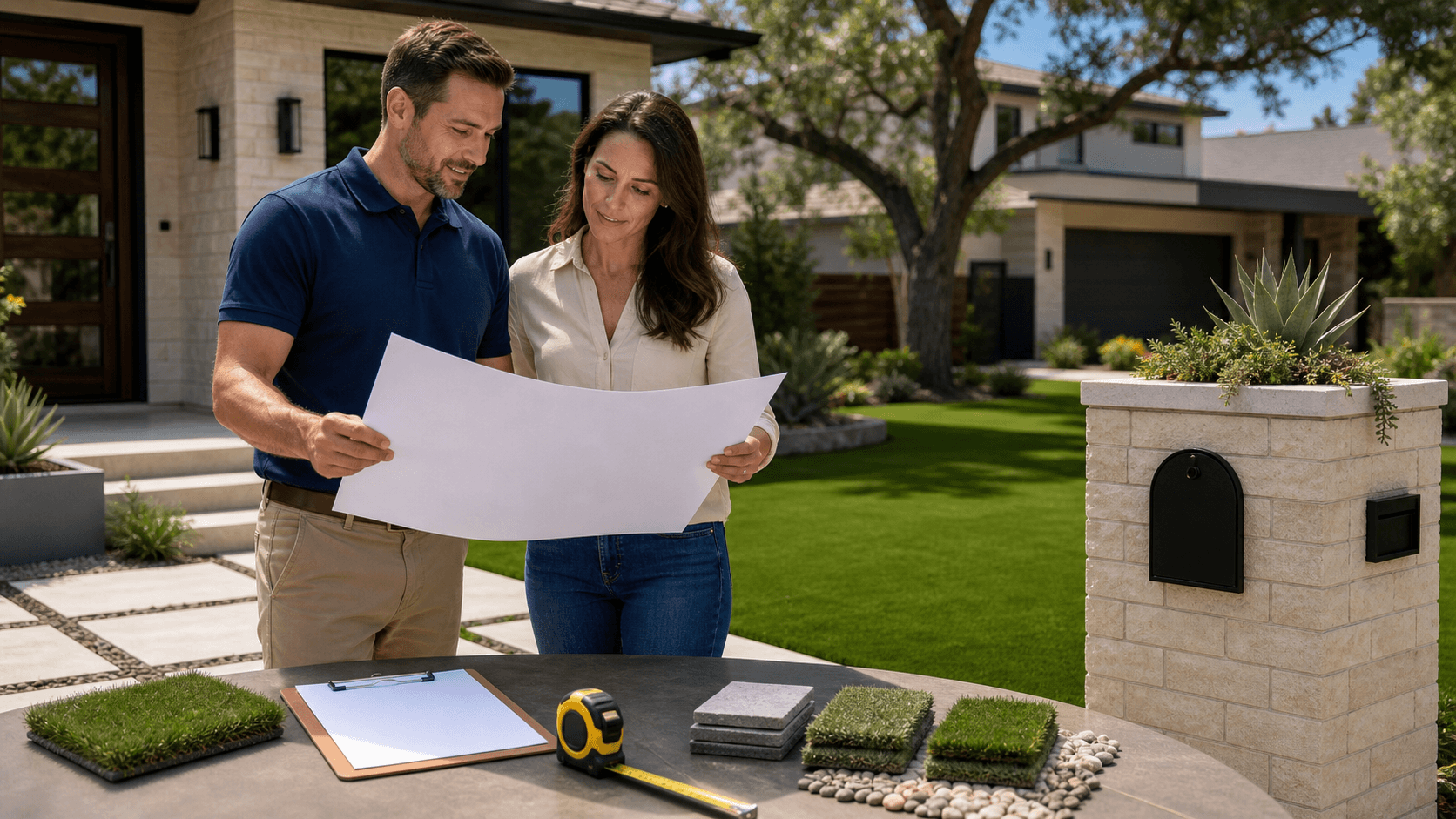
These answers shape the drainage plan just as much as the turf choice. When you talk with an installer, some smart questions include:
- How deep will the base be, and what material will you use?
- What slope will you build into the area, and where will water go?
- How do you handle downspouts, pool overflow, and patio edges?
- What is your approach for pet-specific drainage and odor control?
- What basic maintenance should we expect over the years?
At TexasTurf, we spend a lot of time on these details because drainage is what makes an artificial grass yard truly usable in Central Texas. As the exclusive Texas provider of AGL Grass, we can also offer no-infill, power-washable systems that make pet care and cleanups easier. With the right plan, your turf can handle both daily life and those Texas-sized summer storms without turning into a swamp.
Get Started With Your Project Today
If you are ready for a low-maintenance yard that looks great year-round, we can help you design and install premium fake grass in Austin tailored to your property. At TexasTurf, we take the time to understand your goals, then recommend solutions that fit your budget and lifestyle. Reach out today to discuss your project or schedule a consultation through our contact page.