Austin Homeowners' Guide to Turf Mistakes You Can Avoid
Artificial turf can be a great fit for Austin homes. Pet yards stay cleaner, putting greens stay smooth, and you get more green without spending every weekend mowing and fighting bare spots. But in our Central Texas climate, the quality of the installation matters just as much as the turf you pick.
When things are done wrong, problems show up fast. Puddles after a storm, hot turf no one wants to walk on, bad smells in pet areas, seams you can see from the patio, and yards that feel bumpy underfoot. Here, we will walk through the artificial turf installation mistakes Austin homeowners regret most, so you know what to watch for before anyone brings a shovel to your yard.
We see the same issues again and again: no real drainage plan, the wrong type of turf for pets and heat, shortcuts on base prep, and confusion about how maintenance and long-term value really work. With the right questions and a good installer, you can avoid those headaches and enjoy a clean, low-maintenance yard that actually works for your family.
Ignoring Austin Soil and Drainage Realities
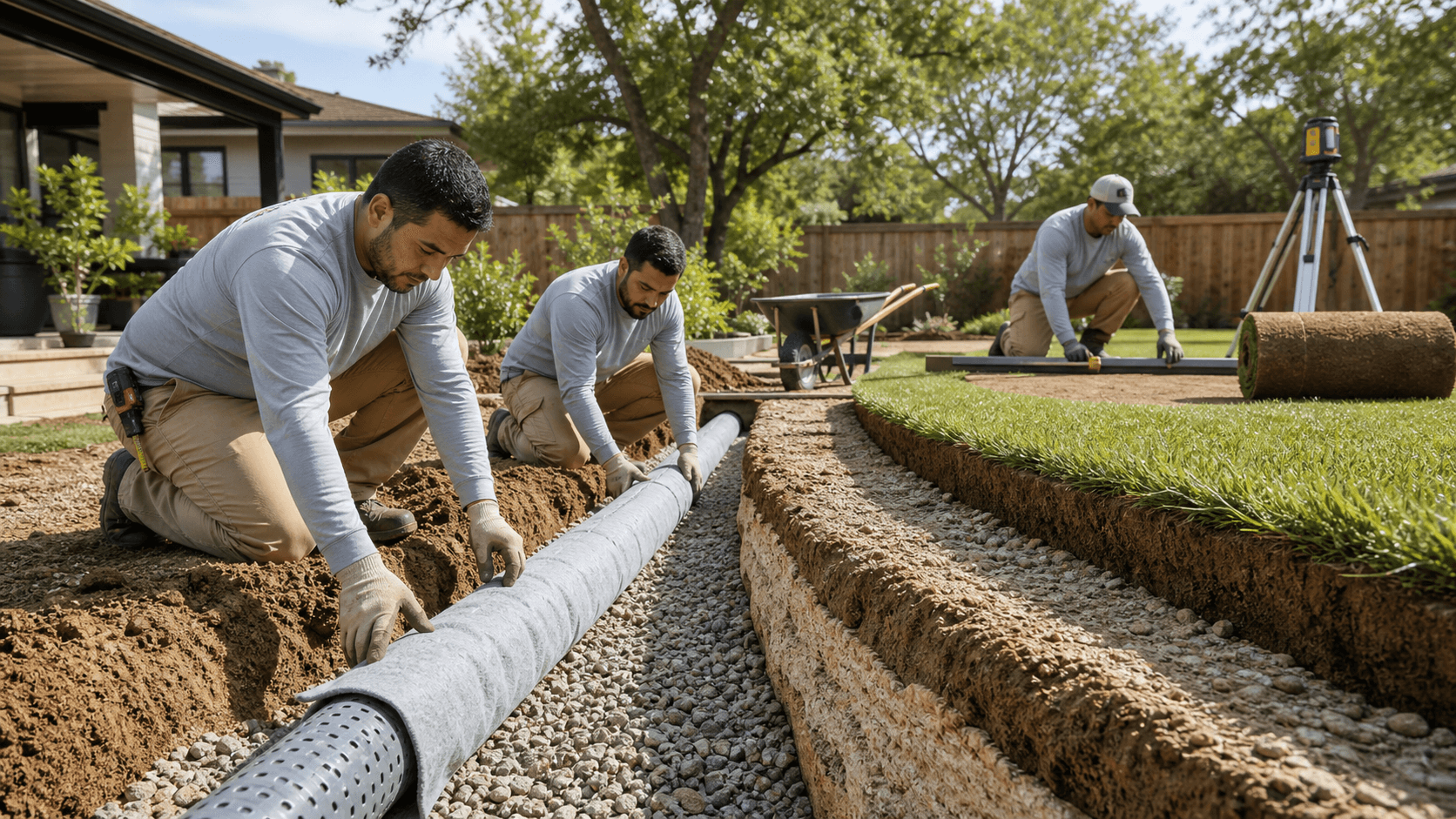
Drainage is the number-one long-term issue we see with artificial turf installation in Austin, TX. Our clay-heavy soils, quick thunderstorms, and sloped yards can ruin a turf job if drainage is treated as an afterthought.
Common drainage mistakes include:
- Laying turf over existing grass or topsoil
- Skipping real excavation and base work
- Failing to set a gentle slope away from the house
- Forgetting drainage paths near patios, pool decks, and fences
When turf is put right on top of dirt or old grass, water has nowhere to go. It can sit under the turf, leading to puddles, soft spots, and bad smells in pet areas. Over time, trapped moisture can cause the base to shift and the turf to buckle or wrinkle.
A proper Austin-ready install should include:
- Removing enough soil to make room for a compacted base
- Using the right blend of base rock or aggregates that drain well
- Compacting in layers so the surface is solid and stable
- Setting the grade so water flows away from the home and out of the yard
Pet yards need extra thought. A good pet-friendly base lets water and urine drain quickly so cleaning is easier and odors do not linger. No-infill AGL Grass pairs well with a strong drainage base because it can be power-washed and it does not hold loose infill that can trap smells. When the base and turf work together, cleaning becomes much simpler and the yard stays fresher.
Choosing the Wrong Turf for Pets, Heat, and Use
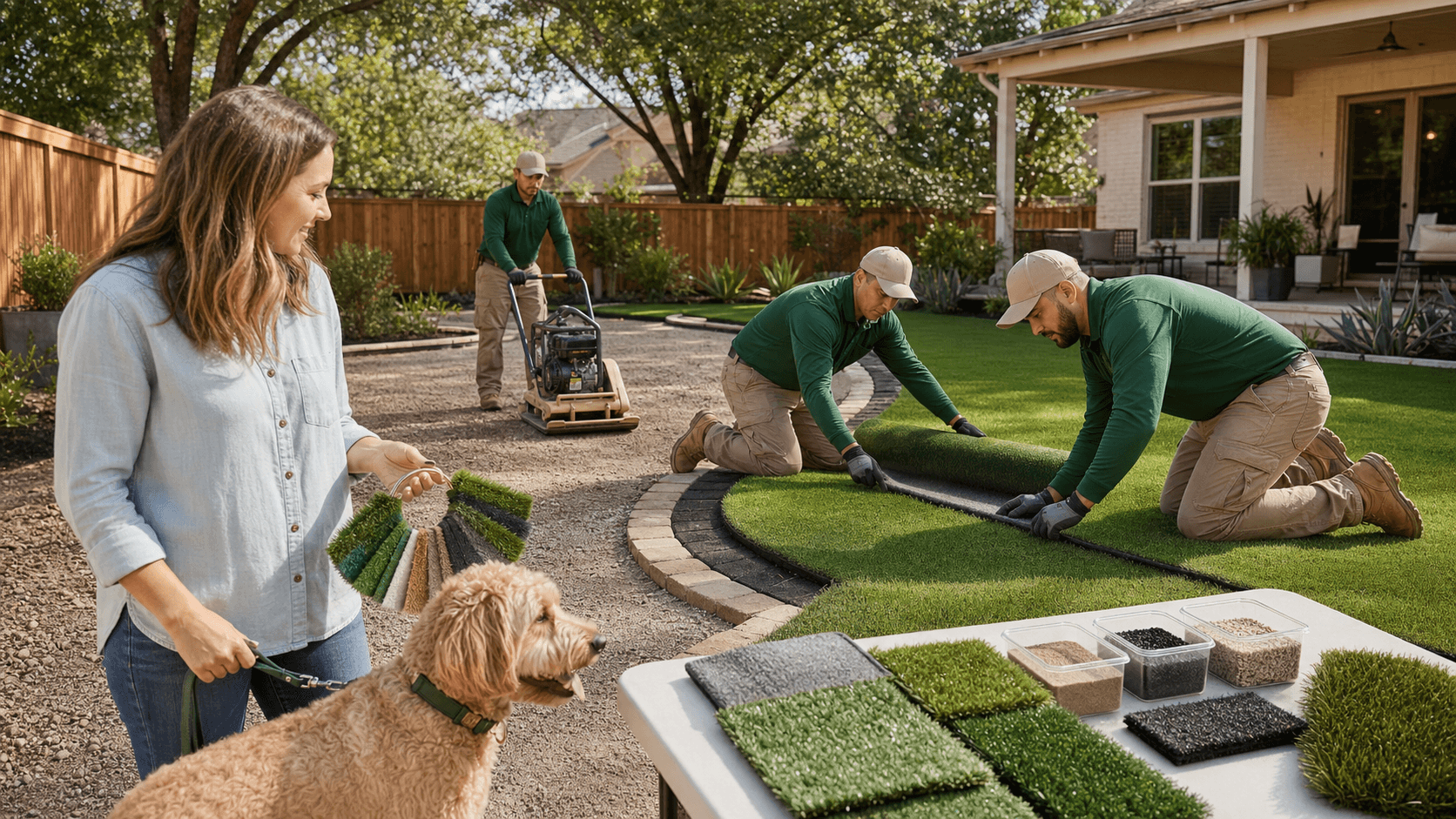
Another big regret happens before the first roll of turf is even unwrapped: picking the wrong product. Many people choose turf based only on price or the first sample that looks "most real" on a showroom floor. That is not enough, especially in Central Texas.
For pets, the wrong turf can mean:
- Fibers that hold onto urine and odors
- Heavy loose infill that sticks to paws and ends up inside
- A surface that is hard to rinse and disinfect
Pet owners usually want a yard that is easy to hose down and safe for paws. Premium no-infill options like AGL Grass help cut down on loose infill mess, which also makes cleaning faster and more sanitary when the drainage base is done correctly.
Heat and comfort matter too. Any turf can feel warm on a bright summer afternoon, but some choices can make a real difference, like:
- Fiber type and density, which affect how much heat the turf holds
- Blade color, with lighter, more natural shades often feeling a bit cooler
- How the space is laid out, with shade, trees, or covers planned where people sit
The way you use the space matters. A backyard putting green has different needs than a kids' play area or a dog run. An experienced installer should ask things like: Is this full sun or partial shade? Do kids play soccer here? Are large dogs using this space every day? The answers will guide the right turf choice and layout.
Cutting Corners on Base Prep and Installation Quality
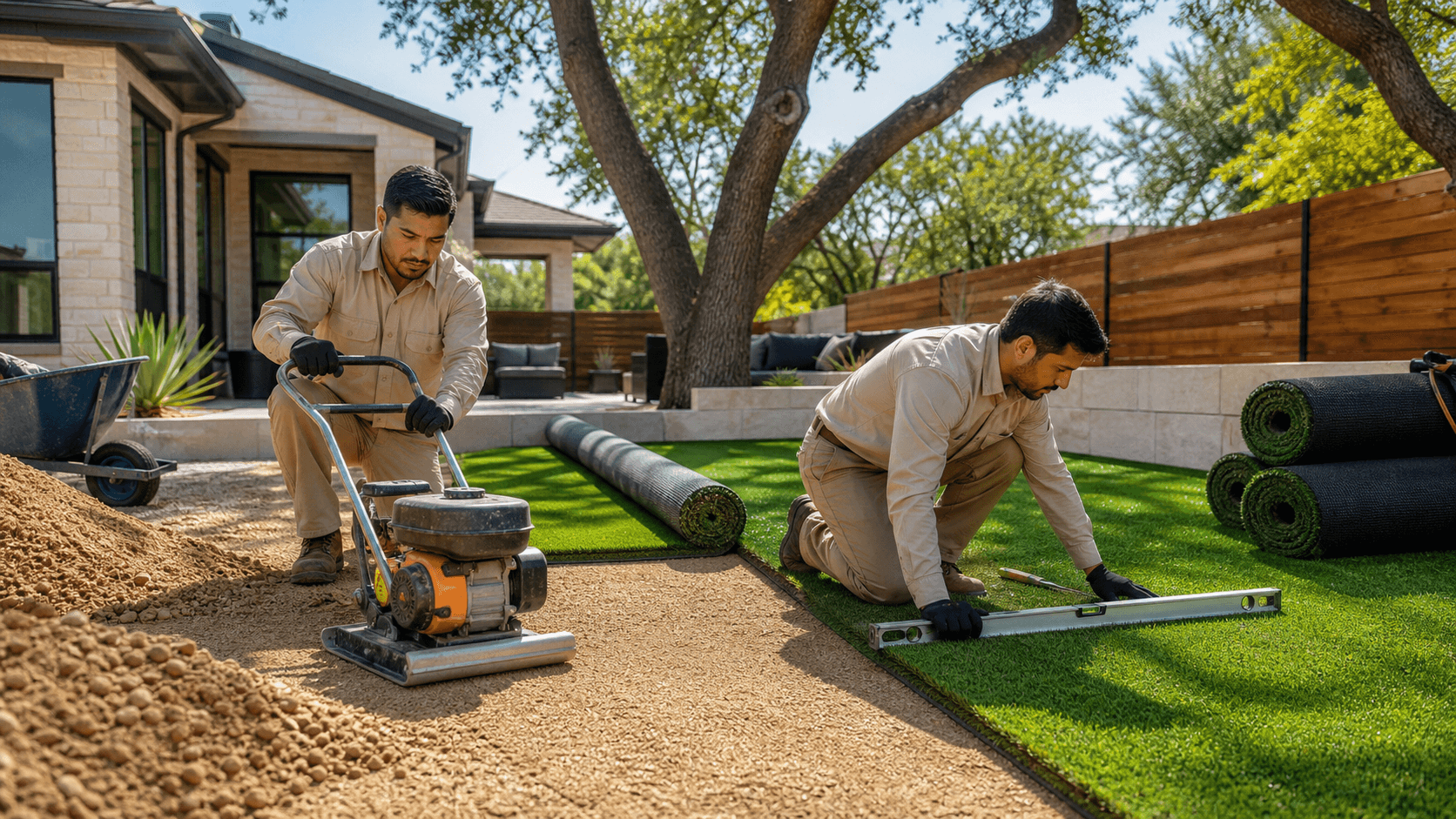
Many of the worst turf problems show up because the install was rushed. Low-bid jobs often look fine for a few weeks, then the rain and sun start to tell the truth.
Common shortcuts include:
- Shallow excavation, so there is not enough room for a solid base
- Poorly compacted base that sinks and shifts over time
- Weak or missing edging that lets turf creep or fray
- Loose seams that open, lift, or stand out as visible lines
Austin's clay soil swells when wet and shrinks when dry. Our temperature swings add more stress to the ground. If the base is not deep enough or compacted right, you may see ripples, sunken areas, or separation around patios, pool decks, and fences.
A professional artificial turf installation in Austin, TX, should involve:
- A careful site evaluation to note slopes, low spots, and drainage paths
- Enough base depth to match your soil and how the space will be used
- Clean, secure transitions at concrete, flower beds, and fence lines
- Strong seam work so putting greens stay smooth and pet yards stay tight
Quality prep is the part you do not see once the turf is down, but it is what keeps everything solid when heavy rain hits or dogs race across the yard.
Misjudging Maintenance, Cost, and Long-Term Value
A lot of people hear "artificial turf" and think "maintenance-free." That is not quite right. Turf can save time and hassle, but it still needs some basic care to look good and stay clean.
Realistic turf maintenance usually includes:
- Rinsing pet areas to help with odors
- Brushing or raking fibers in high-traffic zones
- Blowing or picking up leaves and debris
- Occasional power-washing for busy pet yards
No-infill AGL Grass can make this easier, especially where pets use the space a lot. Without loose infill to track, there is less mess inside the house and fewer spots where odors can linger if the turf is cleaned regularly.
Another common mistake is focusing only on the upfront cost. Cheaper turf or a quick install might seem attractive, but if the product is wrong for pets or the base is weak, you can be looking at early replacement, odor issues, or even a complete tear-out and re-install down the road.
When turf is chosen and installed for the way your family really lives, the long-term value becomes clear. Compared to natural grass, a well-installed artificial turf yard can mean:
- Less time spent dealing with mud, bare spots, and weekly mowing
- Fewer repairs after dry spells or heavy use
- More consistent green space for kids, pets, and guests
Backyard turf, putting greens, and dedicated pet areas work best when they are planned as purpose-built spaces, not just "fake grass over the whole yard."
How to Get Turf You'll Love for Texas Summers and Beyond
All of these "regret stories" can actually be a handy checklist as you talk with installers. You can ask questions like: How will you handle drainage with my clay soil? What base depth do you recommend for my dogs and kids? Which turf types work best in our heat and sun? What regular maintenance should I plan for? What does your warranty cover?
As a family-owned local installer in the Austin area, we focus on how turf holds up in real Central Texas yards, with clay soil, hot sunshine, and active pets. As the exclusive Texas provider of AGL Grass, we offer a premium no-infill option that is built for easy cleaning, less loose infill mess, and long-term durability in our climate. When drainage, turf choice, and base prep are handled the right way from the start, your yard can stay green, clean, and ready for everyday living through plenty of Texas summers.
Get Started With Your Project Today
Transform your yard into a low-maintenance, green space with our professional artificial turf installation in Austin, TX. At TexasTurf, we work with you to design a solution that fits your property, lifestyle, and budget. If you are ready to explore your options or have questions about your project, simply contact us and our team will follow up promptly.