Stop Standing Water Before It Starts
Artificial turf over dirt sounds simple. Tear out the grass, roll out the turf, and call it done. In Central Texas, that shortcut almost always comes back to bite you. Soggy spots, bad smells, and turf that feels hot and sticky instead of cool and clean are all common results of a "cheap and fast" install.
The big reason is our soil. Most national how-to guides assume loose, sandy, or loamy soil that drains pretty well. Austin is different. Our clay and caliche act like a pan under your turf, trapping water and odors right where you do not want them.
The truth is, the work you never see under the turf is what decides if your yard will stay comfortable for kids, pets, and guests. Proper soil and base prep is the difference between a long-lasting, low-hassle yard and a smelly, flooded mess you regret every time it rains or the dogs go out.
At TexasTurf, we design every project around Central Texas soil so homeowners get a yard that actually works in our climate.
How Austin Soil Affects Turf Drainage
Around Austin, we run into the same soil issues again and again:
- Tight black clay that swells when wet and shrinks when it dries
- Hard caliche layers sitting under the surface
- Random rock shelves that redirect water in strange ways
Clay soil can hold on to water like a sponge. When it gets soaked, it expands and turns into sticky muck. When it dries out, it cracks and shifts. Caliche and rock layers act like concrete, blocking water from soaking down. Instead, water slides sideways until it finds the lowest point, which might be right under your turf.
That is why simply laying artificial turf over dirt usually fails here. Dirt looks harmless, but it:
- Compacts over time and creates low spots
- Holds on to pet urine and rainwater
- Settles unevenly and causes dips and trip hazards under the turf
For families and pets, that trapped moisture causes real problems:
- Stronger urine odors that seem to "cook" in the sun
- Mud and dirty water seeping up through seams and edges
- Bacteria growth in warm, damp spots where air cannot circulate
- Standing water that invites mosquitoes and can stain turf backing
If your soil cannot move water away from the surface, your turf system will never feel as clean or comfortable as it should.
Getting the Base Right in Clay and Caliche Yards
When we talk about the "base" under artificial turf over dirt, we are talking about building a stable, drainable layer between your soil and the grass. For TexasTurf projects, that usually includes:
- Removing organic topsoil, roots, and soft material
- Digging down until we reach firm, stable subgrade
- Installing a compacted, permeable rock base, often decomposed granite or similar
The goal is to turn unpredictable native dirt into a consistent surface that drains the same way across the whole yard and holds up for years.
Typical base depths in Central Texas depend on how the area will be used and what the soil is doing:
- Standard-use yards with decent soil and gentle slopes often do well with about 3 to 4 inches of compacted base
- Clay-heavy or caliche-heavy areas, or high-traffic play and pet zones, usually do better with 5 to 6 inches or more
- Special situations like drivable turf, putting greens, or shady side yards that stay damp may need even deeper base or a different blend of rock
Compaction and grading are just as important as depth. The base needs to be:
- Firm and even, so it will not shift and settle
- Tight enough for stability, but not so tight that water cannot pass through
- Gently sloped so water moves away from the house, gates, and patios
Done right, the base works like a hidden drainage layer that protects your turf, your foundation, and your family's feet. It also protects your investment, because a well-built base is what keeps turf looking good and draining well long after the first season.
When You Need More Than Just a Rock Base
Some Central Texas yards already have drainage problems before turf ever goes in. If you see any of these signs, a rock base alone may not be enough:
- Puddles that sit longer than a day after a storm
- Water running toward your home, patio, or pool instead of away
- Water from higher yards or slopes flowing straight into your space
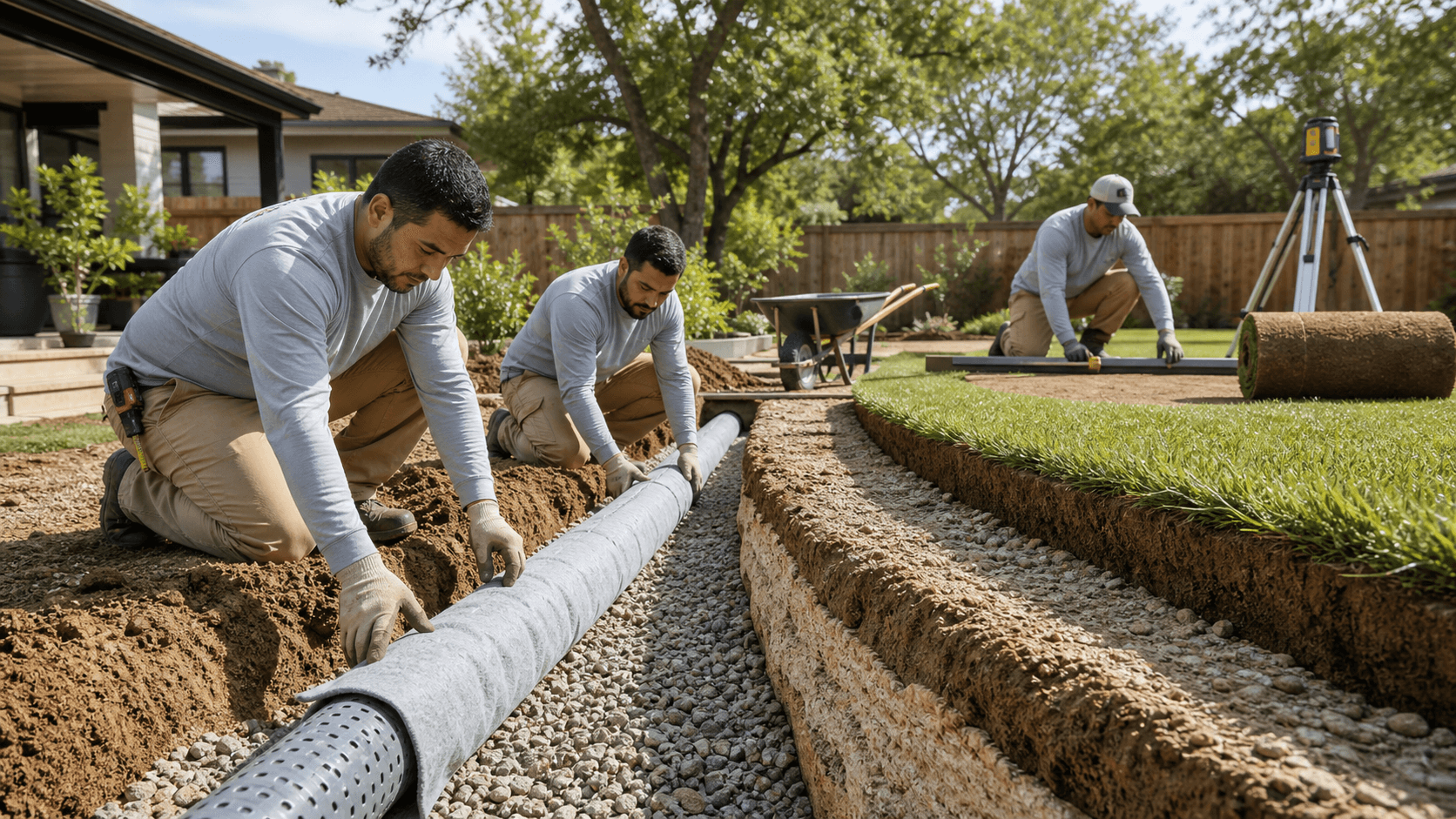
In those cases, TexasTurf may recommend drainage solutions under the turf, like a French drain. Under turf, a typical French drain includes:
- A trench dug along the problem area
- A perforated pipe placed at the bottom
- Clean gravel surrounding the pipe
- A fabric wrap to help keep soil from clogging the gravel and pipe
- Rock base and turf installed on top
French drains work well in spots such as:
- Along fence lines where water gets trapped
- Low swales and natural collection areas
- The base of slopes or retaining walls
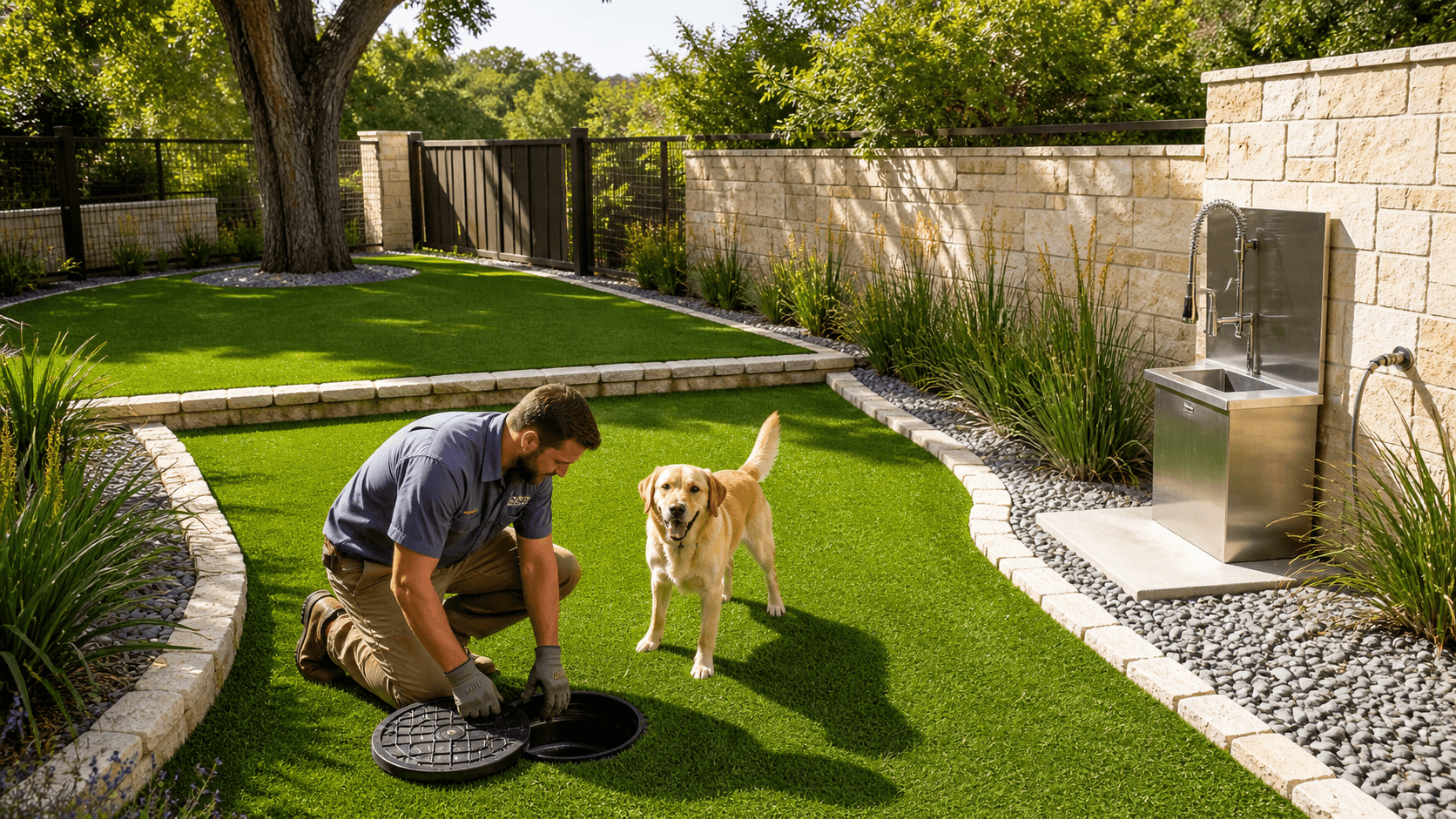
- Heavy-use pet "bathroom zones" that need extra help moving liquids away
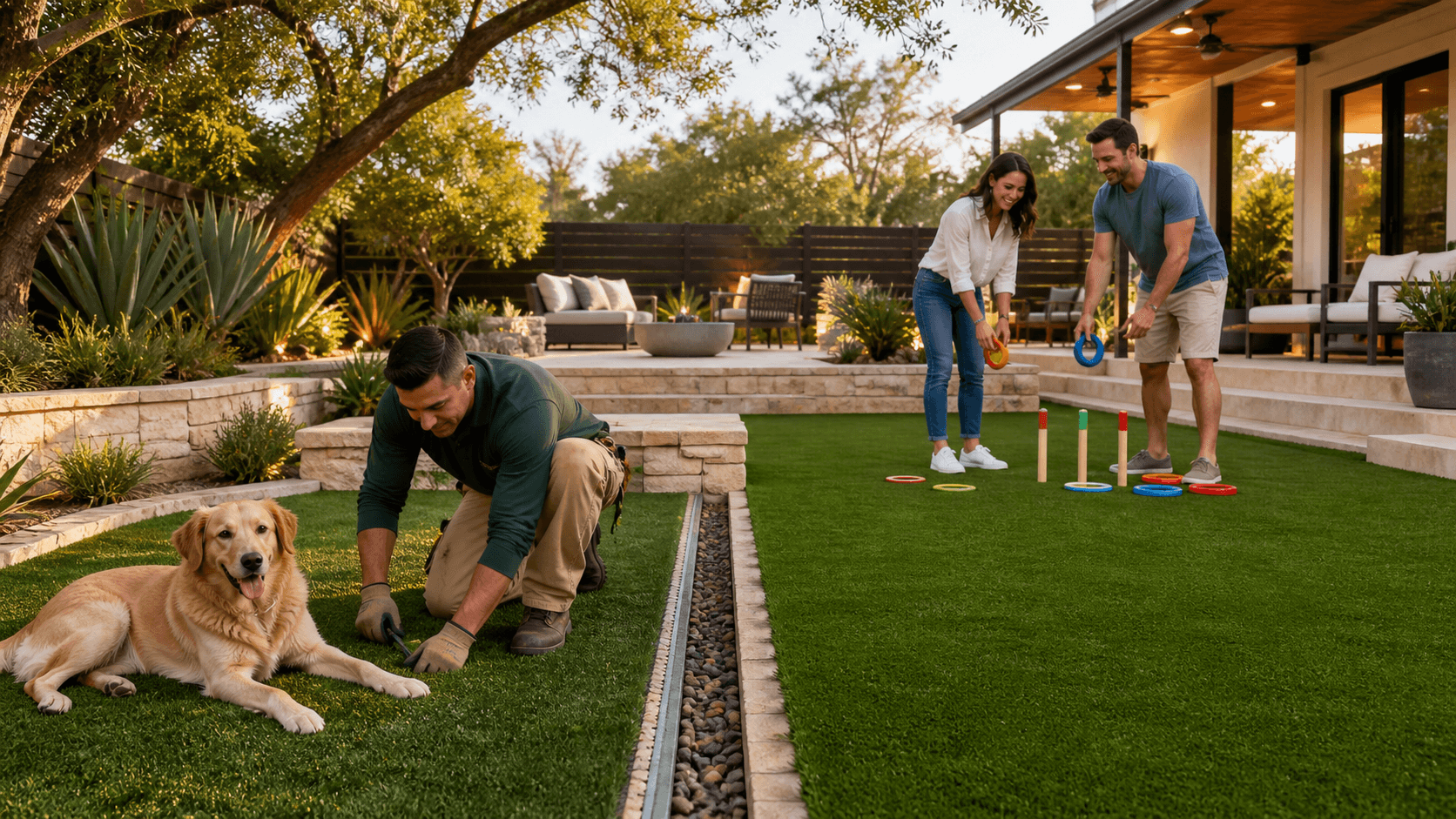
Spending more time on drainage at the start almost always beats tearing up turf later to fix flooding, smells, or soft, swampy patches. When water has a planned path out of the yard, turf tends to last longer, stay cleaner, and stay usable even after one of those Central Texas downpours.
Pet Turf, Odor Control, and Easy Cleaning in Austin Heat
Pet turf in Austin lives a hard life. When the base is not built for drainage, urine soaks into the clay below, or sits trapped in a tight rock layer. Heat and humidity then "cook" those odors, and the smell can hang around no matter how much you rinse.
Poor drainage also means:
- Strong ammonia smells that get worse in the afternoon
- Slippery or slimy spots where the dogs like to go
- Germ buildup that is hard to wash away
This is where a premium no-infill turf like AGL Grass can really shine in pet yards. TexasTurf is the exclusive Texas provider of AGL Grass, so Central Texas homeowners can get this option locally.
Because AGL Grass does not rely on loose rubber or sand infill, you avoid a lot of the places where urine usually hangs out. Instead, you have:
- Dense, quality fibers that do not need piles of loose infill
- A backing designed so water can pass through when you rinse or power-wash
- Less mess stuck in the turf, which means less tracked inside and a cleaner look around patios and pools
For many Austin-area pet owners, those details make day-to-day maintenance simpler and cut down on the loose infill mess you see with traditional systems.
To build a pet-friendly turf system from the ground up, TexasTurf focuses on:
- Enough base depth to move urine and rinse water away from the surface
- Smart grading so liquids do not run back toward the house or high-traffic walkways
- Adding French drains in heavy-use dog zones if the soil needs extra help
With the right base and a no-infill turf like AGL Grass, regular rinsing and pet-safe cleaners work with the system instead of fighting it. Many homeowners find that this setup is easier to keep fresh than natural grass with bare muddy patches, constant reseeding, and dirt getting tracked into the house.
Planning Your Summer Turf Project in Central Texas
Summer in Austin is when a lot of people decide they are done dealing with mud, dust, and worn-out grass. At the same time, the soil can be baked hard on top while still trapping water deeper down. That mix makes timing and prep really important.
Getting the drainage and base right during the warm months sets you up for the next round of big storms and for heavy use when kids are home, friends are over, and pets are outside more often.
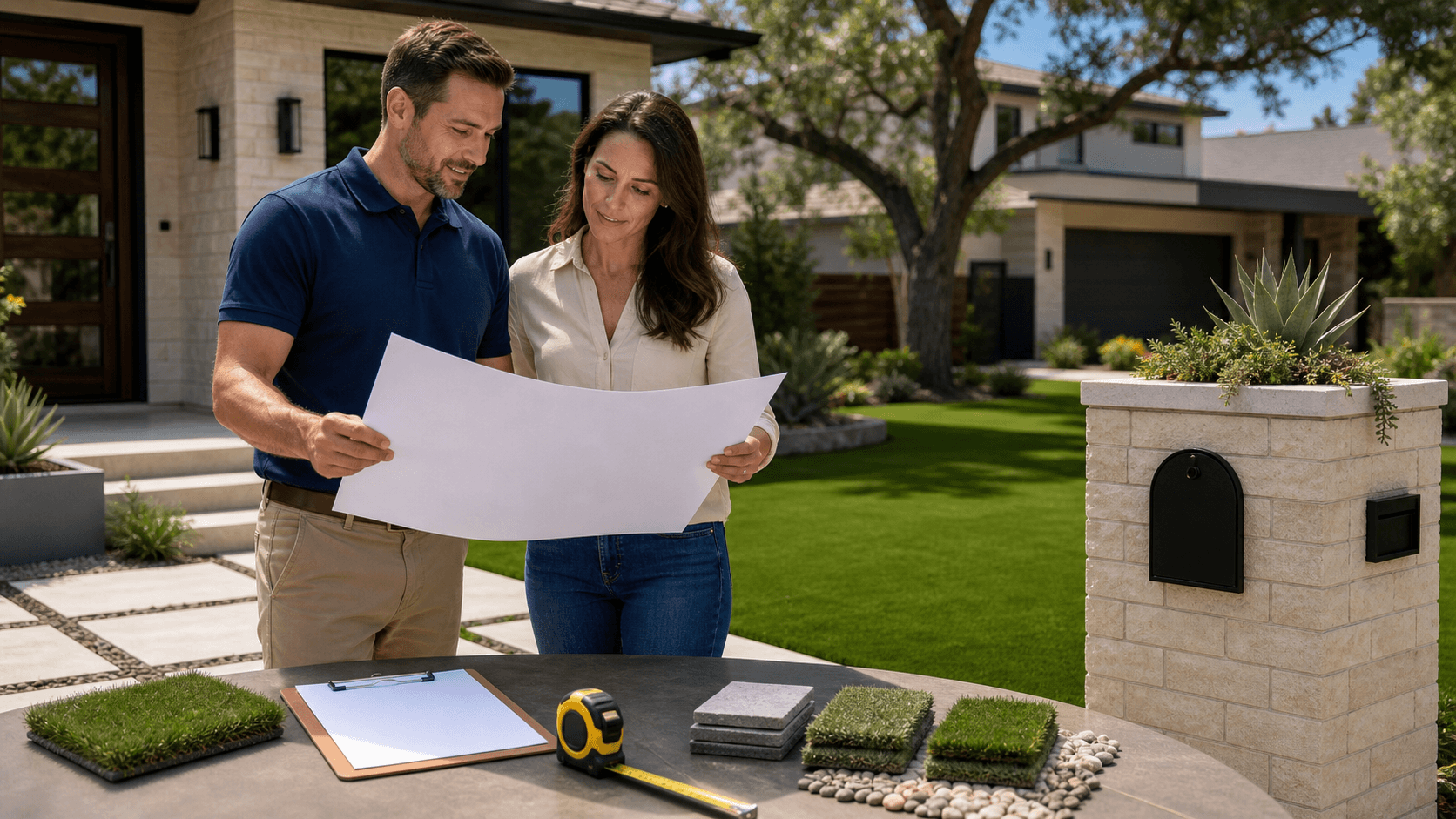
When TexasTurf comes out for a site evaluation, we focus on the things that matter most for drainage and comfort:
- Walking the yard to spot clay pockets, caliche layers, and existing low spots
- Watching how neighboring yards and slopes push water into your space
- Checking where water currently flows during heavy rain
From there, we can recommend:
- How deep the base needs to be in each area
- Whether any spots can safely handle artificial turf over dirt with minimal digging
- Where you would benefit from deeper base or French drains under the system
- Which turf options, including AGL Grass choices, fit how your family and pets use the yard
We also help you understand how smart drainage and a quality base impact the overall cost, so you know where it makes sense to invest for long-term value instead of paying for fixes later.
The key is to treat drainage, base prep, and turf choice as one connected system, not separate decisions. When everything under and above the turf is working together, Austin clay and caliche do not have to ruin your dream of a cooler, cleaner, low-maintenance backyard.
With TexasTurf and AGL Grass, Central Texas homeowners get a turf system built for our soil, our storms, and our summers, not a one-size-fits-all solution from a national playbook.
Get Started With Your Project Today
If you are ready to upgrade your yard with a clean, durable surface, explore our artificial turf over dirt solutions tailored to Texas properties. At TexasTurf, we walk you through every step, from choosing the right product to professional installation. Share a few details about your space and goals, and we will provide a clear plan and quote. Have questions or need guidance before deciding? Simply contact us and our team will help you move forward confidently.