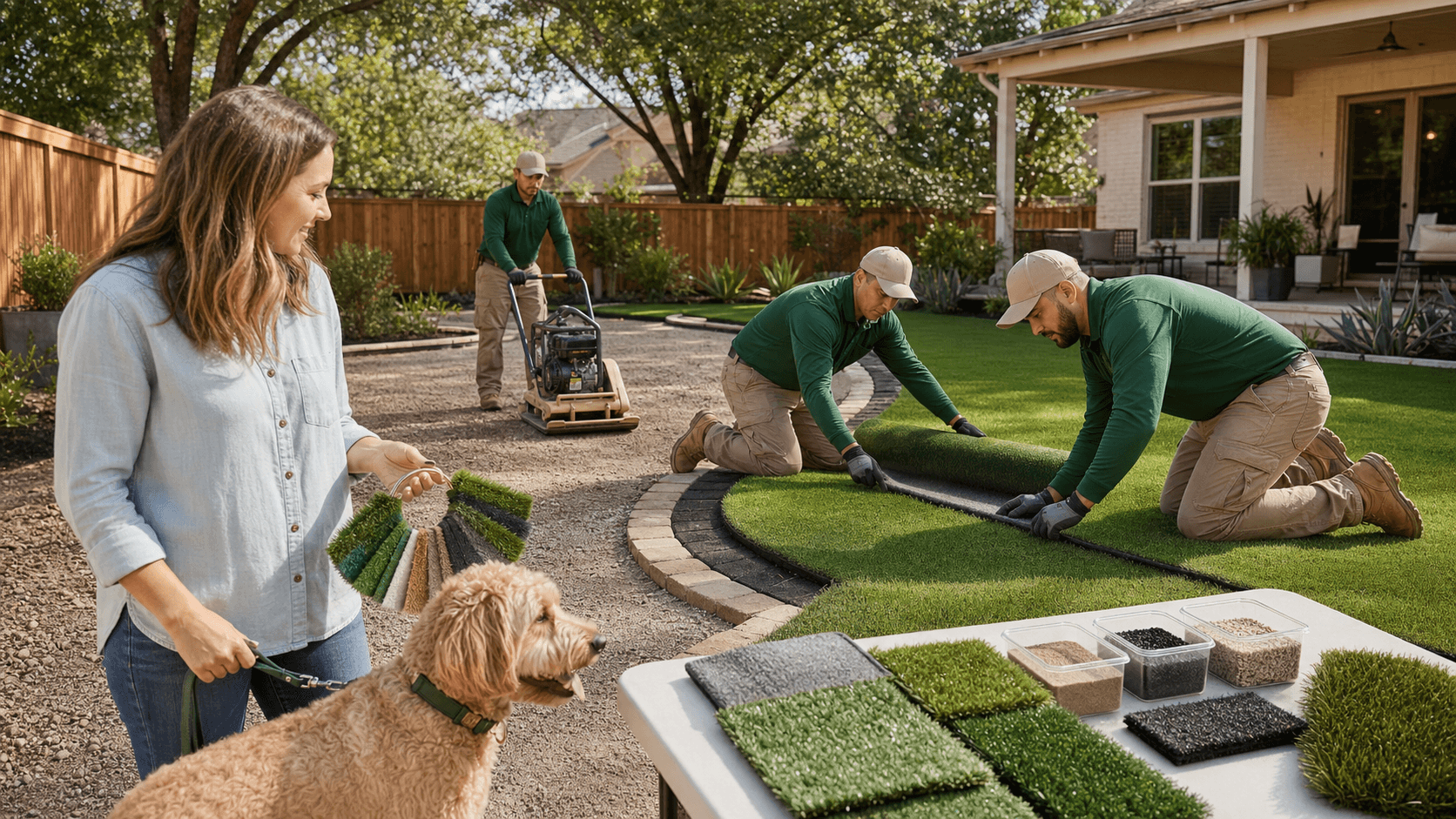
Choose No-Infill Pet Turf That Survives Austin Summers
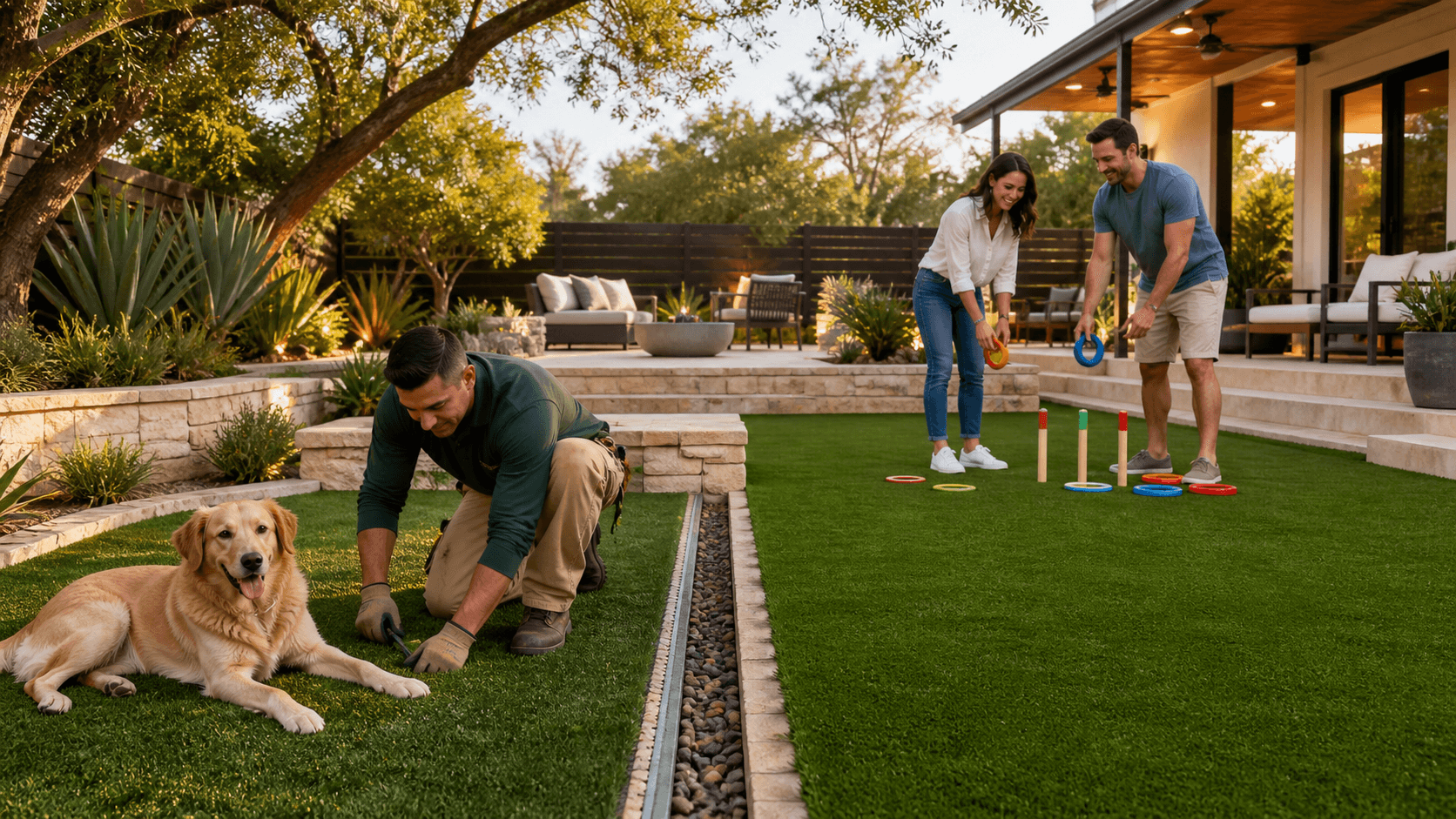
No-infill pet turf in Austin is all about solving the same headache we hear every week: muddy paws, burned spots, and patchy grass where the dogs always run. Summer is when those problems hit hardest, with long sunny days, heavy afternoon storms, and pets who still want to zoom around the yard.
When we say "no-infill pet turf," we mean turf that does not use a loose layer of rubber or sand brushed into the fibers. The turf stands on its own, so you avoid much of the loose material that can get kicked up, tracked inside, or hold on to pet waste. For a lot of Austin and Central Texas homes, that makes daily cleanups simpler and keeps the yard looking more like a clean outdoor room than a dusty sports field.
In this guide, we will walk through how to compare turf products for pets, what pile height and density really mean, why backing and drainage matter so much, how to think about heat, what maintenance actually looks like, how costs typically break down, and smart questions to ask any local installer before you sign anything.
How No-Infill Pet Turf Works for Real Pet Families
Traditional turf systems usually rely on infill. Installers lay the turf, then brush in sand, rubber, or other material to help the blades stand up and to add weight. It can work well, but with pets it can also hold odors, trap hair and waste, and end up stuck in paws and floor mats.
No-infill pet turf is built to keep its shape without that loose layer. For Austin homes, that can mean:
- Less loose material for dogs to dig into or carry inside
- Fewer spots for pet hair and mess to hide in
- Easier rinsing with a hose or power washer
- A cleaner surface for kids and guests
For pets, the benefits add up. Paws stay cleaner, there are fewer bare dirt spots, and the play surface feels the same every day. When the turf is paired with a good base and drainage plan, urine moves through quickly so you can focus on surface cleaning instead of fighting deep smells.
AGL Grass is a good example of a premium, no-infill option designed with active pets in mind. As the exclusive provider of AGL Grass in Texas, we install it in pet yards, side yards, and full backyards where families care a lot about cleanliness and need a surface that can handle regular power-washing.
Because AGL Grass is built to perform without traditional infill, there is less loose material to trap odors or end up in your house. For many Central Texas dog owners, that combination of no-infill design and easy cleaning is a major part of the long-term value.
Comparing Turf Pile Height, Density, and Backing for Pets
The right turf for pets is not just about color. Pile height, density, and backing each change how the yard feels and how hard it is to keep clean.
Pile height is simply how tall the blades are:
- Short turf: Easier to spot and clean solid waste, great for fetch and heavy play, less likely to mat
- Mid-height turf: More natural lawn look, still good for dogs that run and roll, a nice balance for most families
- Very tall turf: Looks very lush at first, but can mat down with pet traffic and trap more leaves and debris
For most pet yards, we find that short to mid-height turf hits the sweet spot: soft enough to enjoy, but simple to maintain.
Density and blade shape also matter. Higher stitch counts and certain blade designs can feel softer underfoot but still spring back after zoomies or furniture use. Turf that is too soft and loose may feel nice at first, but it can flatten under constant pet traffic and start to look tired.
Backing is where a lot of the pet magic happens. You will usually see:
- Perforated backing: Holes punched through so water can drain out
- Fully permeable backing: Water can pass through almost the entire surface
- Antibacterial or antimicrobial features: Coatings or materials that help limit bacteria growth
For urine drainage and odor control, backing quality often matters more than most people expect. AGL Grass products are built with backing systems that pair well with power-washing and efficient drainage, which is a big deal for pet-heavy yards and side yards that don't get much natural airflow.
Odors, Drainage, and Heat: Designing a Pet-Safe Austin Yard
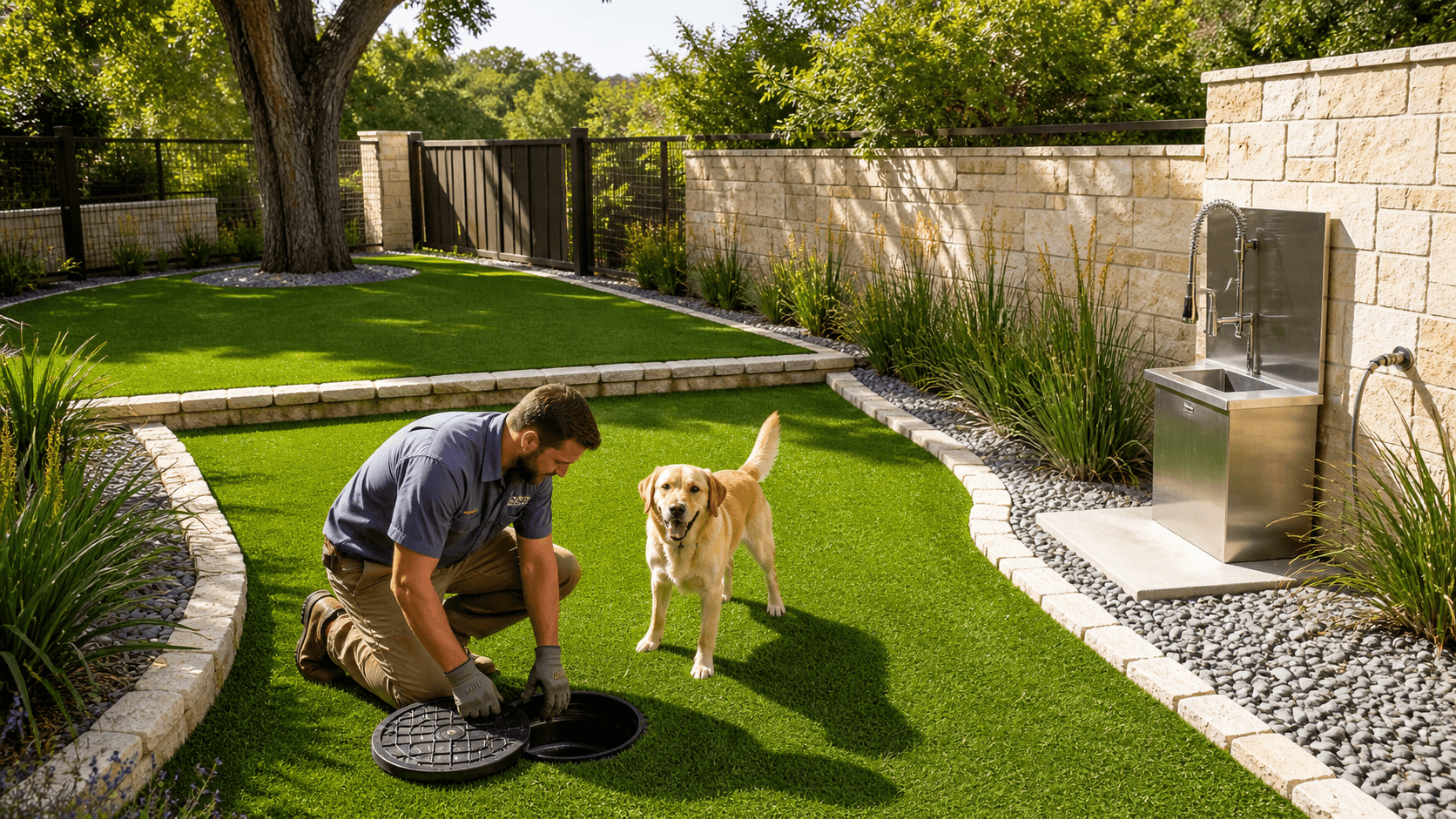
Good drainage starts long before the turf rolls out. In Central Texas soils, a proper sub-base usually means:
- Removing grass and organic material
- Installing a compacted base rock layer at the right depth
- Grading that gently guides water away from the house, patio, and low spots
When installers rush this part or cut corners on base depth, you can end up with standing water, soft spots, and trapped odors. With pets, those problems show up fast.
We also need to talk about heat. All synthetic turf warms up in full Texas sun. No-infill turf can help a bit because there is less dark, loose material holding heat, but color, shade, and layout still matter more. Homeowners can:
- Plan shade with trees, pergolas, or shade sails
- Time heavy play for mornings and evenings
- Lightly mist the turf before play on very hot afternoons
On odor control, a simple routine goes a long way:
- Quick hose rinses on regular potty zones
- Enzyme cleaners as needed for deeper odor control
- Periodic power-washing or professional cleaning for multi-dog homes
Because there is no loose infill layer to soak up waste, AGL Grass no-infill systems are easier to rinse and power-wash from top to bottom. That matters during Austin's hottest months, when odors can build up faster and you want to be able to freshen the yard quickly.
Installation Quality, Costs, and Avoiding Common Mistakes
With pet turf, the installation work underneath is just as important as the roll you choose. Local conditions, access, and design make every yard different.
While we are not talking exact numbers here, it helps to understand what typically drives cost for Austin and Central Texas projects:
- Access for equipment and materials (tight gates or slopes can add labor)
- How much demo or removal is needed (old sod, roots, or concrete)
- Base depth and base rock type, especially in heavy-clay or poorly drained areas
- Edging choices along fences, beds, patios, and pool decks
- Turf type, pile height, and special features like putting areas or stepping pads
- Pet-specific upgrades such as enhanced drainage layers or odor-control base treatments
No-infill pet turf like AGL Grass can cost a bit more upfront than basic turf and infill, but homeowners often make that back in easier cleaning, fewer odor issues, and less mess tracked inside. Over time, that can mean less money spent on cleaners, repairs, and landscape fixes from muddy traffic.
Common mistakes we see around Austin include:
- Shallow or uneven base that settles under pet traffic
- Poor grading that sends water toward the house or into low corners
- Weak seam work that opens up over time
- No clear plan for where rinse water will go
Each of those shows up later as smells, ripples, trip hazards, or turf that wears out before it should. Working with a crew that understands local clay soils, live oaks, and neighborhood drainage quirks from Austin to the surrounding Hill Country can save a lot of stress down the road.
Smart Questions to Ask Any Austin Pet Turf Installer
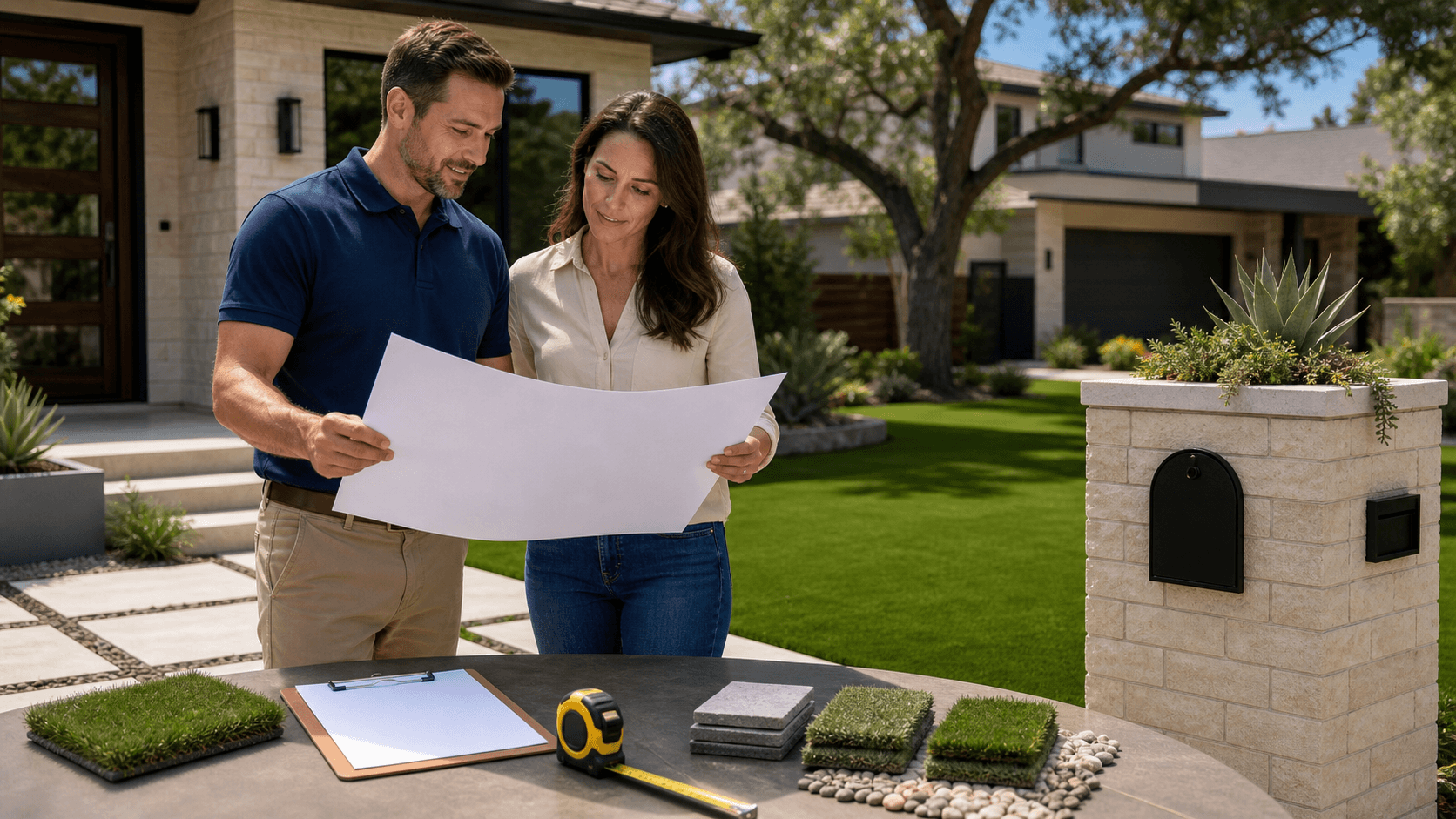
Before you sign a contract for no-infill pet turf in Austin, it helps to be ready with pointed questions.
On product and performance, ask:
- Which turf brands and models do you recommend for pets?
- Is this a true no-infill system or does it need infill?
- What is the pile height and density?
- What type of backing and drainage rate does it offer?
- Can this turf be safely power-washed?
We are always prepared to walk homeowners through specific AGL Grass specs so they know exactly what they are getting, from drainage performance to how often power-washing makes sense for their number of pets.
On installation and maintenance, ask:
- How deep will you build the base and what materials will you use?
- How will you direct drainage away from my house and low spots?
- How do you handle seams and edging in pet areas?
- What is your plan for odor prevention?
- What cleaning routine do you recommend for homes with more than one dog?
For warranty and local support, dig into:
- What parts are covered, materials and labor?
- How long have you been installing turf in Central Texas?
- Do you offer tune-ups or professional cleanings later on?
- Who do I contact if I notice a lifted seam or a low spot after a big storm?
Turn Your Austin Yard Into a Low-Stress Pet Oasis
Choosing no-infill pet turf in Austin really comes down to a few key decisions: a quality turf product, the right pile height and density for your pets, a backing that drains well, and a base that is built for our local soils and storm patterns. Add in some honest planning around heat and a realistic cleaning routine, and you can have a yard that stays green and ready for play most days of the year.
At TexasTurf, we install a range of artificial turf solutions for local homes and businesses across Austin and the surrounding Central Texas communities. We are the exclusive Texas provider of AGL Grass, a premium no-infill system built for pets, families, and low-maintenance yards. When you are ready to trade muddy paws and patchy grass for a cleaner, easier backyard, we are here to help you design a pet space that actually works for how your family lives and for our Texas weather.
Transform Your Outdoor Space Into a Pet-Friendly Oasis
If you are ready for a cleaner yard and happier pets, explore our premium no-infill pet turf in Austin solutions designed to handle real-life Texas weather and everyday play. At TexasTurf, we customize every project so your lawn looks great and works even better for your pets. Tell us about your goals and challenges, and we will recommend the right system for your space and budget. Have questions or want a tailored quote? Simply contact us to get started.