Austin Dog Yards That Finally Work in Real Life
Dog yards in Austin have a hard job. They have to survive spring storms that turn soil into sticky mud, summer heat that burns grass to a crisp, and daily pet use that leaves pee spots and smells that never really clear out. Many yards look fine for a short time, then slowly turn into a mess.
In this article, we walk through real-world style makeovers using no-infill pet turf in Austin and what actually changed for those spaces. We will talk about drainage, odor control, daily use, and how no-infill turf systems, including AGL Grass, can turn problem dog yards into clean, easy spaces families actually enjoy.
We are TexasTurf, a local artificial turf team serving Austin and Central Texas, and we focus on long-lasting pet and family yards that hold up to Central Texas weather and heavy play. TexasTurf is the exclusive Texas provider of AGL Grass, a premium no-infill turf that is easier to clean, can be power-washed, and reduces loose infill mess around your home. Let us start with why so many dog yards fail before turf even goes in.
Why Austin Dog Yards Fail Before Turf
Natural grass sounds great on paper, but Austin soil and weather make things tough, especially with dogs. A lot of yards sit on clay-heavy soil that compacts fast. Add shade in some spots, blazing sun in others, and you get grass that grows in patches instead of a full lawn.
Common problems we see before turf include:
- Mud pits along fences where dogs run the same path
- Dusty bare spots that turn everything dirty in dry spells
- Dead or thin grass in shady corners and high-traffic zones
Odor and drainage issues show up quickly too. Poor grading can leave low spots where water and pet urine collect. When that sits on compacted soil, it does not drain well, so it starts to smell, especially after big rain events and long hot days.
Maintenance burnout is real. Homeowners spend time and money on:
- Weekly mowing and trimming around AC units and fences
- Reseeding bald patches that never really fill in
- Fertilizers and soil amendments that wash away in storms
- Constant patch repair when dogs dig or wear out the same paths
Over time, those costs and weekends add up. That is usually when people in Austin start looking at artificial turf. For pet yards here, high-quality no-infill systems can solve a lot of these pain points when they are installed correctly by a local team that understands Central Texas soil and drainage.
Real Austin Pet Yard Makeovers and Measurable Changes
Let us look at two typical yard layouts we work on all the time around Austin and what changed once no-infill pet turf was installed.
Case Study 1: Small Central Austin Dog Run
This type of space is common: a 250 to 400 square foot side yard, narrow and long, with a fence on one side and the house or AC unit on the other. Before turf, it is usually:
- Bare dirt or failed sod that never took
- Standing water after storms
- Strong urine odor trapped in the corner
- Constant mud being tracked inside the house
Many homeowners try gravel first. It often shifts, feels rough on paws, and can trap smells. Sod can die fast in shade between houses.
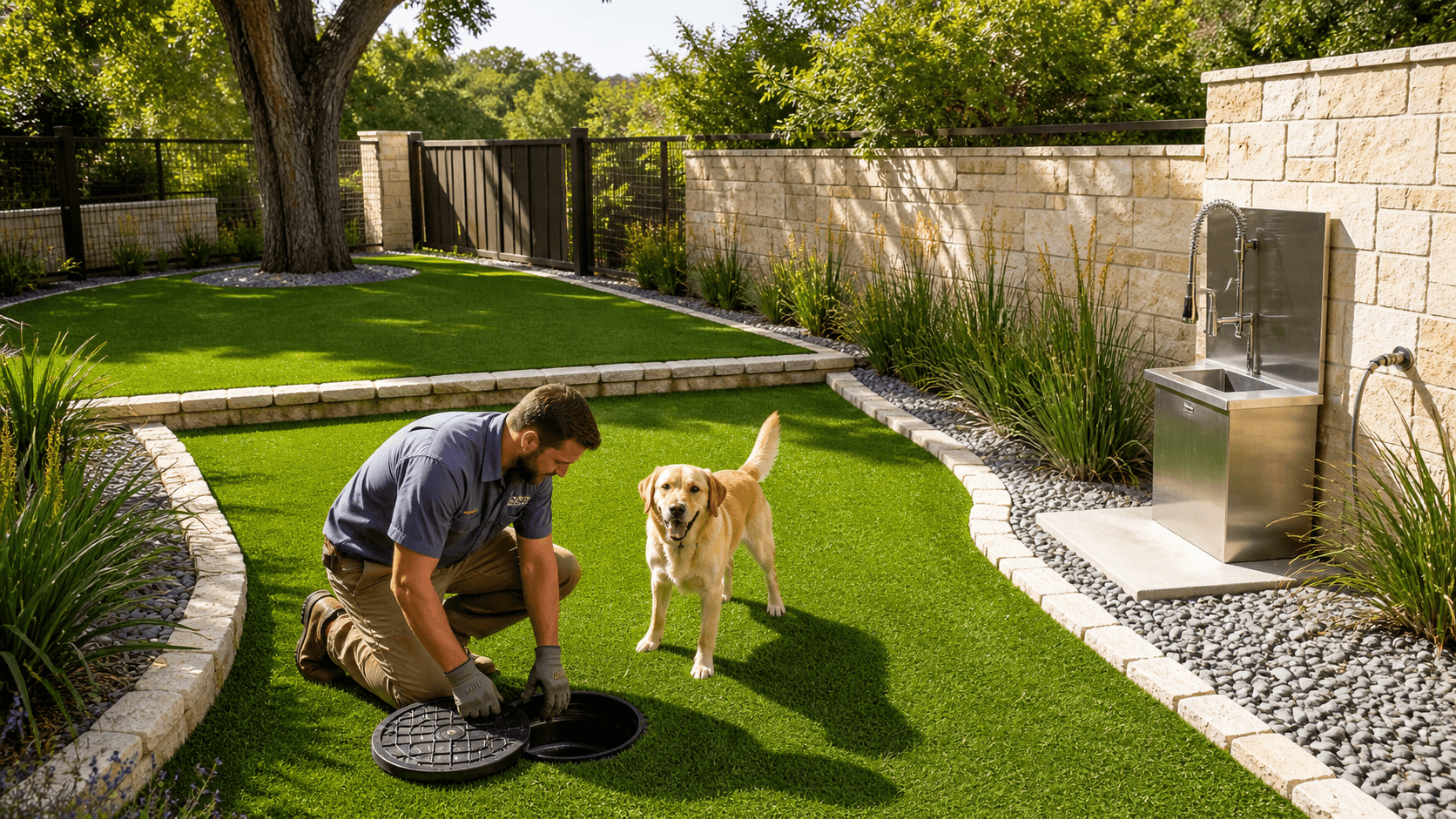
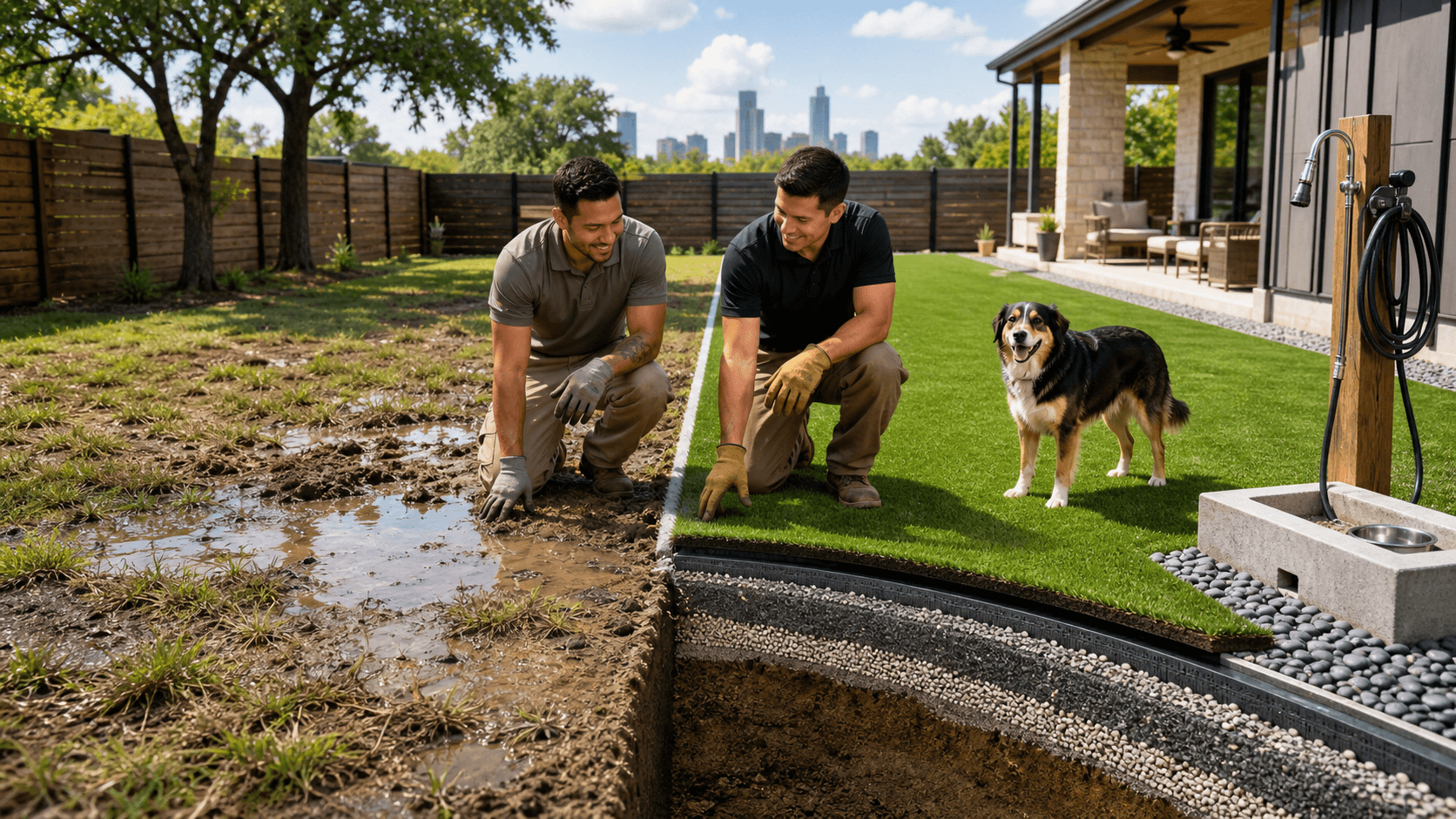
With AGL Grass no-infill pet turf installed by TexasTurf over a properly graded and compacted base, the space works very differently. We use a drainage layer and turf with an antimicrobial backing. Because there is no loose infill, the surface can be rinsed and power-washed without worrying about washing material out of the turf, which is a big advantage in tight dog runs that need frequent cleaning.
After installation, the changes are clear:
- Drainage: Instead of puddles that sit all day, water now moves through the turf and base, then off to the correct area. After a heavy summer storm, the surface sheds water quickly and is usable again soon after.
- Odor: With a good base and drainage, plus pet-safe enzyme cleaners and regular rinsing, urine does not sit on the surface. Odor is noticeably lower, even in tight spaces by the AC unit or trash cans.
- Daily Life: Dogs use the run more, and people can walk through it without boots. Mud tracking into the home is gone, and the side yard now works as a clean access path for taking trash out or moving yard tools.
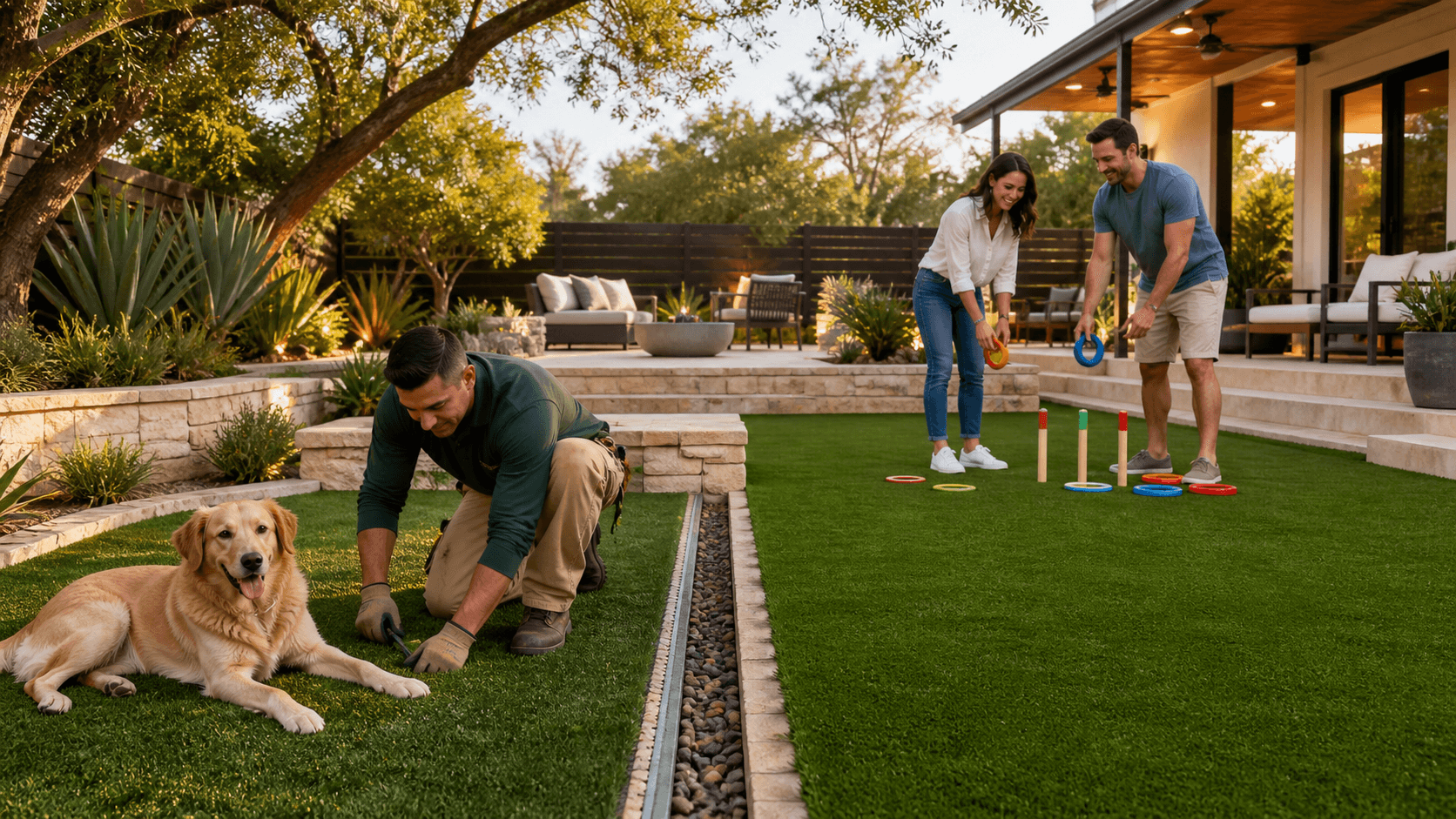
Case Study 2: Family Backyard with Big Dogs and Kids
A second common layout is a medium to large suburban backyard, somewhere around 800 to 1,200 square feet, shared by big dogs and kids. Before turf, these yards often have:
- Patchy Bermuda grass that never fully fills in
- Dirt pits near the back door and along the fence
- Kids avoiding the yard after rain because of mud and smell
For these spaces, we often design a blended layout:
- No-infill pet turf, such as AGL Grass, in the main dog and play zone
- Standard infill turf in lighter traffic or decorative areas
- Defined borders and clean edges at patios and fences
- A small seating or hangout zone so adults can relax while kids and dogs play
After installation, families usually notice:
- Drainage: The yard becomes usable much sooner after storms. Instead of waiting for mud to dry, kids can play on the same day or soon after rain because the surface sheds water and does not turn into a swamp.
- Odor Control: A simple routine works well, such as weekly rinses and occasional deeper cleaning with pet-safe products. No loose infill in the main pet zone means you can wash the turf thoroughly without creating low spots or spreading infill toward the back door.
- Heat and Comfort: Turf will warm up in full sun, and we are always honest about that. Shade from trees, shade sails, umbrellas, and light-colored surrounding surfaces help keep things more comfortable. A quick hose rinse cools it down for paws when needed.
What No-Infill Pet Turf Changes for Austin Homeowners
No-infill pet turf in Austin makes a big difference in how yards feel and how easy they are to clean.
Key benefits many homeowners notice:
- Cleaner yards and interiors because there is no loose rubber or sand moving around
- Less grit on patios and floors, especially near doors where dogs run in and out
- Easier leaf and debris cleanup since a blower or broom can move material off the surface
With AGL Grass no-infill systems installed by TexasTurf, cleaning is straightforward. You can:
- Rinse or power-wash without worrying about shifting infill
- Use pet-safe enzyme cleaners to help break down bacteria
- Keep the surface level and consistent over time
A well-installed system uses a base that drains, breathable turf, and antimicrobial components. That mix reduces muddy paws, helps odors, and gives better airflow under the turf so the yard stays more comfortable through typical Central Texas weather.
Planning an Austin Dog Yard Makeover That Actually Works
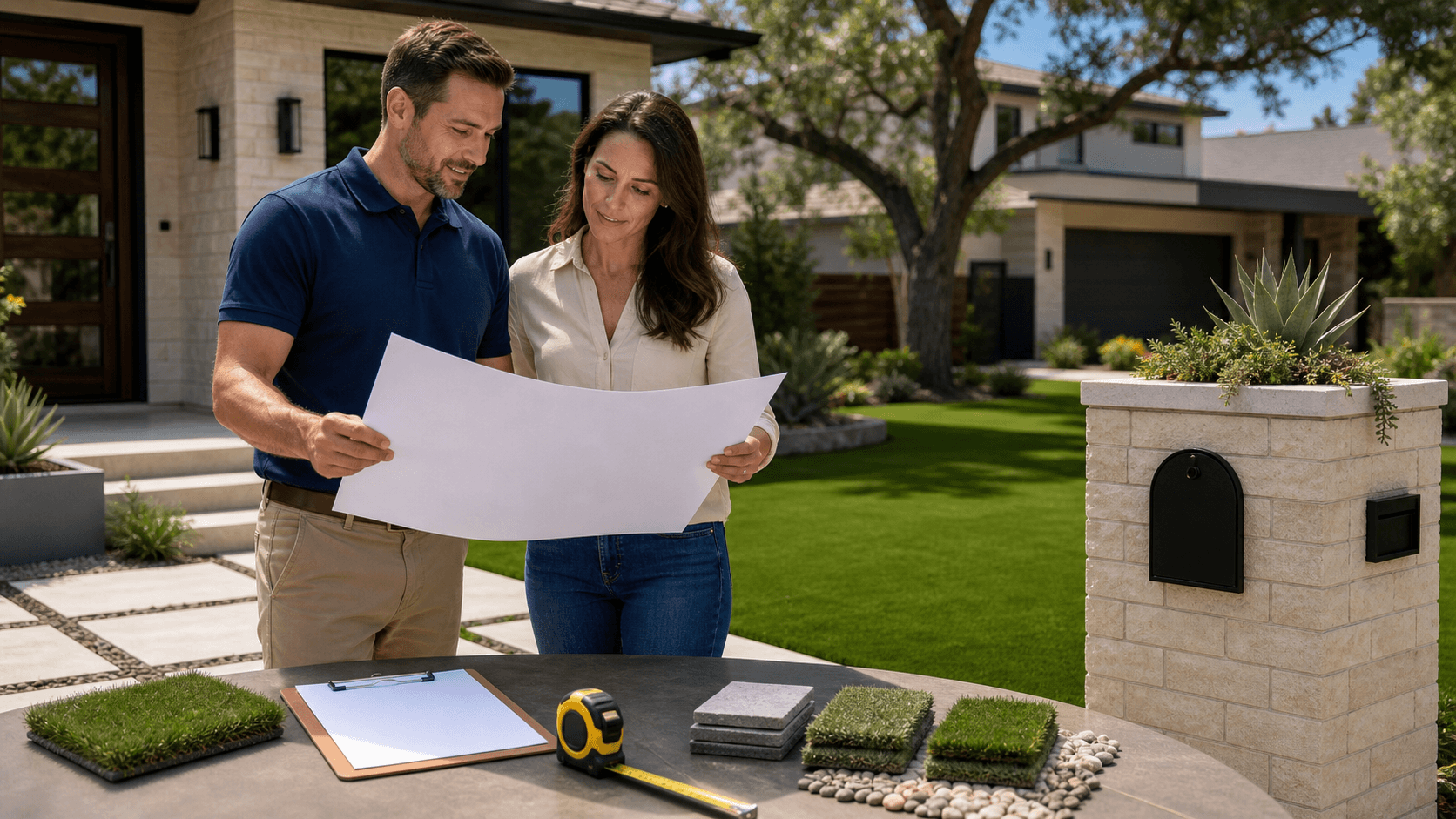
Getting turf is not just about picking a product; it is about planning the whole yard. Good drainage, odor control, and heat management all start with design and quality installation.
Here is a simple yard assessment checklist to think through:
- Where does water naturally flow and where does it pool?
- Which areas get full sun all day and which stay shaded?
- How do your dogs use the space, are they diggers, sprinters, or fence runners?
- Is there clear access for an install crew and materials?
- Are there high-traffic routes from doors and gates that need extra durability?
Choosing between no-infill pet turf and blended systems comes down to use and budget. AGL Grass no-infill turf is ideal for:
- Heavy pet zones that need frequent deep cleaning
- Tight side yards and dog runs with limited airflow
- Households that want less grit and mess around doors and patios
Blended yards can work well too, using no-infill turf in main pet areas and standard turf or rock in low-traffic spots to balance performance and cost. Timing also matters. Many Austin homeowners plan installs before peak summer heat or before the rainy season, so the base can set up well and the yard is ready for holidays, football season, and everyday play.
When you start with smart drainage design, the right turf system, and clear cleaning habits, your yard stays fresher, looks better, and gives both dogs and people more time outside without stress. Working with a local team like TexasTurf that understands Central Texas soil, heat, and pet use helps your Austin dog yard finally work in real life, year after year.
Transform Your Yard Into a Cleaner, Safer Space for Pets
If you are ready to simplify yard maintenance and keep your pets cleaner and more comfortable, our no infill pet turf in Austin is a smart solution. At TexasTurf, we help you choose the right system for your property and install it with long-lasting performance in mind. Tell us about your project and goals, and we will provide a tailored recommendation and quote. Have questions or want to schedule a consultation now? Just contact us and we will walk you through the next steps.