Keep Your Austin Turf Draining, Clean, and Ready Year-Round
Good drainage is the hidden hero of any artificial lawn in Austin. When a big Central Texas downpour hits, you want water to move through your turf fast, not sit in slimy puddles that smell bad a day later. Then, when the rain stops and everything gets dry and dusty, you still need that drainage layer clear so it works the next time the sky opens up.
Artificial turf is low-maintenance, not zero-maintenance. A few simple habits can keep clogs, odors, biofilm, and standing water from ever becoming a problem. In this guide, we will walk through how drainage actually works under your turf, what leaves and mud do over time, smart routines for pet yards, and easy rinsing schedules that match Austin's weather patterns.
How Turf Drainage Really Works in Central Texas Yards
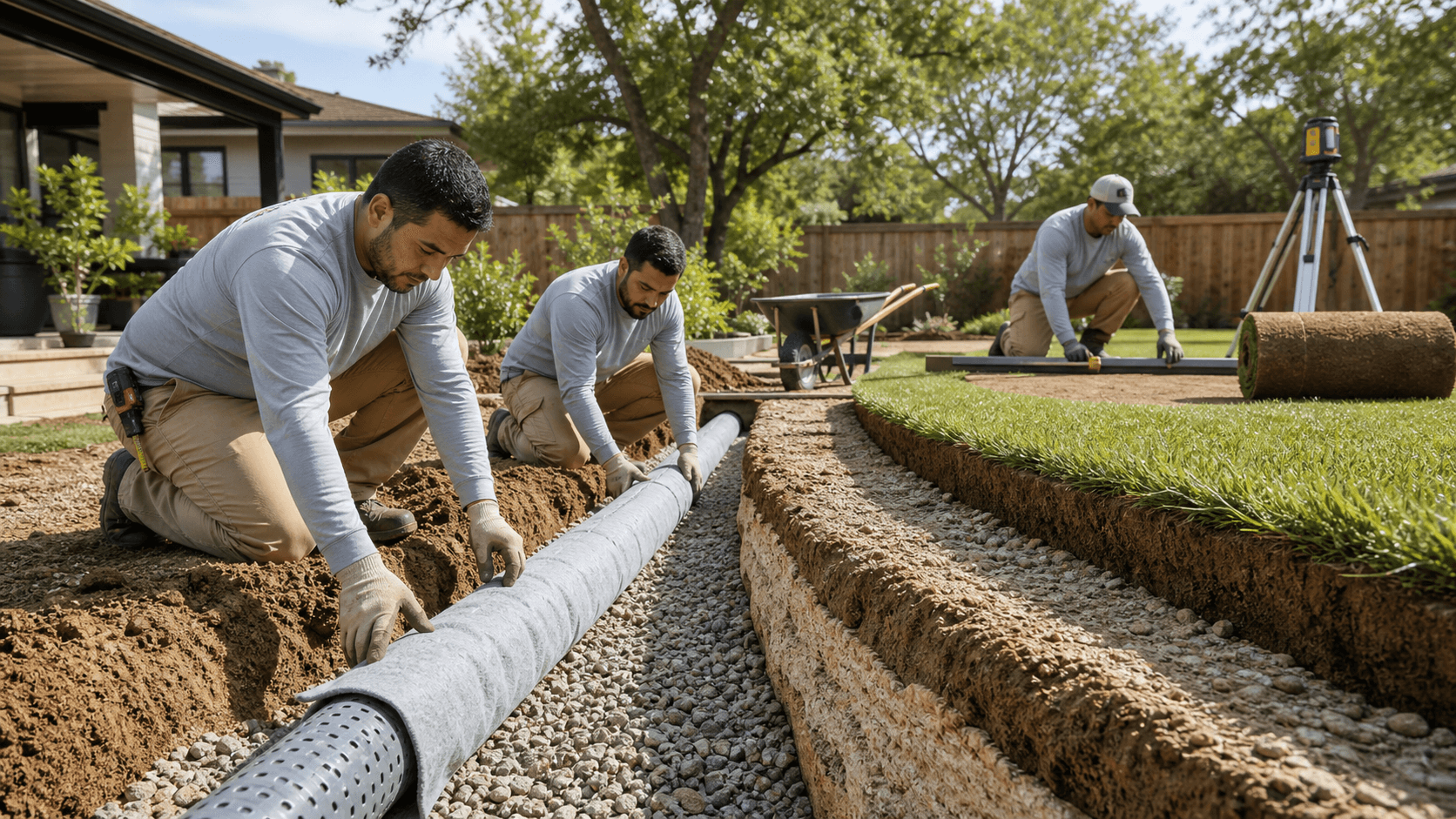
Under every good artificial lawn in Austin, there is a drainage system at work. The turf itself has perforations in the backing so water can flow down instead of sitting on top. Under that, there should be a compacted base, usually a mix like road base or decomposed granite, that lets water move sideways and down into the native soil.
If that base is built wrong, water struggles. Austin has a lot of clay-heavy soil and sloped lots. When a fast thunderstorm hits, that clay can seal up and hold water if the base is too thin or not graded right. The result is:
- Puddles that hang around instead of draining
- Musty or sour odors after rain
- Soft, squishy spots that feel "boggy" underfoot
That is why the base is just as important as the turf. A well-built base lets water move quickly, even during those sudden downpours, and keeps your lawn feeling solid and dry soon after.
AGL Grass, which we install as the exclusive provider in Texas, is a no-infill turf designed for strong vertical drainage. Since there is no loose infill to blow around or wash out, it can be power-washed without knocking anything loose. That makes long-term cleaning simpler and helps keep the drainage system working the way it should.
Leaves, Dust, and Mud: Everyday Debris That Clogs Turf
Around Austin, everyday debris is the slow clogger. It does not show up all at once, but over months it starts to block those little drainage holes in the backing.
Common troublemakers include:
- Oak leaves and live oak tassels
- Cedar pollen and tiny seed pods
- Hill Country dust and fine dirt blowing in
- Bits of mulch or soil from nearby beds
In shady yards or under big trees, this debris settles between the blades and starts to mat down. Over time, it can form a thin layer that keeps water from getting to the perforations. You may start to see slow draining after rain or small puddles in low spots.
Some simple habits help a lot:
- Use a leaf blower on low to move loose leaves off the turf surface
- Run a stiff broom or turf rake over the fibers to lift and loosen debris
- Plan a "deep clean" pass in heavy leaf drop and again in early spring before storm season
Mud is another quiet problem. Kids, pets, and shoes track in wet soil from natural areas and beds. If that mud is never rinsed off, it dries into a fine silt that works its way toward the backing. Over time, that silt layer can clog parts of the drainage system.
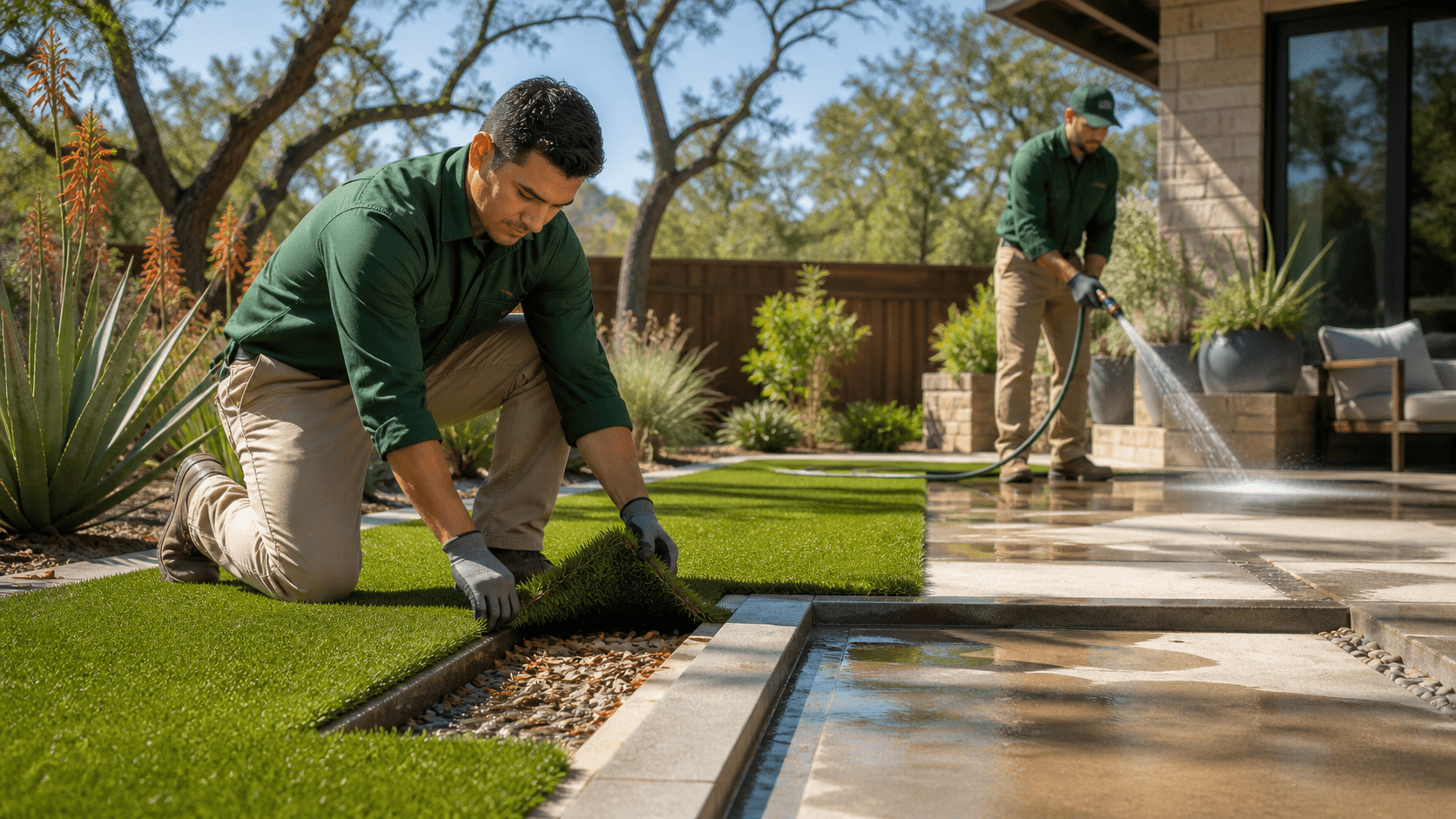
Regular light rinsing, paired with debris removal, helps your artificial lawn in Austin drain like new. You do not have to soak the whole yard, but washing away surface dirt before it settles in makes a big difference.
Pet Yards Without Odors: Prevent Biofilm and Bacteria Build-up
Pet yards take more use and more abuse, especially in warm months. Along with normal dirt and dust, you also have urine and solid waste to think about. If those are not managed, you can end up with biofilm.
Biofilm is a thin, slimy layer made of bacteria, urine residue, and tiny bits of organic matter. It can cling to the blades and the backing. When that happens, you may notice:
- Strong odors that come back even after a quick rinse
- Slick or slimy spots when you walk across the turf
- Areas that seem to stay damp longer than others
A simple pet turf routine helps keep this under control:
- Rinse favorite potty spots with a hose as needed
- Do a weekly or bi-weekly full rinse in warm seasons, depending on how many pets use the area
- Use pet-safe enzyme cleaners on urine areas instead of strong chemicals
- Always pick up solid waste and bag it, instead of trying to hose it into the base
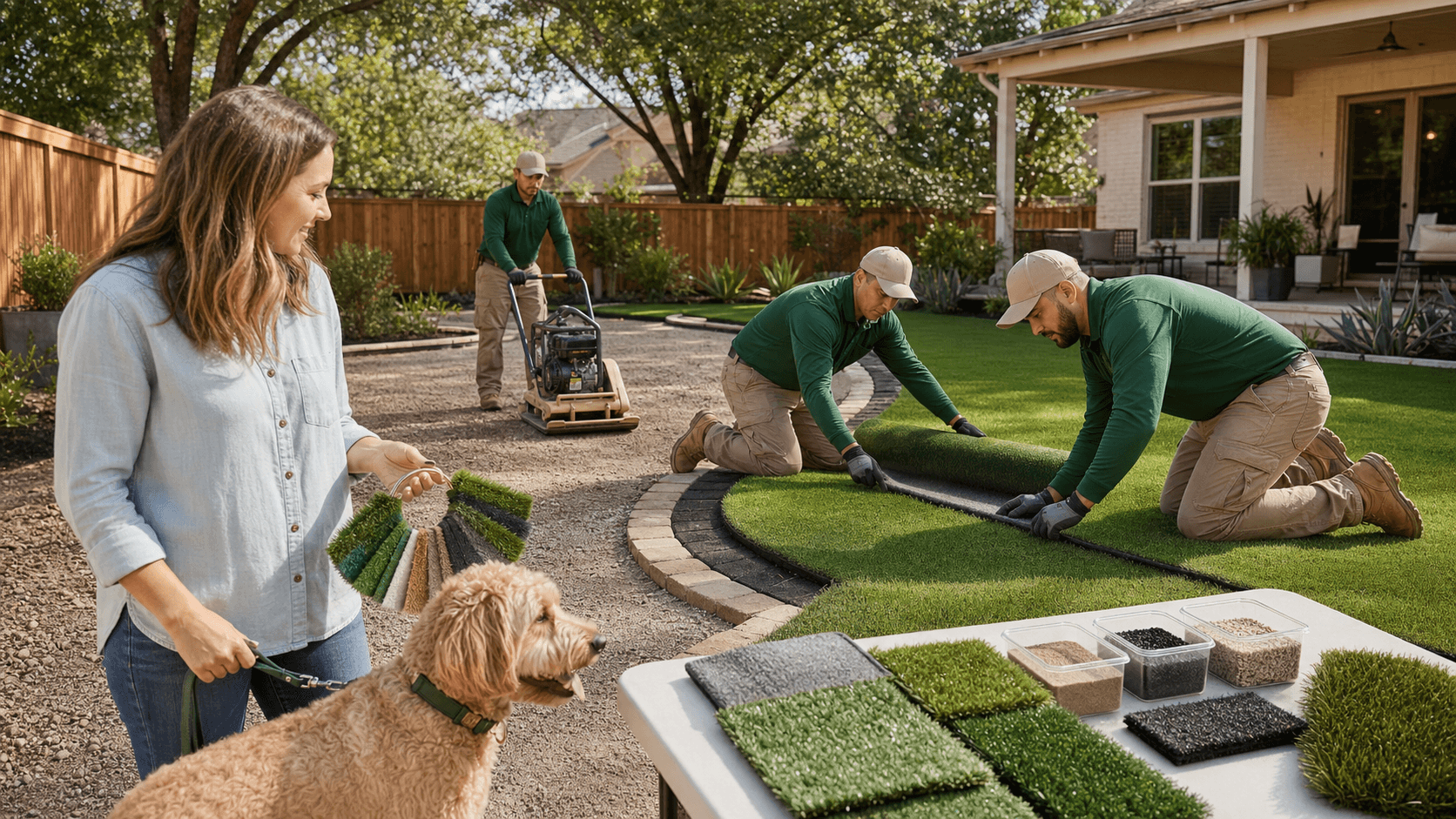
AGL Grass works especially well for pet owners because it has no loose infill to trap urine and odors. The surface is easier to flush and power-wash, which makes deep cleaning more effective. In busy dog yards or small patios, that can be the difference between a fresh-smelling space and one you avoid on hot afternoons.
Smart Rinsing Schedules for Austin Rain and Summer Heat
Not every artificial lawn in Austin needs the same rinsing schedule. It depends on your shade, number of pets, and how much debris you get. Still, there are some good patterns to follow through the year.
In late spring through early fall, when heat, sweat, and pet use are highest:
- Spot rinse pet areas several times a week
- Give heavy-use zones and low spots a deeper rinse weekly or every other week
- Use enzyme cleaner on areas that see a lot of urine
After big storms:
- Walk the lawn and look for standing water
- Clear washed-in leaves, twigs, and mulch before they dry in place
- Rinse off fine silt in low areas so it does not settle into the base
In drier winter periods:
- Plan a light rinse about once a month
- Focus on dusty zones and under trees where pollen and debris collect
- Give the turf a quick brush to lift flattened fibers
You do not have to soak the whole yard every time. Short, targeted hose-downs in 10 to 15 minute zones are usually enough. Put your attention on:
- Low spots or areas that tend to puddle
- Main foot traffic paths
- Pet potty areas and play zones
Even with these rinses, a well-draining turf system, especially a no-infill setup like AGL Grass, uses far less water over the year compared to natural grass that needs regular irrigation.
Spotting Trouble Early and Keeping Your Turf Performing Like Day One
Catching small issues early keeps your artificial lawn in Austin working and looking like it did the first week. Take a slow walk around your yard every so often and after heavy storms. Pay attention to what you see, feel, and smell.
Warning signs to watch for:
- Water standing more than a few hours after rain
- Persistent odors even after rinsing and enzyme treatment
- Slimy, slick patches underfoot
- Visible silt or mud building up at turf edges
- Fibers that stay matted down even after brushing
Some light care is fine to handle on your own. That might include extra rinsing, more frequent pet-area cleaning, brushing the turf, or clearing out packed debris under trees. If you notice ongoing puddling, repeated odor issues, or low areas that feel spongy, it is time for professional help.
As a local Austin installer and the exclusive Texas provider of AGL Grass, we work with real Central Texas yards every day. We understand how clay soils, pets, trees, and summer heat all play together. Proper inspections, base repairs, drainage upgrades, or deep power-washing can get your turf system back on track and help it stay cleaner, cooler, and more enjoyable for the long haul.
Get Started With Your Project Today
Transform your yard into a space you can enjoy year-round with a custom artificial lawn in Austin designed and installed by TexasTurf. We will walk you through every step, from design ideas to a finished lawn that looks clean and stays low maintenance. Reach out today through our contact page to schedule a consultation and get a tailored quote for your project.