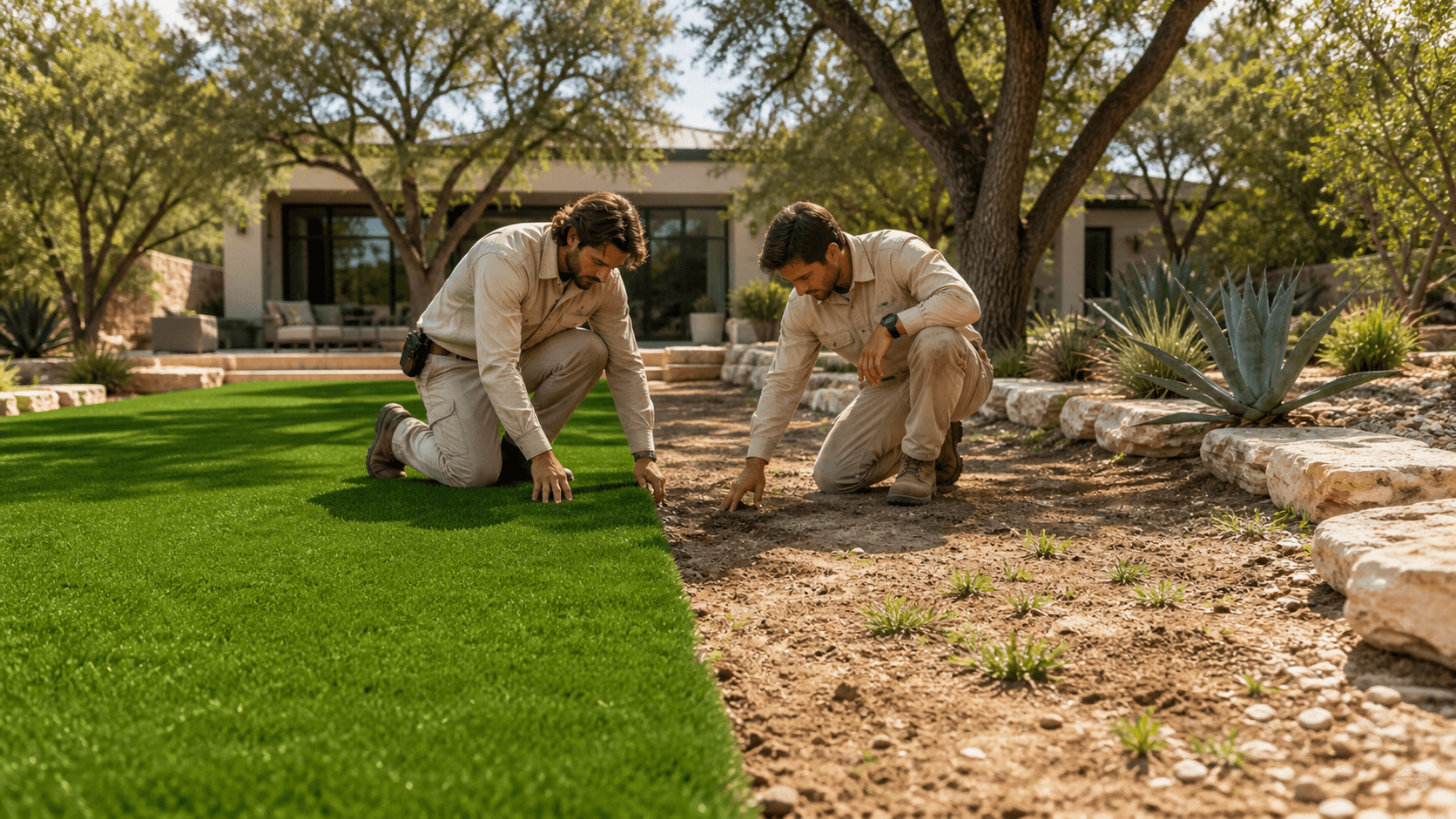
Rethinking Bare Dirt Backyards in Austin
Bare dirt in an Austin backyard sounds simple, but it creates a lot of daily headaches. Dust blows into your house, mud sticks to paws and shoes after every storm, and the ground can turn rock hard once the summer sun hits. Many homeowners look at that patch of dirt and think artificial turf might be the answer.
The big question is this: if your yard is already exposed soil, does it really make sense to put artificial turf over dirt, or are there problems hiding below the surface? That is what we want to unpack, especially for Central Texas yards with tough heat, tricky soil, and active pets. By the end, you should have a clear idea of what works, what to avoid, and how to get a backyard that actually feels good to use, not just nice in photos.
What Really Happens When You Put Turf Over Dirt
Laying artificial turf straight over bare dirt sounds fast and easy. Just roll it out and call it done, right? In real life, that shortcut usually turns into a long-term headache.
Here is what tends to happen when turf goes directly over dirt with no base work:
- The surface feels lumpy and uneven
- Low spots collect water after storms
- High spots wear out faster under foot traffic
- Edges shift and create trip points
Central Texas soil has its own personality. Around Austin, we see a lot of:
- Clay that holds onto water
- Rocky and caliche-heavy areas that are tough to dig
- Compacted subsoil from years of traffic or construction
If you put artificial turf over that raw dirt, the water from rain or rinsing has nowhere good to go. You can end up with standing puddles under the turf, bad smells, and pet mess that never quite rinses away. The turf backing lets water through, but the soil under it can act like a bowl.
That is why professional installations focus on building a proper base. That usually includes:
- Grading to move water in the right direction
- A compacted base layer to create a smooth, solid surface
- Drainage planning so water can pass through the turf and away from your home
So yes, you can have artificial turf over dirt, but only after that dirt is turned into a stable, well-draining base that fits Austin soil and weather. It is not about a quick cover up, it is about building the right foundation first.
Pets, Kids, and Mud: Daily Life on Backyard Turf
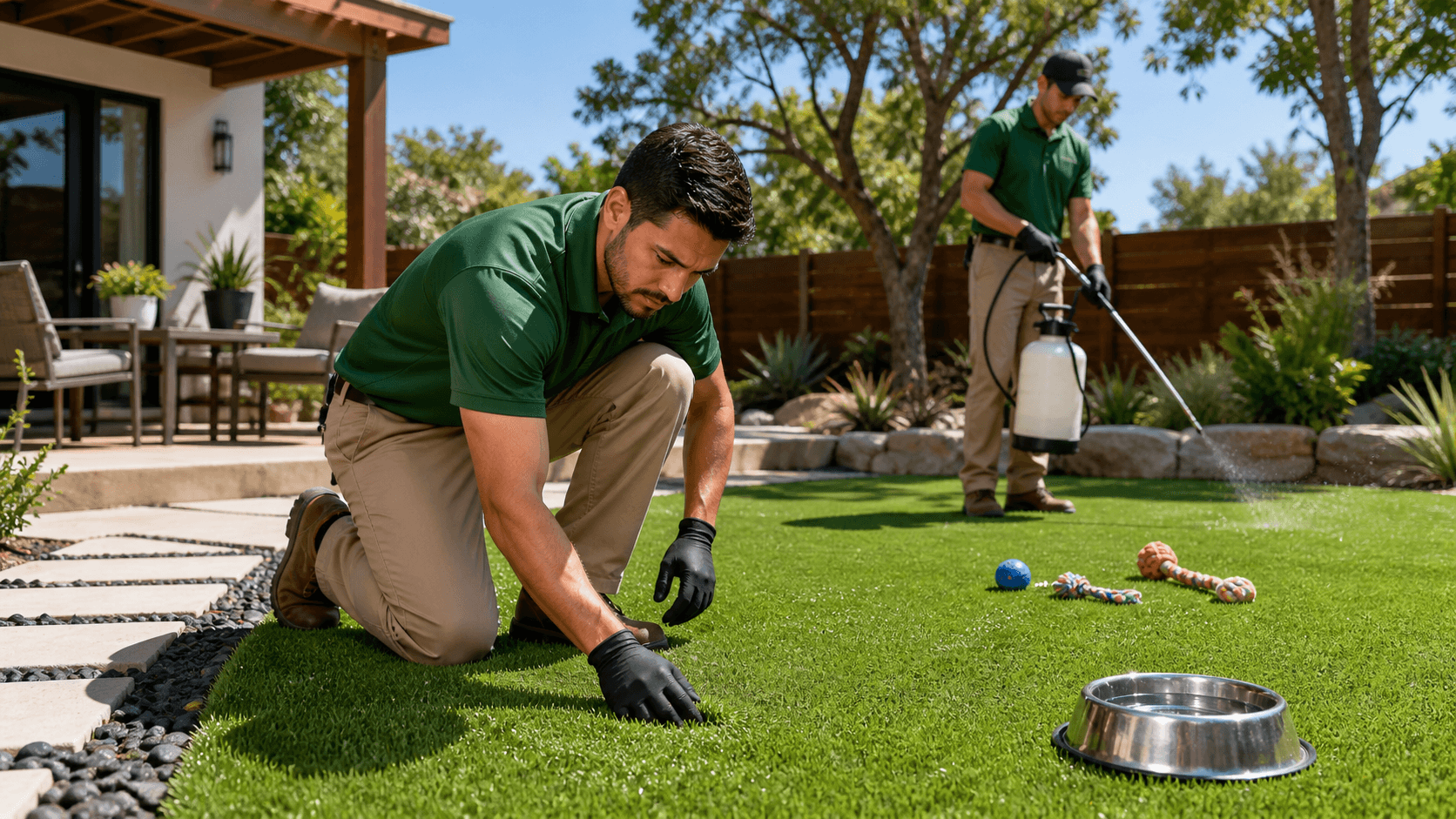
For a lot of Austin homes, the real test of any yard is simple: what happens when the dogs and kids head outside? With bare dirt, you know the answer. On dry days, you get dust. After a storm, you get mud, paw prints, and a mess inside.
Quality turf with a proper base changes daily life in some big ways:
- Far less mud tracked into the house
- A cleaner surface for kids to crawl or roll around on
- A yard that is usable even after a heavy rain
Pet owners do need to think through how their dogs use the space. Dogs may try to dig at edges if the turf is not installed well. That is why strong edging and a secure perimeter are important. For daily cleanup, liquids should drain through the backing and into the base, then solids can be picked up like normal and the area rinsed.
Odor control is all about drainage, base materials, and cleaning habits. If the turf sits on top of soggy soil, smells will build up. A proper base and occasional rinsing or power washing help keep things fresh. No-infill systems like AGL Grass, which we offer exclusively in Texas, make that cleaning step easier. Since there is no loose infill to trap odors or get stuck in paws and shoes, you can power wash the surface more freely and keep the turf looking and smelling cleaner.
Heat, Drainage, and Maintenance in Austin's Climate
We need to talk about heat in a direct way. Any dark surface in full Texas sun will warm up, and artificial turf is no different. It will feel warmer than natural grass in the middle of a bright afternoon. That does not mean turf is off the table, it just means smart design choices matter.
Some ways to manage heat include:
- Picking turf styles and colors that reflect more light
- Working around existing shade from trees or structures
- Using infill types and base designs that allow more airflow
Drainage is just as important. In Austin, a calm, dry week can turn into a heavy downpour with little warning. Good turf systems handle that by letting water pass through the backing, into the base, and then out of the yard along planned paths. Turf laid on bare dirt will often trap water instead of moving it along.
Maintenance is lighter than with natural grass, but it is not zero. You can expect to:
- Brush or rake high-traffic areas once in a while
- Rinse or lightly power wash pet zones as needed
- Clear leaves and organic debris to prevent buildup
With no-infill turf like AGL Grass, rinsing and power washing are usually simpler, since you are not worried about washing away infill pellets. The key is to think of turf as a low-maintenance surface, not a no-maintenance surface. That mindset helps avoid disappointment later.
Cost, Value, and Curb Appeal for Austin Homeowners
When people ask about putting artificial turf over dirt, they are often trying to understand where the value comes from. The base work under the turf is a big part of that. Things that affect the overall investment include:
- How easy it is to access your backyard with equipment
- How much grading and base prep your existing soil needs
- The quality and style of turf you choose
- Any edging, border work, or drainage upgrades needed
Long term, many homeowners see value in less daily yard work. Turf does not need mowing or constant watering through the hottest months. You get cleaner feet, cleaner paws, and more days when you can actually step outside and enjoy the space without worrying about muddy patches.
Curb appeal is another big piece. A small or shady Austin yard that struggles to grow grass can look finished and welcoming with a well-installed turf area. No-infill options like AGL Grass offer a refined, modern look without visible infill or loose particles that can spill onto patios and walkways. For homeowners who care a lot about easy cleaning and a polished look, that style of system can be a smart long-term choice.
How TexasTurf Builds Better Backyards From Bare Dirt
Turning a bare dirt yard into a durable turf space is not about hiding the soil under a green carpet. It is about reshaping that space so it drains well, holds up to daily life, and feels good to walk and play on.
Our general process usually includes:
- An on-site visit to look at soil type, slope, and how water moves
- Drainage planning to keep water away from your house and sitting areas
- Base prep, including grading and compaction over your existing dirt
- Helping you pick turf styles, including options like AGL Grass for no-infill systems
- Careful installation with solid edging, seams, and cleanup
Being based in the Austin area, we work with the same types of soil, sun, and storm patterns that you do. We see the repeating issues in local neighborhoods and know how Central Texas weather slowly affects turf over time. That local experience shapes how we design each project, especially when starting from bare dirt.
If you are staring at a dusty, patchy backyard and wondering whether artificial turf over dirt makes sense, the real answer is that the dirt has to be transformed first. With the right base, drainage plan, and turf choice, that problem area can become one of the most useful parts of your home.
Get Started With Your Project Today
If you are ready to transform bare soil into a clean, low-maintenance yard, explore our artificial turf over dirt solutions tailored to Texas properties. At TexasTurf, we walk you through every step, from site prep over existing ground to final installation. Tell us about your space and goals, and we will recommend the right products and plan. Have questions or want a custom quote now? Simply contact us to get started.