
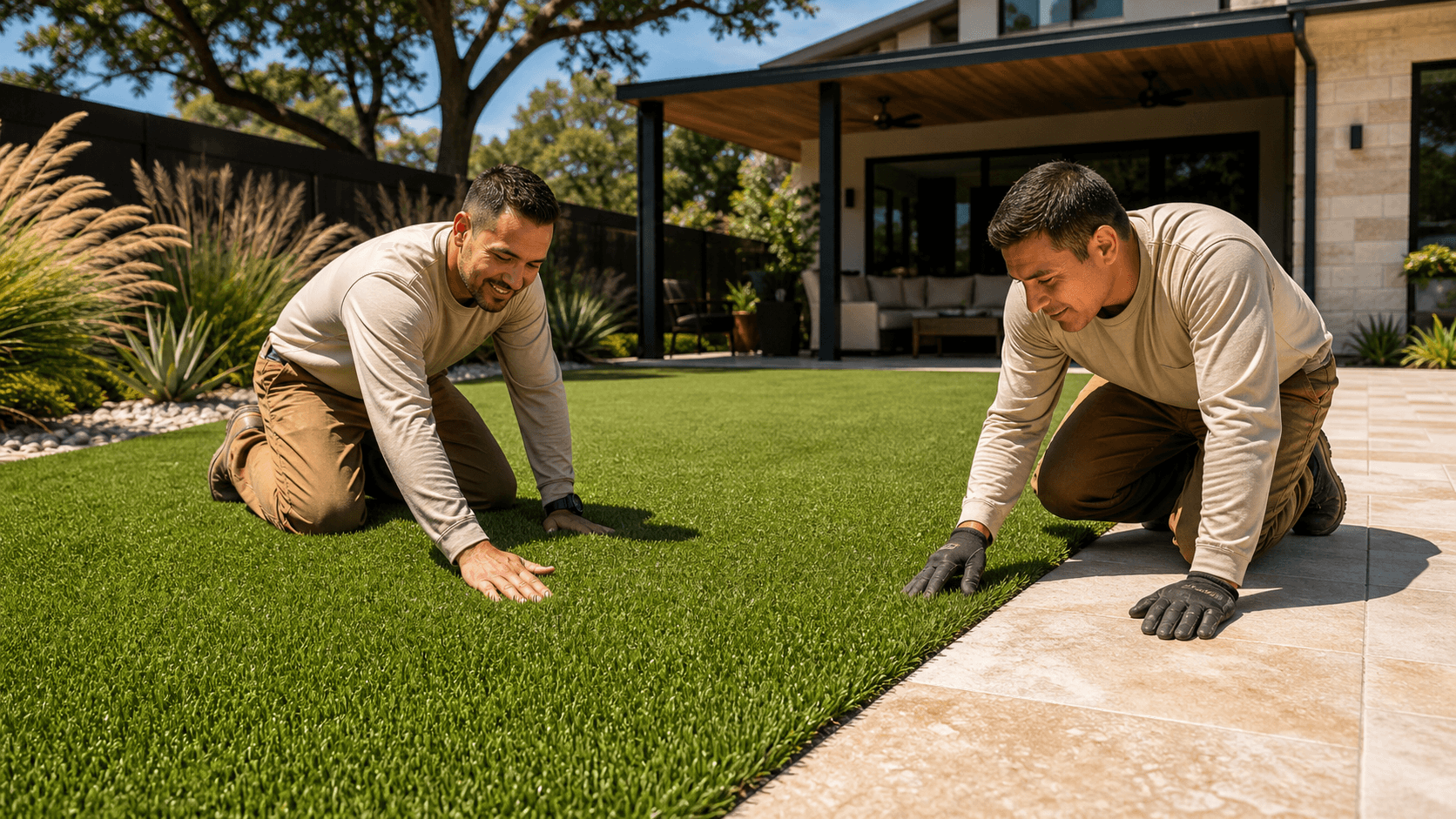
Inside an Austin Yard Makeover That Ditched the Dirt
A lot of Austin yards look great from the street but turn into mud, dust, and frustration up close. This case study walks through a real-world switch from beat-up grass to AGL Grass artificial turf, so you can see what actually changes day to day. We will cover the before-and-after look, how drainage worked in real storms, what the surface felt like in the heat, how cleaning fits into a busy week, and how the yard held up after a full year.
The property was a typical Central Texas lot, with full sun in the back, some dappled shade from a couple of trees, and that familiar hard clay soil. The family had kids, a dog, and a schedule that left very little time for lawn care. Fall rains meant slippery mud. Spring meant weeds and ruts. Summer meant crispy, patchy grass that never quite bounced back. They wanted a yard that stayed usable, clean, and green without turning every weekend into yard work.
From Patchy Lawn to No-Infill Turf Oasis
Before turf, the yard looked like many Austin lawns that have been "fixed" too many times. There were:
- Bare spots where grass never took
- Compacted clay that stayed muddy after rain
- Sprinkler issues that left some areas soggy and others dry
- Constant muddy paws tracking into the house
Fall rains turned the low spots into puddles, then sticky muck. Spring brought weeds that popped up faster than they could be pulled. By late summer, the grass that survived was thin and rough, so the kids and dog did not like using the bumpy, uneven space.
The family chose AGL Grass because they wanted:
- A clean, even play surface for kids and pets
- No loose infill that could end up in the pool or inside the house
- Something that would look natural under bright Texas sun
They also wanted a local Austin installer that understood our soils and drainage. During our on-site visit, we walked the yard, checked the existing grade, looked at shade patterns during the day, and talked through how they used each area. That helped us plan traffic flow from the patio to the play area and to the side yard where the dog liked to run.
Installation day is where most homeowners are surprised. From their point of view, they see:
- Old grass and soil removed and hauled away
- A new base getting compacted and shaped
- Careful cuts around trees, beds, fences, and pool coping
Edges around patios and beds were trimmed tight so there was no obvious "fake grass" border. By the time we rolled out and secured the AGL Grass, the yard suddenly looked finished instead of halfway done. The kids were on it by that evening, the dog followed, and curb appeal jumped right away.
Drainage and Fall Storms: How the Yard Handled Real Rain
Drainage is one of the biggest worries we hear in Austin, especially on clay. We set this yard up with:
- A crushed rock base graded gently away from the house
- Attention to existing low spots so water had somewhere to go
- AGL no-infill backing that lets water pass through quickly
Because there is no loose infill in the AGL system, there is nothing to float, wash away, or clog the backing. Water can move straight down into the base, then follow the grade away from the house and slab. Where needed, we also talk through typical neighborhood rules and HOA expectations so everything looks clean and intentional.
The first big fall thunderstorm hit not long after installation. During the rain, the owners noticed water moving off the patio and into the turf, not pooling near the house. After the storm, they saw:
- A few shallow puddles in the lowest areas that drained off fairly quickly
- No standing water against the foundation or along the fence line
- No loose material washing onto the patio or into the pool
Through winter and spring rains, the pattern stayed about the same. Even with regular pet use and furniture on the surface, drainage did not slow down or turn smelly. The no-infill design and base prep kept things free of mud, which meant far less dirt tracked through back doors and onto floors.
Pet odor often comes up with synthetic turf. Here, the combination of drainage and regular rinsing kept smells under control. Liquids did not sit near the surface, and because there was no infill holding moisture, light cleaning was usually enough. The family also liked that water was not trapped near the slab, which is a common concern for Austin foundations.
Surface Temps and Summer Comfort in Central Texas Heat
No outdoor surface stays cool in full midday sun in an Austin summer. AGL Grass is no different, and we are always honest about that. What matters is how it feels in real life at different times of day and in different parts of the yard.
In this yard, they noticed:
- Midday turf in full sun felt hot, like a sun-baked patio
- Turf in dappled shade under trees felt more like a warm sidewalk
- Areas by the pool deck and light-colored stone felt slightly cooler than darker hardscape
By late afternoon and evening, the surface cooled enough for barefoot play again. Morning was usually the most comfortable time for pets and kids to run around.
We suggested simple cooling tricks that work well:
- Plan high-energy playtime for mornings and evenings
- Add shade sails, umbrellas, or use natural tree shade for seating zones
- Give the surface a quick hose-down or mist before heavy use on very hot days
- Use lighter pavers, rock, and mulch around the turf to cut down radiant heat
Compared to their old lawn, late summer felt different. The natural grass used to be dry, dusty, and prickly in spots, with patches of bare soil that kicked dust everywhere. The turf had a more predictable surface temperature, but it was always even, green, and soft enough for regular use. With common-sense timing and quick cooling when needed, the family used the yard more often overall.
Cleaning Routine, Pet Use, and 12-Month Owner Feedback
One of the biggest questions people ask is how much time turf actually saves. This family's routine settled into a simple pattern:
- Weekly: quick leaf blow or broom to clear leaves and small debris
- As needed: hose rinse on pet areas, especially after heavy use
- Occasionally: power wash sections, which AGL Grass can handle since there is no infill to blast out
They noticed a clear trade from mowing, edging, fertilizing, and weed control to short, simple cleaning tasks. Instead of blocking off big chunks of weekend time, they handled most turf care in short bursts when they were already outside.
For pets, the dog adapted quickly. Bathroom habits stayed about the same, only now there was no muddy digging, and far less dirt came back inside. The fibers held up to daily running, ball chasing, and zoomies without tearing or creating holes.
Over the year, the turf saw:
- Kids playing sports and rolling around
- Outdoor gatherings with tables, chairs, and coolers
- Sprinklers and water play on hot afternoons
After 12 months, they noticed some light matting in the heaviest traffic lanes, which is normal. A simple brushing or grooming helped the blades stand back up. Seams and edges stayed tight because they were installed to handle expansion and contraction in our heat.
Their favorite parts after four seasons were:
- A cleaner house with less dirt and grass coming through the back door
- A yard that stayed green and "company ready" without rushing to mow
- No muddy ruts or bare patches after storms or heavy use
The trade-offs they mentioned were learning a new cleaning rhythm, staying smart about midday heat, and committing to the upfront project. Overall, they felt the AGL system fit their busy, pet-friendly lifestyle very well.
Is AGL Grass Right for Your Austin Home?
AGL Grass is not the perfect fit for every single yard, but it is a strong option for many Central Texas homes. It tends to work especially well for:
- Pet owners who are tired of muddy paws and dead spots
- Families who want a reliable play surface for kids
- Yards that struggle with shade, clay soil, or heavy traffic
- Areas around pools, side yards, and paths where loose infill would be a mess
Some properties still do fine with traditional grass, especially if you enjoy regular lawn care, have good soil, and do not mind seasonal changes. Others might use a mix of turf, beds, and hardscape to balance comfort and style.
Before choosing turf, it helps to ask yourself:
- Where does water currently sit after a storm?
- How much sun hits each part of the yard?
- How do your pets use the space now?
- What does your HOA allow for turf and edging?
- How long do you plan to stay in the home?
A good installer should explain base prep, drainage, seams, and edges in plain language. They should also be familiar with Central Texas soil and weather patterns, and in our case, how AGL's no-infill system works for cleaning and pet use. Taking time to walk your yard, notice problem spots, and think through how your family actually lives outside will put you in a better position to decide if an AGL Grass install like this Austin case study is the right move for you.
Transform Your Landscape With Low-Maintenance Turf Today
Upgrade your yard with our premium AGL artificial turf grass and enjoy a green, polished look all year long. At TexasTurf, we help you choose the right product for your space, lifestyle, and budget, then handle the installation from start to finish. If you are ready to explore options or get a personalized quote, simply contact us and we will walk you through the next steps.